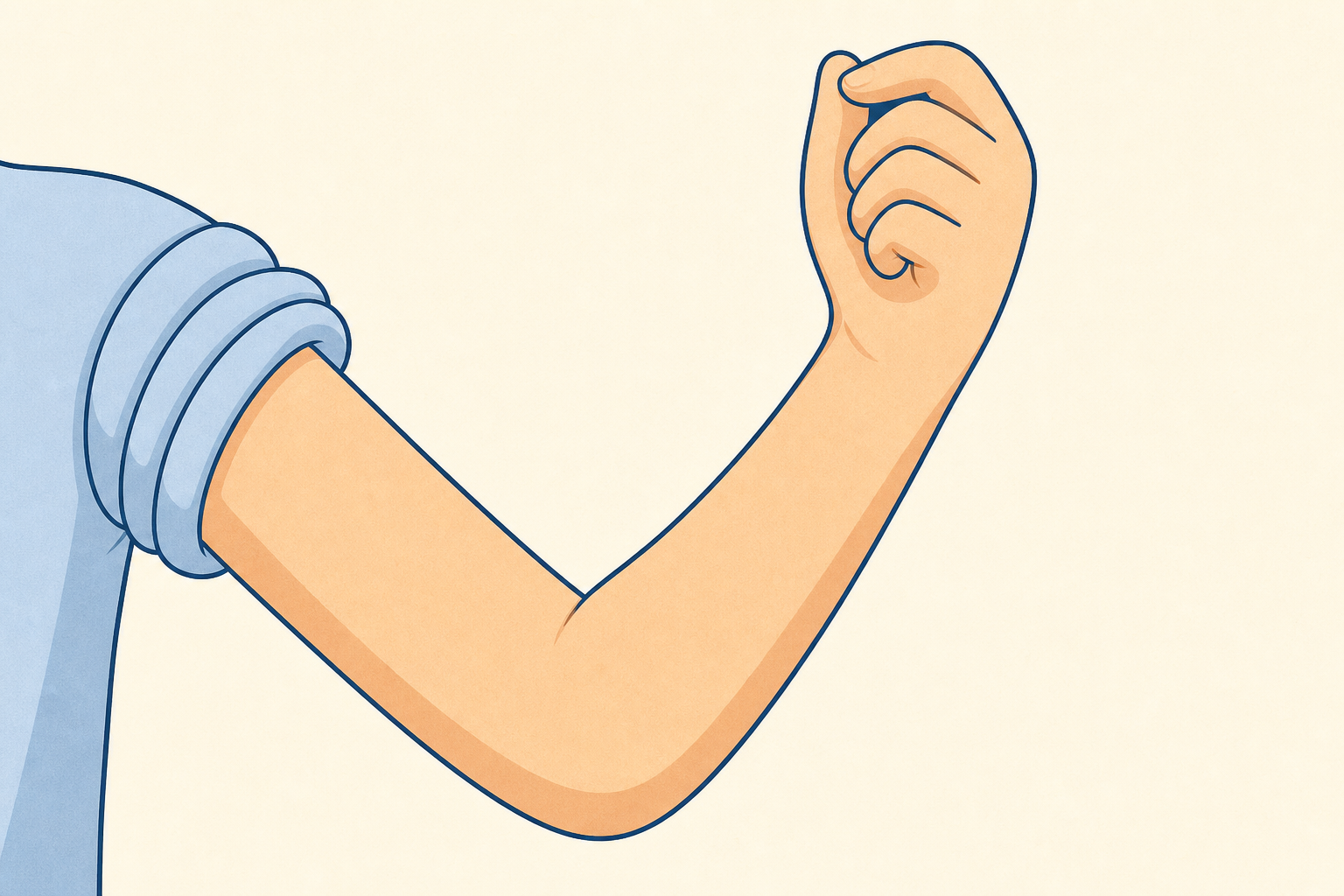
 Hold your arm out straight, then bend it at the elbow. What is happening under your skin that makes that move possible?
There is a hidden team under your skin doing that job every time you pick up a pencil.
Today we will feel that teamwork on your own arm, then build and test a working model of a hinge joint and a muscle pair.
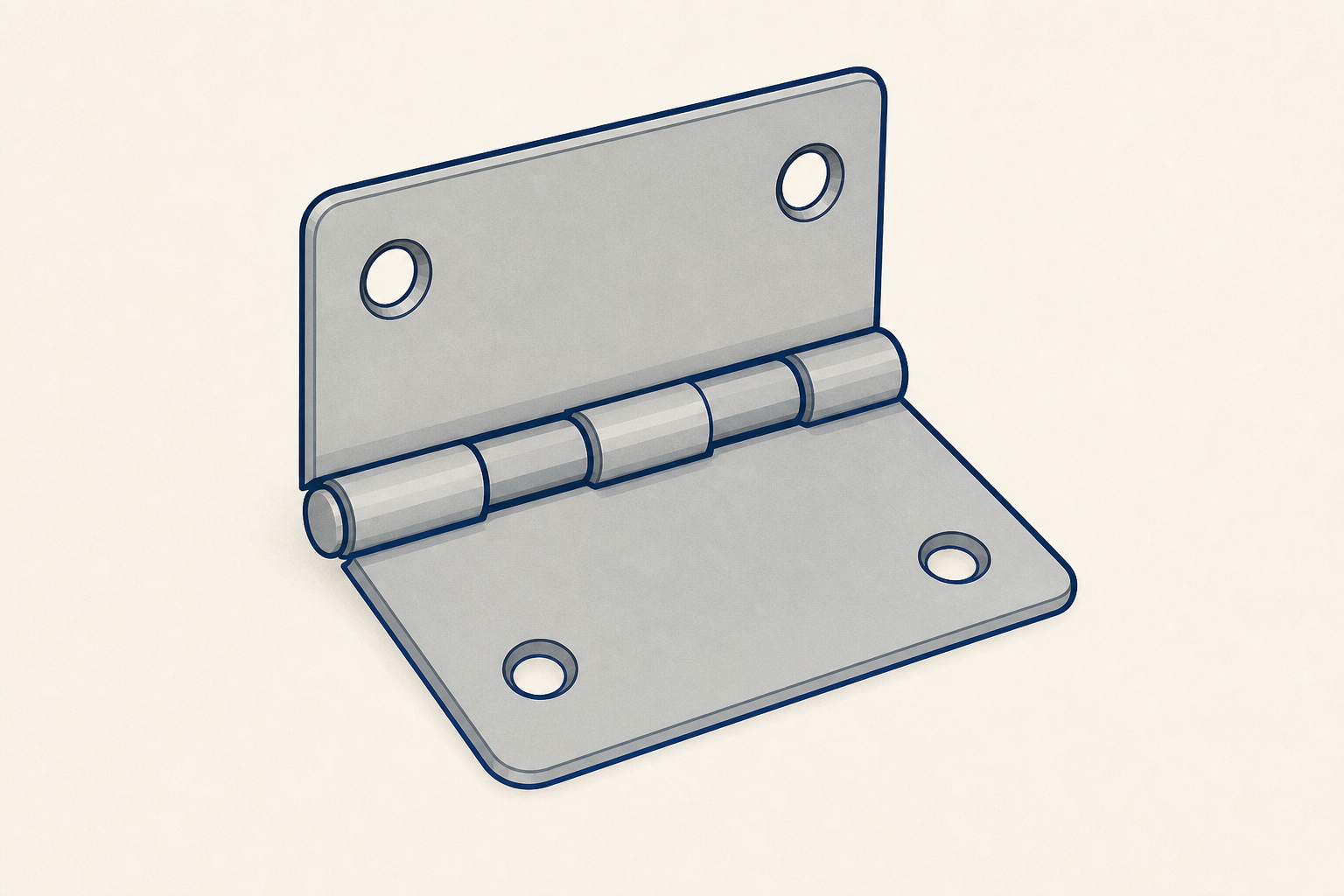 Bend your elbow again. That bend happens at a hinge joint: it moves mainly one way, like a door hinge.
The clever part is hidden: the power does not come from the joint itself.
The force comes from muscles. Muscles only pull when they shorten; they never push. So they work in a muscle pair: one pulls while the other relaxes.
When you bend your elbow, which muscle do you think is doing the pulling?
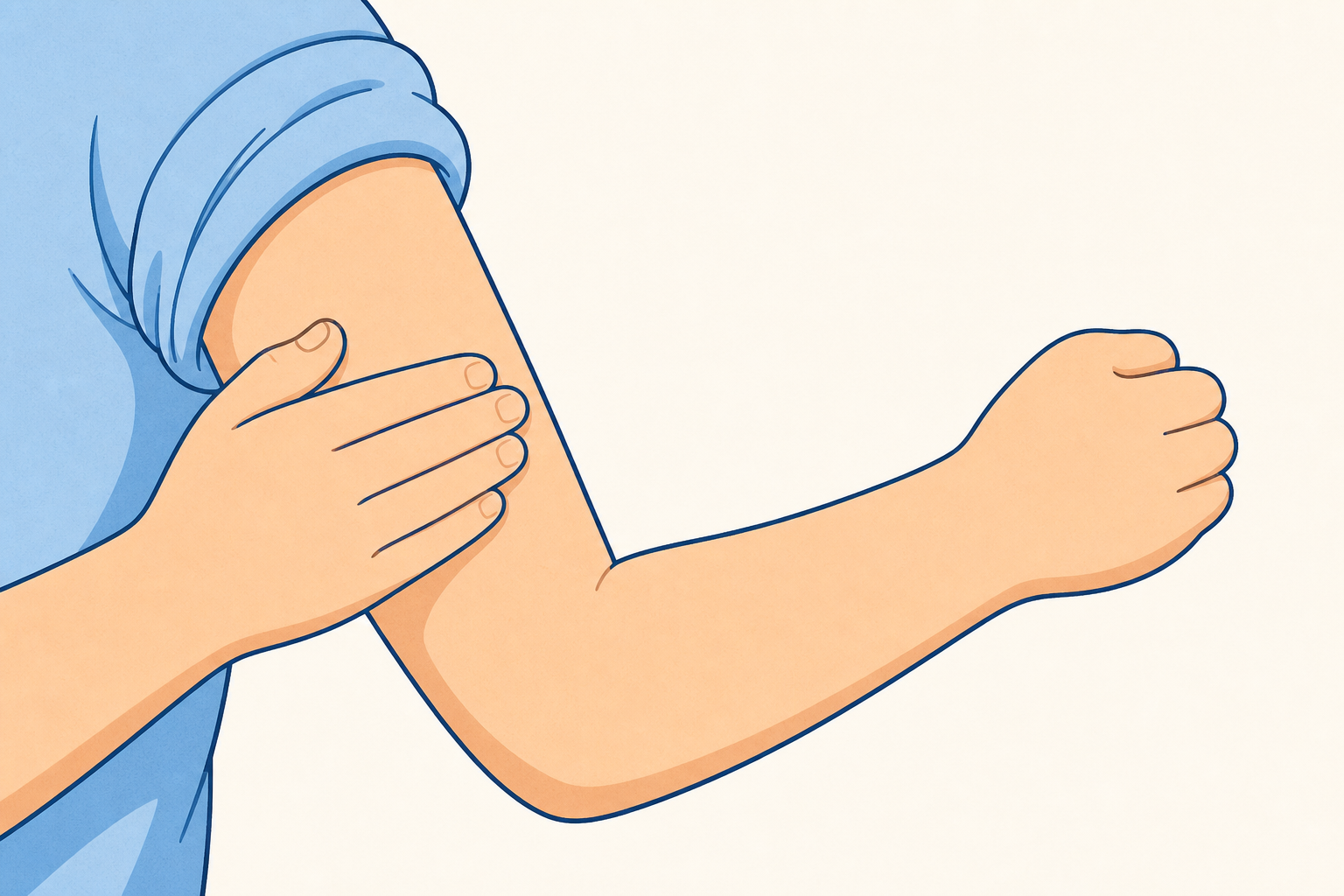 Place one hand on the front of your upper arm. Bend your elbow slowly and feel the muscle firm up. That is your biceps pulling.
Now place your hand on the back of the same upper arm. Straighten your elbow and feel the muscle firm up. That is your triceps pulling.
Notice: when one muscle pulls and shortens, the other softens and lengthens. They work as a pair.
In your group, build a working model of an arm hinge joint.
Join two card strips with a split pin so they bend like an elbow.
Add one elastic on the front of the model and one on the back. Tape or tack both ends of each elastic so the bands stay put.
When both elastics are anchored on opposite sides, you are ready to test.
Test your model the same way you tested your arm: one pull at a time, and see if it matches.
In your group, say your prediction out loud before anyone pulls. If you pull only the front elastic, what will the joint do? If you pull only the back elastic, what will it do?
Then test each pull in turn. Watch which elastic shortens and which goes slack. Does your model match what you felt on your own arm?
Keep your Investigation Journal closed for now. You will draw and label the model in the next step.
Unlock the full learning experience
You're previewing this lesson. Get full access to this lesson and hundreds more — each one ready to teach, with interactive activities, printable resources and pupil progress tracking built in.
This lesson is copyright of DigitalSkills.org 2017 - 2025. Unauthorised use, copying or distribution is not allowed.