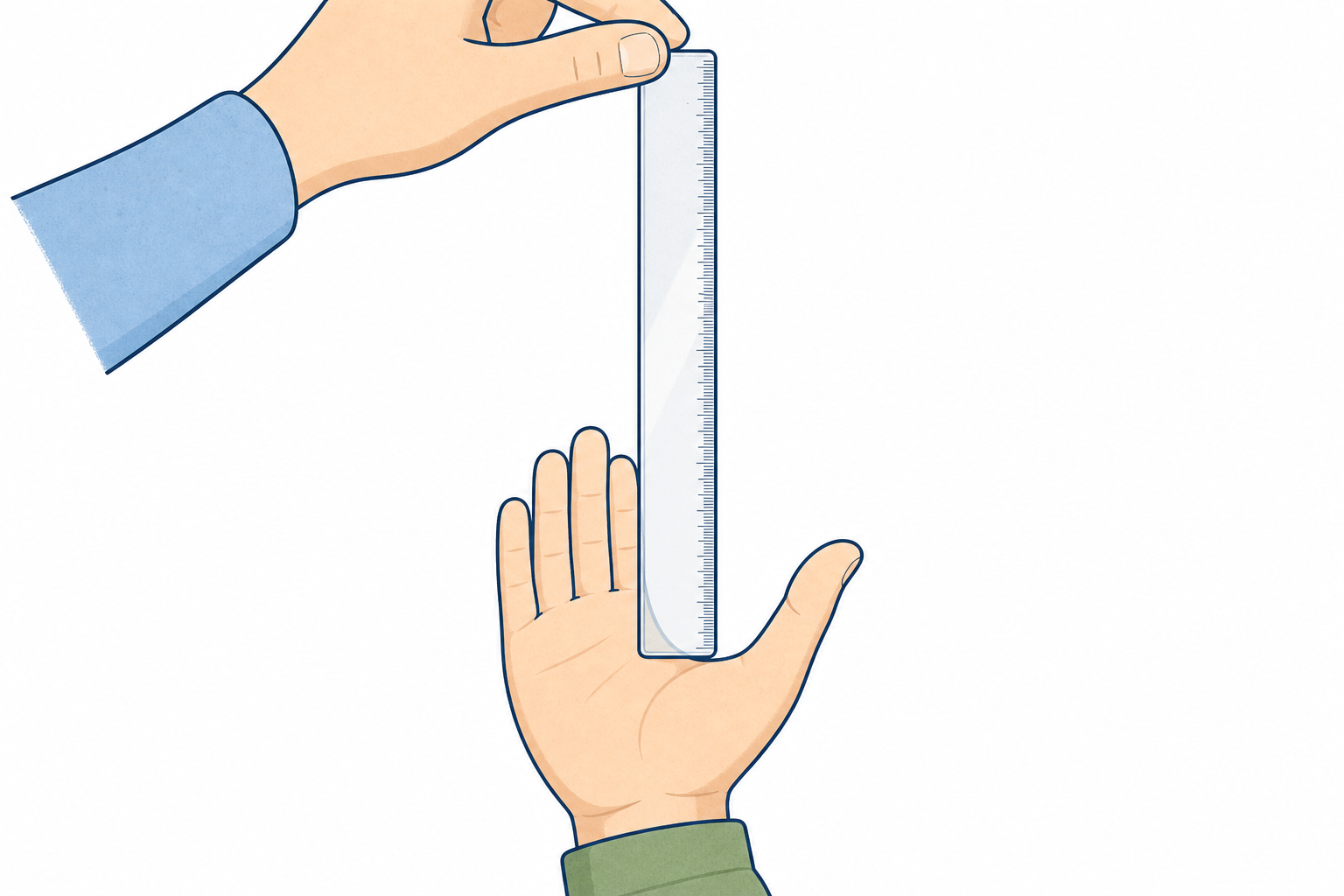
 Watch the front carefully. A volunteer is about to catch a falling ruler between their fingers. Can they catch it before it falls far?
What do you think the brain and senses are doing in that tiny moment?
In that catch, the volunteer's eyes saw the ruler move. Their brain got the message and told their fingers to pinch. That quick response is a reaction.
How far the ruler fell before the catch is the reaction distance. A longer distance means a slower reaction.
Thumbs up if you think the brain can react before we plan every step through. Thumbs sideways if you are not sure yet.
We are going to investigate how quickly people react. Your group will help design the test, then you will measure in pairs.
Here are the two set-ups you can compare:
- Eyes ready versus distracted (the dropper asks a simple question at the exact moment of the drop)
- Writing hand (the hand you usually write with) versus your other hand
Choose one comparison. On your results table (Investigation Journal), write the comparison you chose, then write your prediction: which set-up will give the shorter catch distance, and why. Do this before any dropping starts.
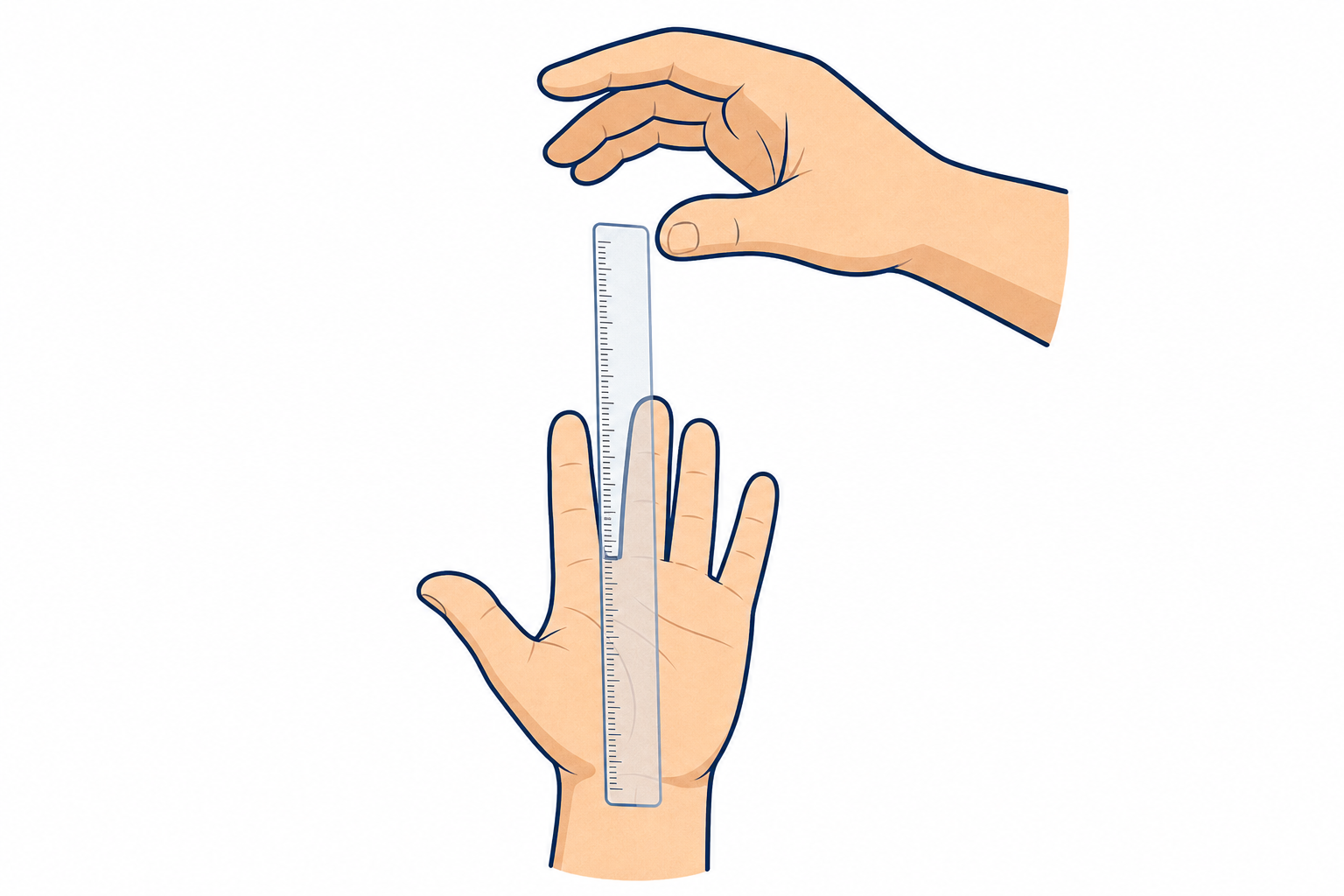
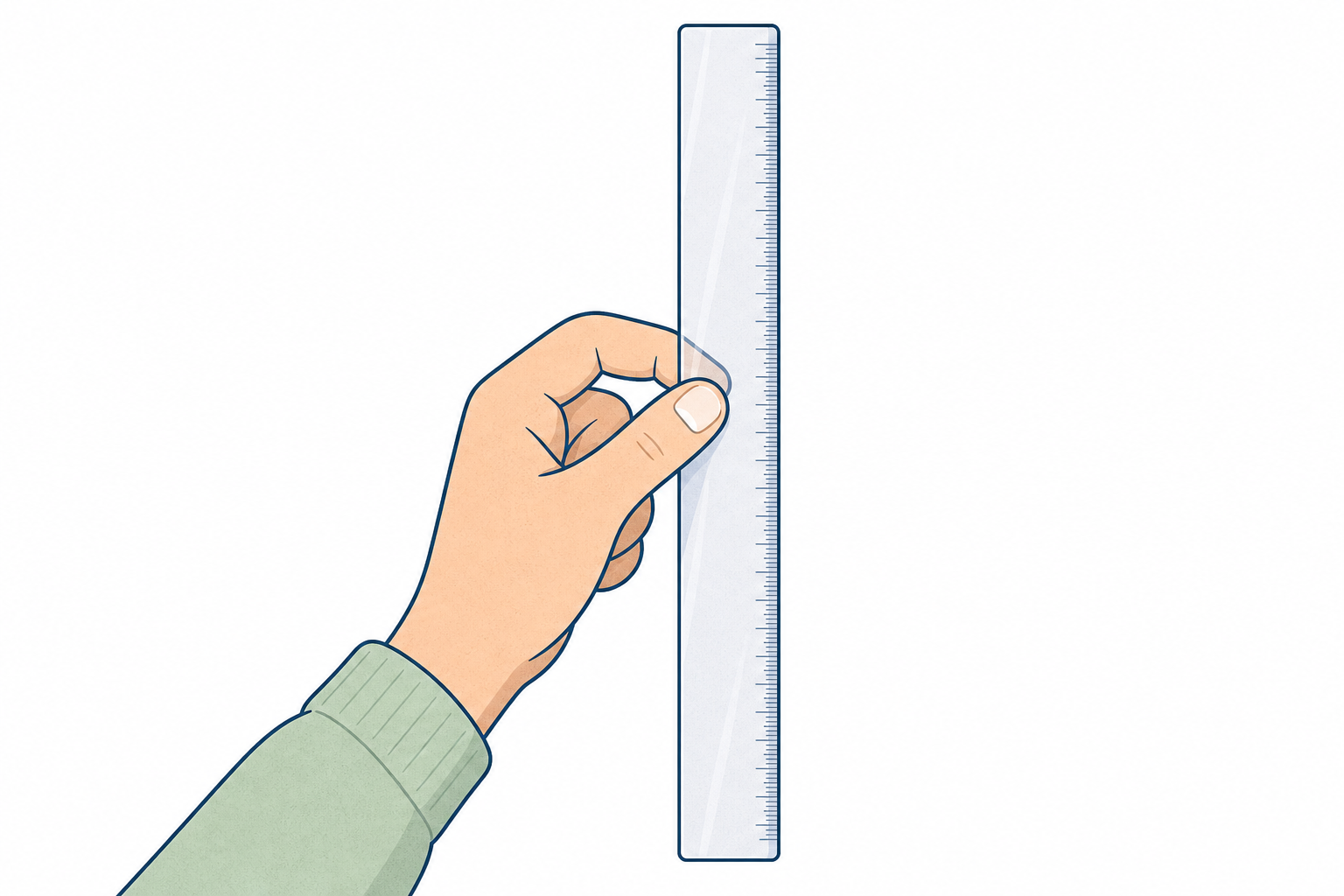 Your group splits into measuring pairs. Each pair needs one ruler and uses the comparison and prediction your group just wrote.
- One person drops the ruler; the catcher pinches it as soon as it moves.
- Read the centimetre mark at the top of the catcher's finger and write it on your results table.
- Do three trials for each set-up. Circle the middle value on the results table (for example, if you catch at 18 cm, 22 cm and 16 cm, the middle is 18 cm).
Both middle values circled on your results table. That is the main job.
Look back at your trials. When was the catch hardest? Did the catch feel early or late? Did fingers start too wide between trials?
If you tested distraction: did the question make anyone miss or catch higher on the ruler?
If you tested hands: did the other hand feel slower or miss more often?
Share one careful observation with your group: something you saw or felt about your hand and eyes as you tried to catch, not just the number.
Unlock the full learning experience
You're previewing this lesson. Get full access to this lesson and hundreds more — each one ready to teach, with interactive activities, printable resources and pupil progress tracking built in.
This lesson is copyright of DigitalSkills.org 2017 - 2025. Unauthorised use, copying or distribution is not allowed.