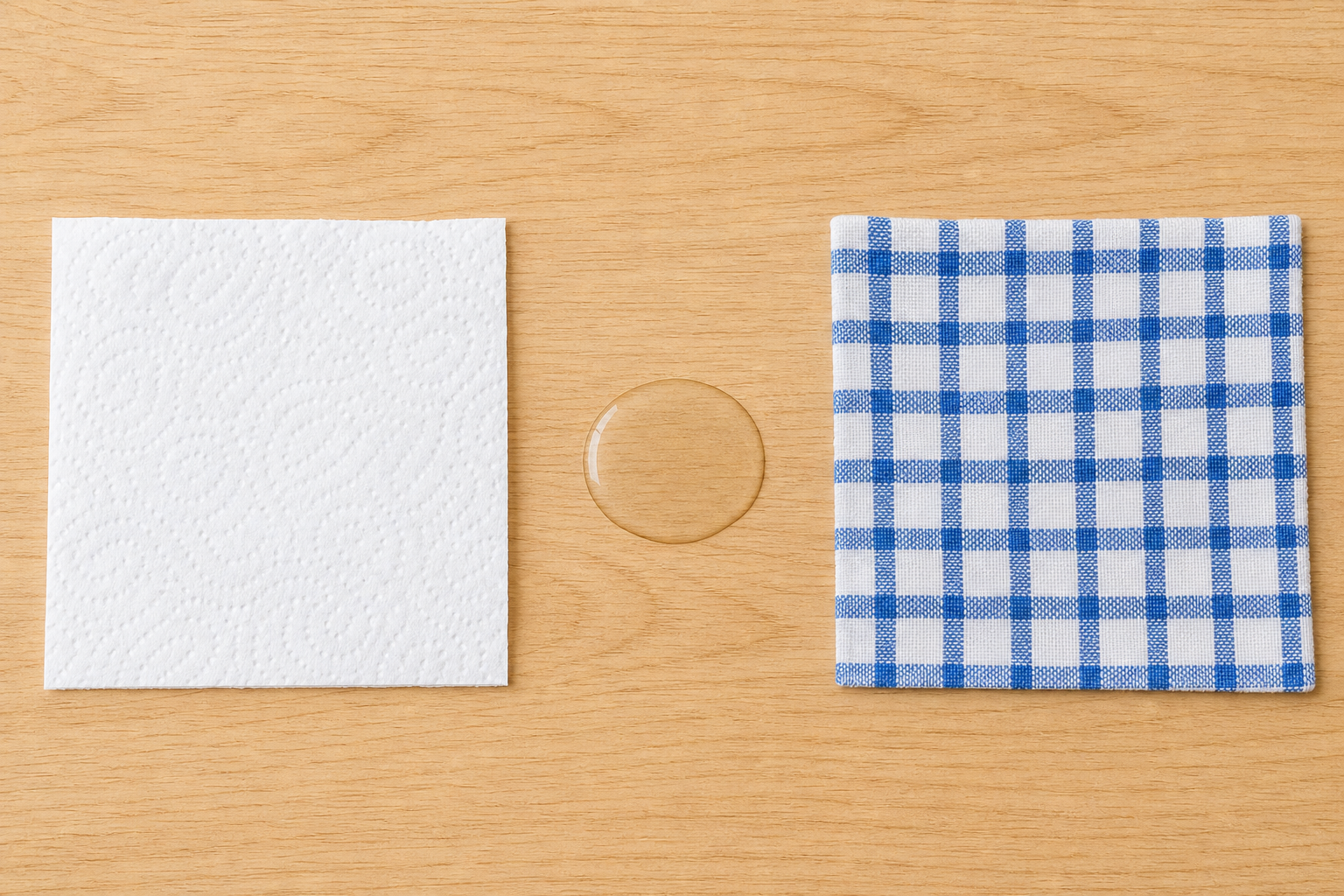
 Watch carefully: I am going to spill a little water on the bench. Which cloth do you think will soak up more, the paper towel or the tea towel?
How could we find that out fairly, so the comparison is honest?
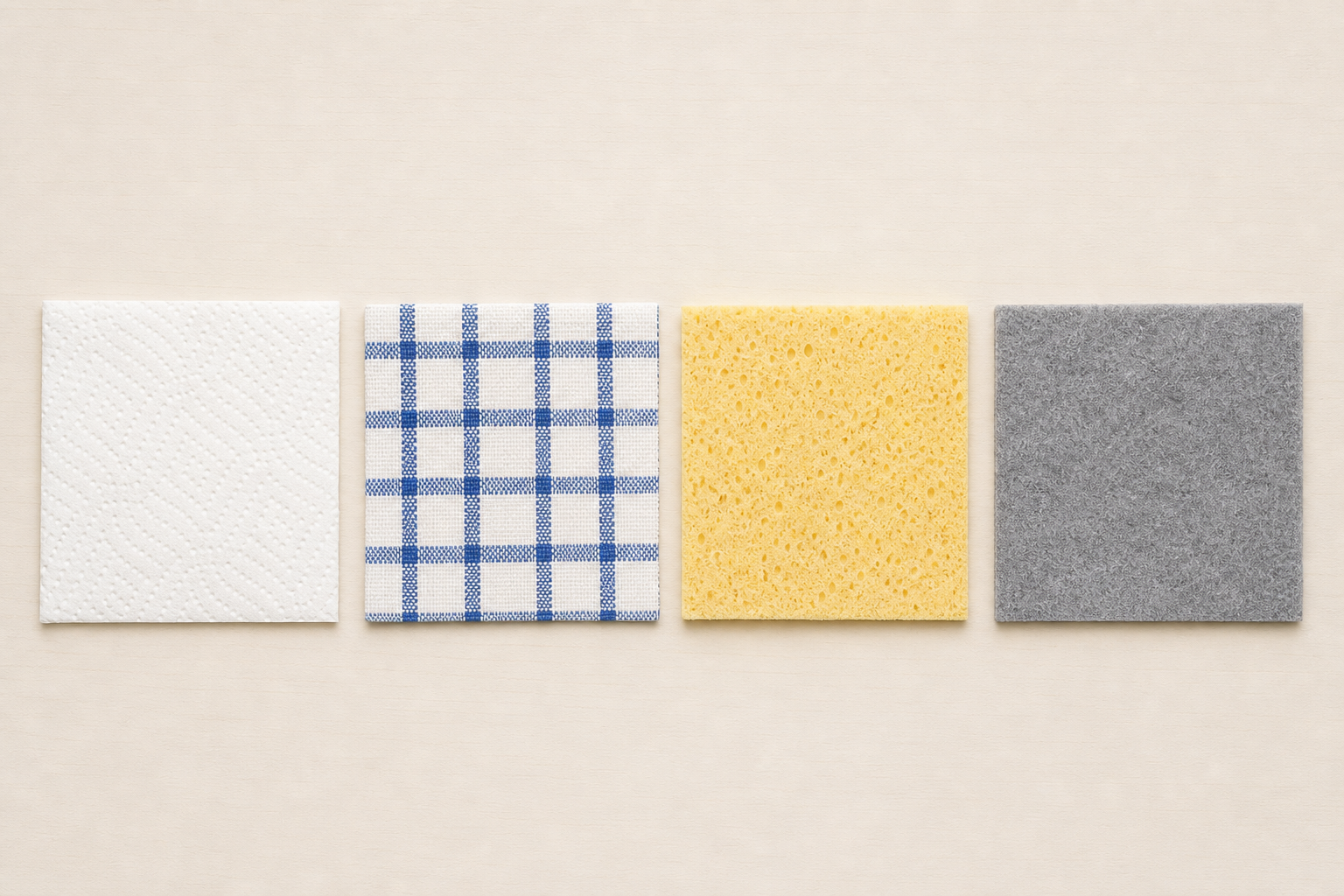 Our question: Which material soaks up the most water?
Look at the materials we will test. Whisper to your partner which one you think will hold the most water, and say why. Predictions are the start of the science, not a guess to get right. Then write your prediction and your reason on your Investigation Journal page.
Five cards are on the board: the material, how much water it holds, amount of water offered, size of each piece, time it sits.
Nobody calls out yet. On your Investigation Journal page, and on your own, write which single card you think is Change and which is Measure. Two minutes, no talking.
Then we place them together and you check your own sheet. Leave what you wrote exactly as it is, even if it turns out differently.
Which material soaks up the most water?
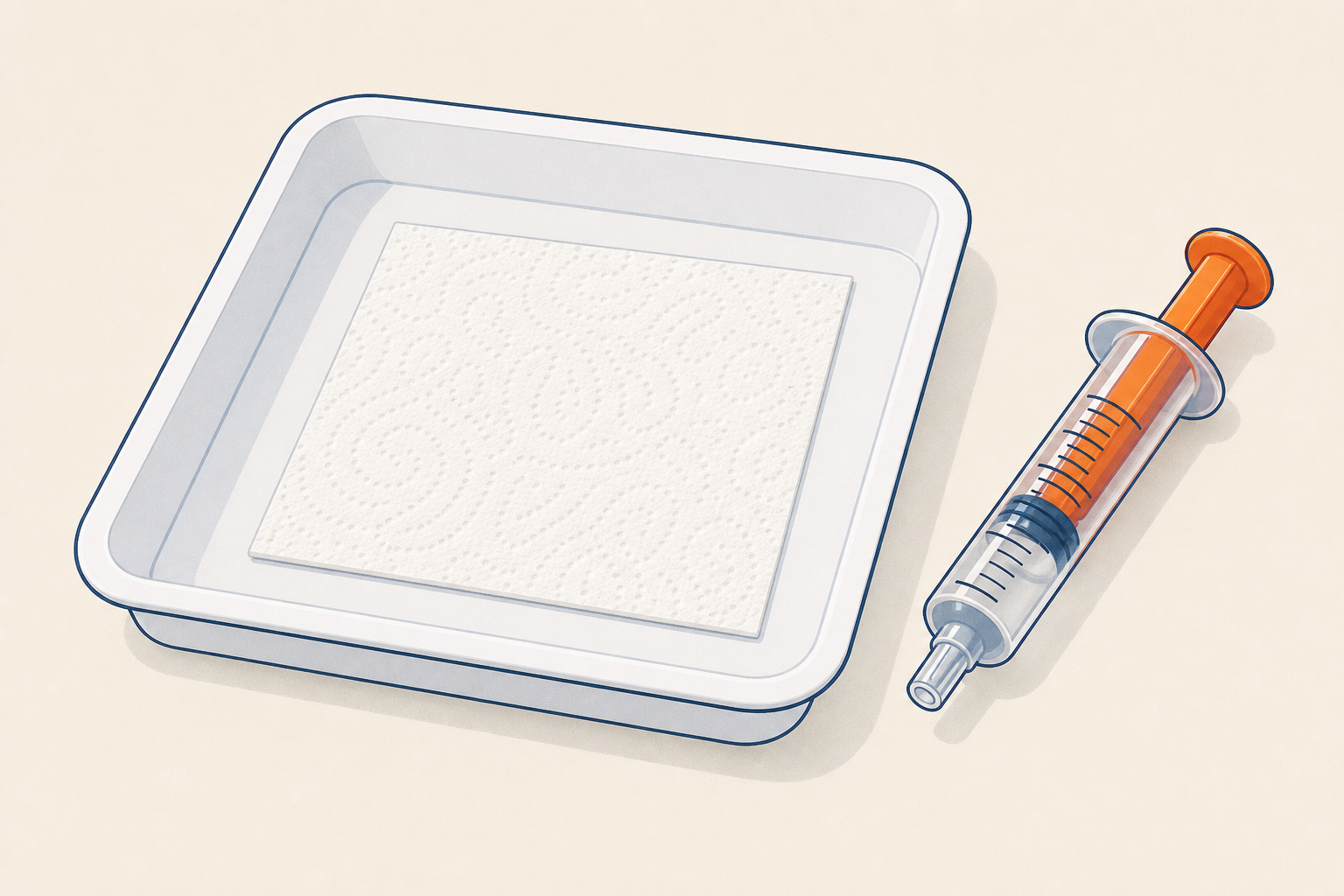
 Watch how we measure ml held. Do not write on your journal yet: that starts when your group tests.
Our class method (everyone will use this):
- Each piece is the same size (about 10 cm square).
- Offer exactly 10 ml of water from the syringe.
- Wait 30 seconds (same time for everyone).
- Gently tip the tray so free water gathers in one corner, draw it back into the same marked syringe, and read ml free.
- ml held = 10 − ml free.
We will do each material twice with a fresh dry piece each time, then find the average.
In your group, test the materials one at a time, and write each reading on your Investigation Journal page as soon as you measure it.
Method every time: a same-size dry piece, 10 ml of water, wait 30 seconds, then tip the tray and draw the free water into the syringe. ml held = 10 − ml free.
Do each material twice, with a fresh dry piece each time, then work out the average.
Short of time? Finish two materials fully rather than rushing all of them.
Unlock the full learning experience
You're previewing this lesson. Get full access to this lesson and hundreds more — each one ready to teach, with interactive activities, printable resources and pupil progress tracking built in.
This lesson is copyright of DigitalSkills.org 2017 - 2025. Unauthorised use, copying or distribution is not allowed.