A good engineer does not stop at the first build. They test, learn, and try again.
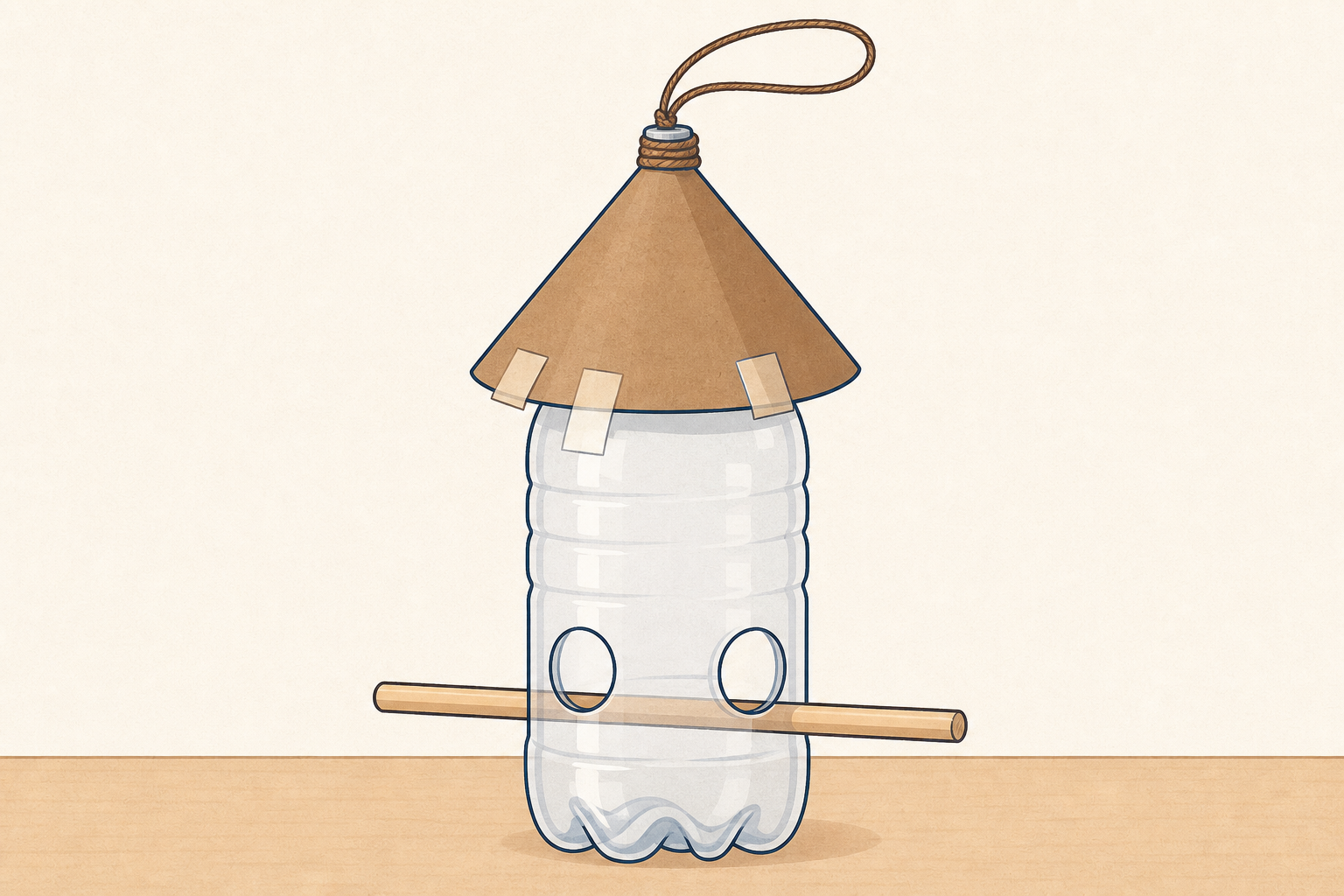 Look at the bird feeder your group built earlier in this project. Which of our three jobs do you think it already does well: holding seed, keeping seed dry, or giving a stable perch? Hands up for your strongest guess.
Every feeder gets the same checks: one level spoon of seed, a ten-second shower from the same height, and the same two fingers held on the perch for a slow count of three. That shared method is a fair test: same way every time so we can trust the comparison.
The checklist we score against is our success criteria: holds seed, stays dry, and stable perch. One careful change after the scores, then test again: that is iteration.
Score each job 0, 1 or 2:
- Holds seed: 0 = most seed falls out; 1 = holds some but leaks when moved gently; 2 = holds seed securely when lifted a little.
- Stays dry: 0 = seed soaked; 1 = partly wet; 2 = seed stays dry.
- Stable perch: 0 = tips or collapses under two fingers held for a slow count of three; 1 = wobbles but stays up; 2 = stays steady.
How does using the same spoon and the same shower keep the dry test fair?
Every feeder is about to get exactly the same ten-second shower, from the same height, so that any difference in the results comes from the feeders and not from the pouring. Before we test anything, we practise that timing together.
This practice run happens with no feeder and no water at all. Get the timing into your head now, counting along in your head if it helps, so that later at the pour stations your group starts and stops on the same signal as every other group.
Keep the shower fair
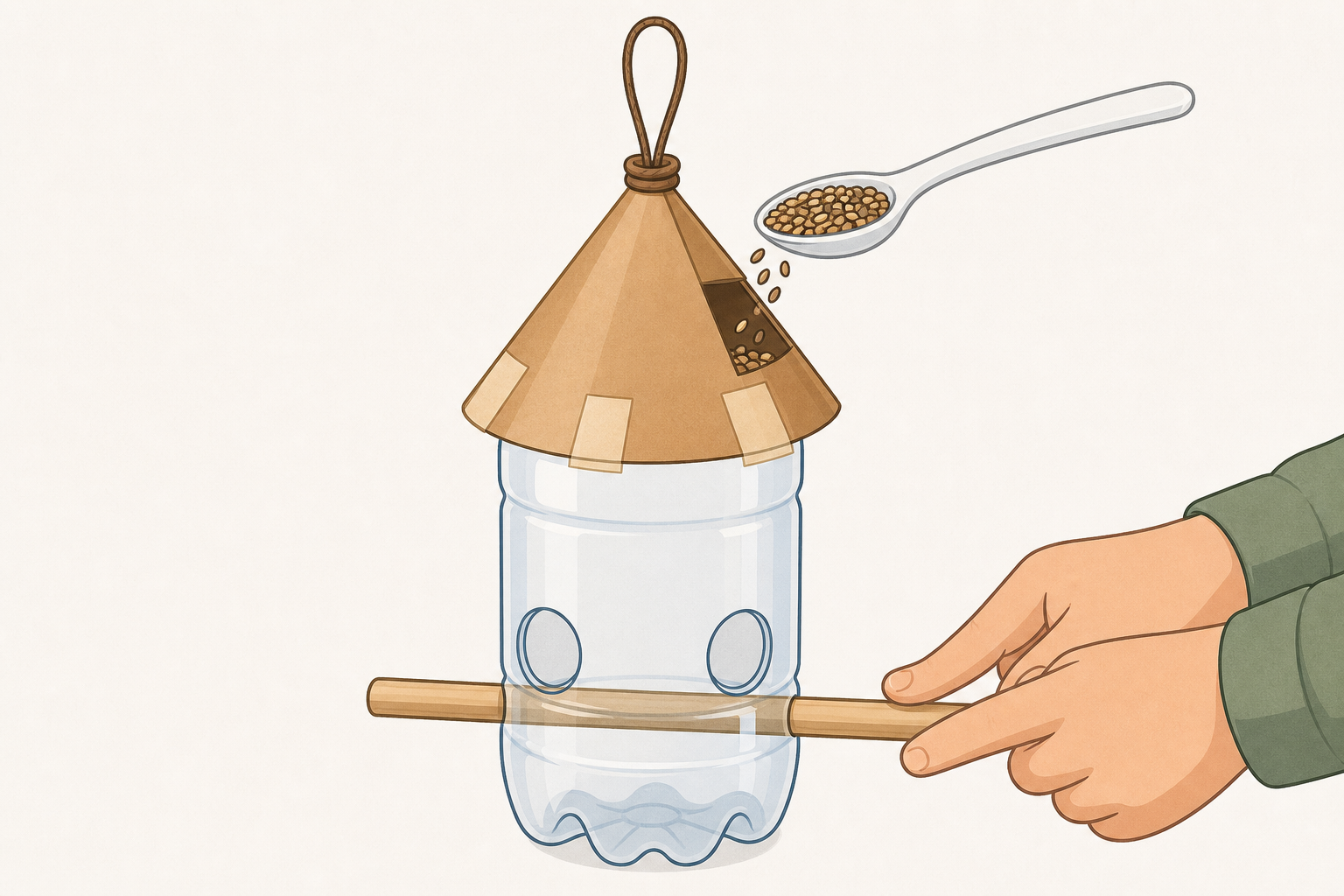
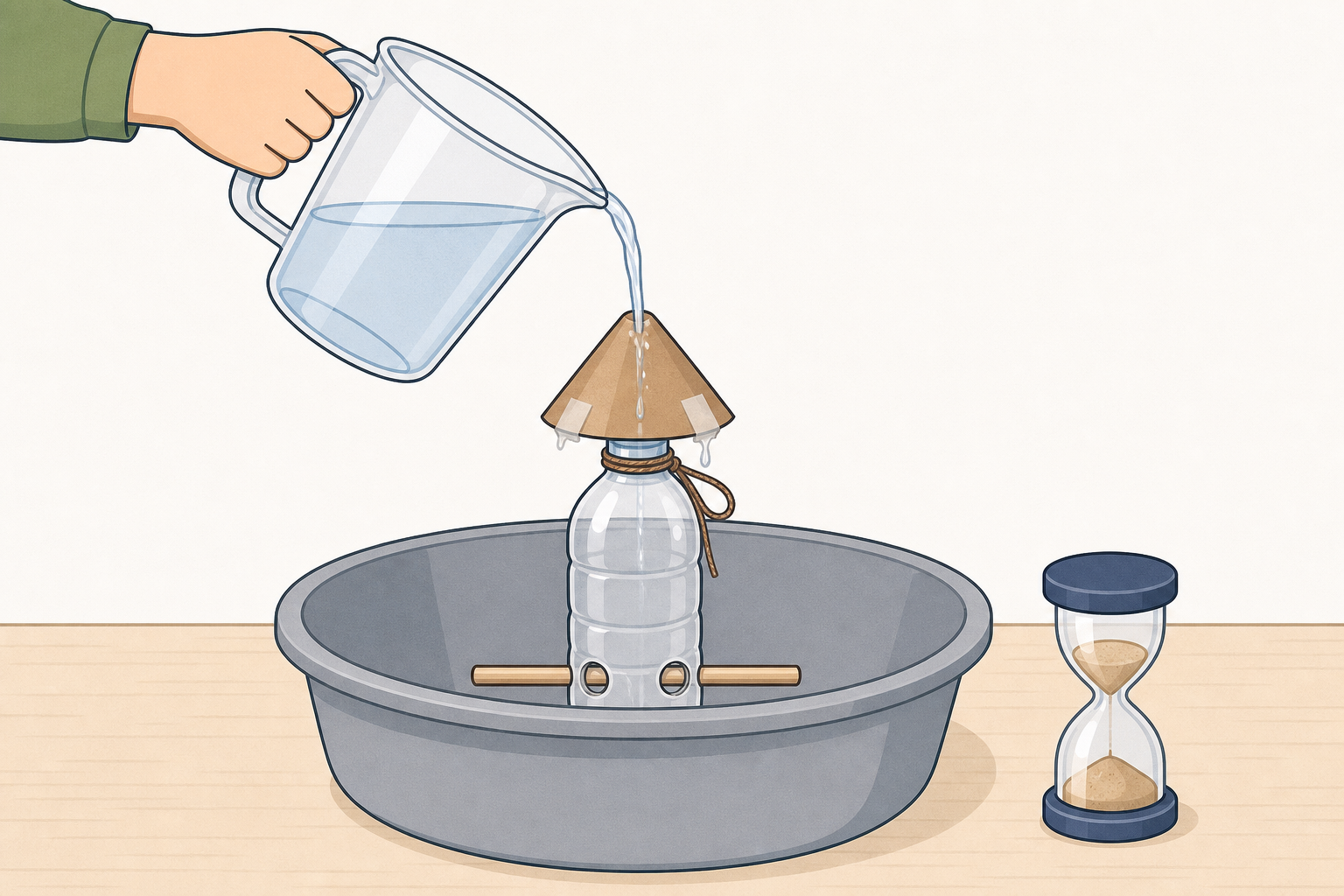 Test your feeder against all three success criteria. Finish the two table checks first, then join a pour-station queue for the shower. Score each check 0, 1 or 2 using the key on the board:
- Holds seed: 0 = most seed falls out; 1 = holds some but leaks when moved gently; 2 = holds seed securely when lifted a little.
- Stable perch: 0 = tips or collapses; 1 = wobbles but stays up; 2 = stays steady. Use a firm two-finger hold for a slow count of three: stronger than a real bird, so if the perch stays steady it is doing well.
- Stays dry: 0 = seed soaked; 1 = partly wet; 2 = seed stays dry.
1. Holds seed: put one level spoon of seed in the feeder, lift it a little, and watch.
2. Stable perch: hold two fingers down on the perch for a slow count of three.
3. Stays dry: set the feeder on the tray at a pour station and give it the ten-second shower from the agreed height.
Write the scores and what you saw on your Investigation Journal page before you change anything.
Each group will call out its total first-test score out of 6. We will type the totals into the table on the board, then show the chart.
Which bars are tallest and shortest? What does a short bar tell an engineer to work on first?
Now a quick show of hands: which job scored lowest for your group: holds seed, stays dry, or stable perch? Which feeder job pulled most scores down across the class?
First-test feeder scores
Unlock the full learning experience
You're previewing this lesson. Get full access to this lesson and hundreds more — each one ready to teach, with interactive activities, printable resources and pupil progress tracking built in.
This lesson is copyright of DigitalSkills.org 2017 - 2025. Unauthorised use, copying or distribution is not allowed.