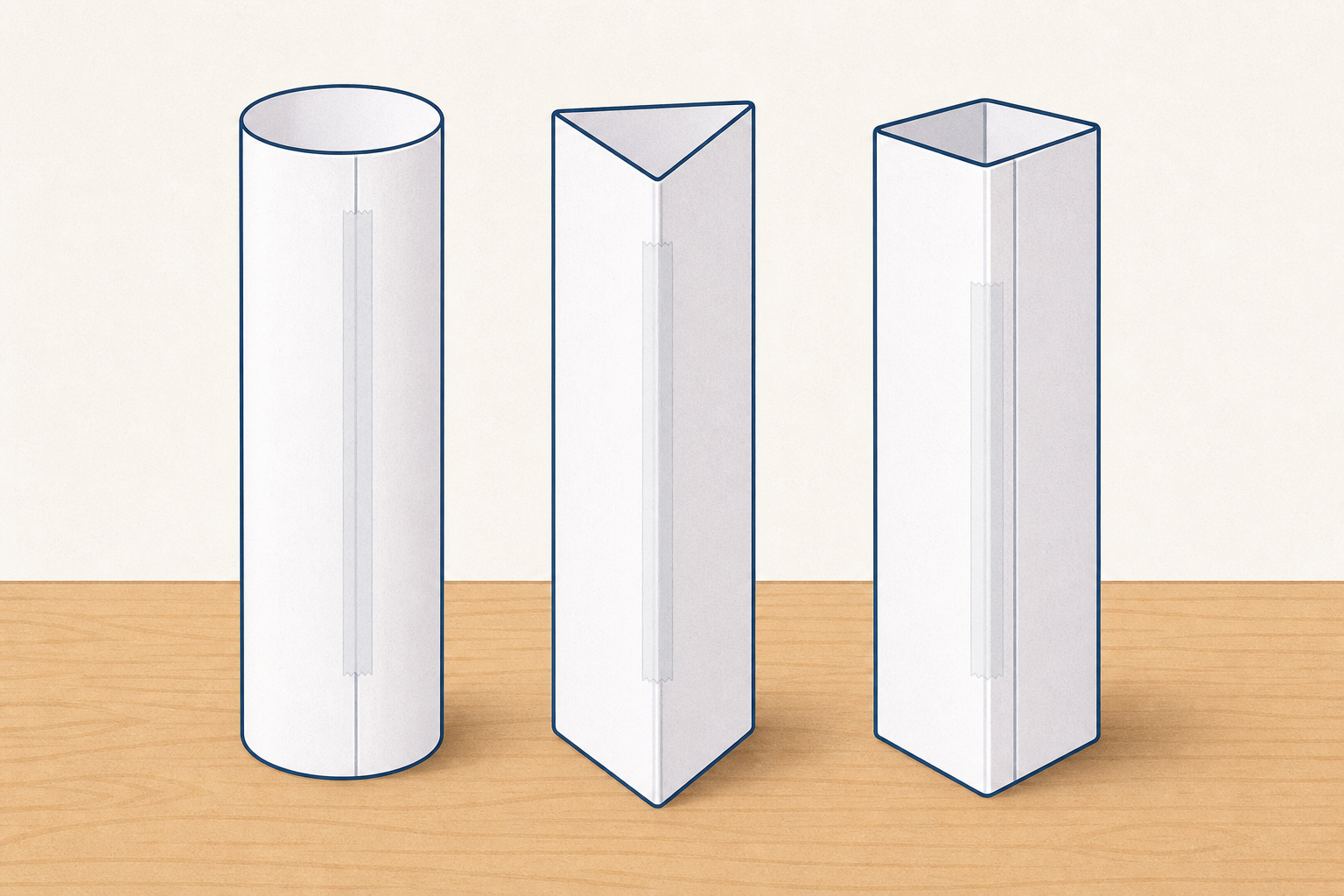
 Look at these three paper tubes: one round, one triangle and one square. If we stack books on top, which shape do you think will hold the most before it folds?
Hands up for your guess, and be ready to say why.
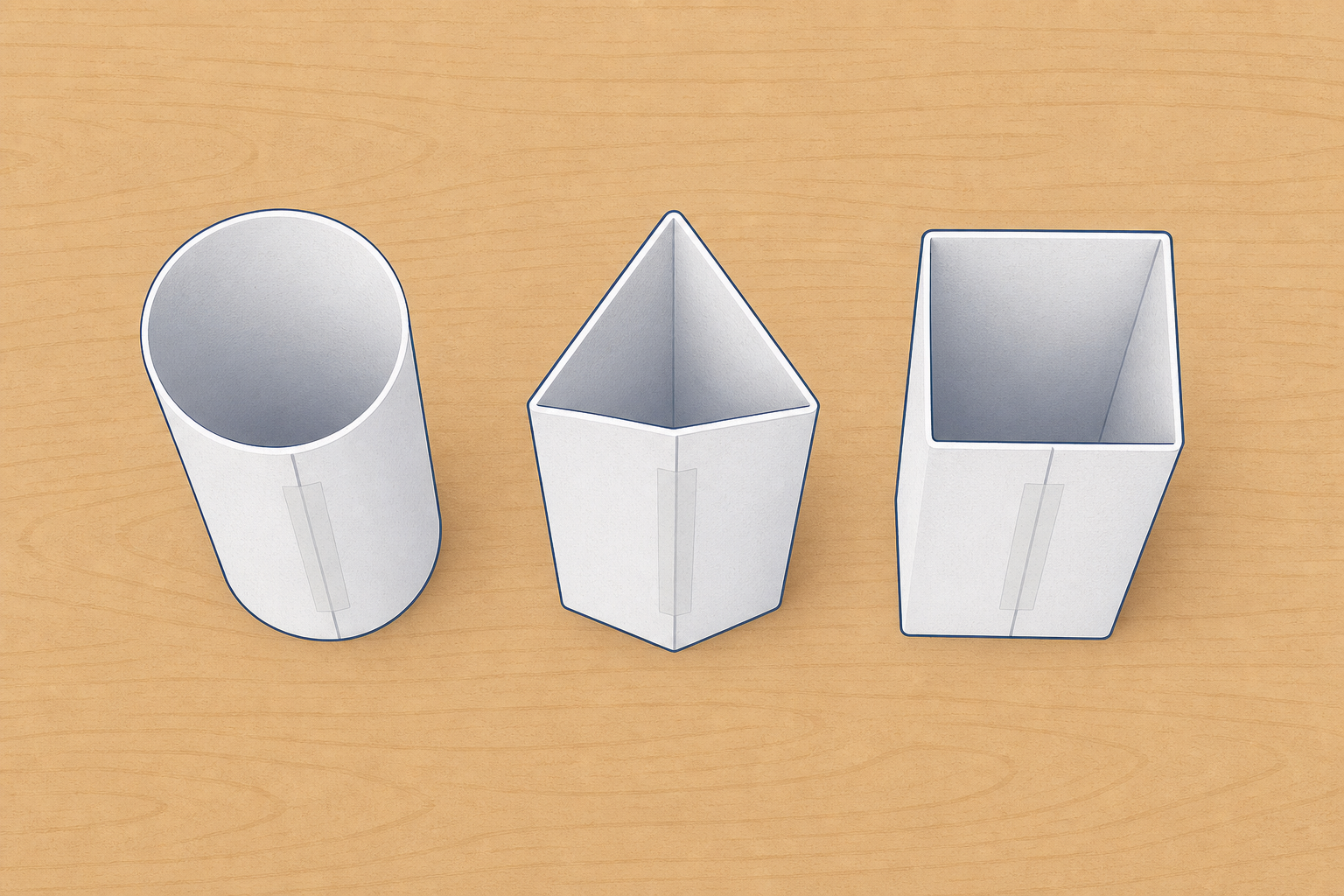 Our question: which paper column shape holds the most books before it buckles?
A fair test means we change only one thing, measure one thing, and keep the rest the same. Today we change only the end-shape of the column: round, triangle or square. The end-shape is the shape you see when you look straight down the open top of a column, and it is what we compare.
When a column folds under the books, we call that a buckle. We will watch for it when we test.
Let's plan our fair test together on the board. Five cards are waiting there, one for each part of the test.
Call out where each card belongs: Change, Measure, or Keep the same.
Which column shape holds the most?
Your group will build three paper columns from the same size sheets, all the same height: a round tube, a triangle tube and a square tube.
Round: roll the sheet and tape the long join. Triangle: fold into three equal panels, then tape the join. Square: fold into four equal panels, then tape the join.
Use only a thin strip of tape along each join. Stand each column on its end and check the heights match before you test.
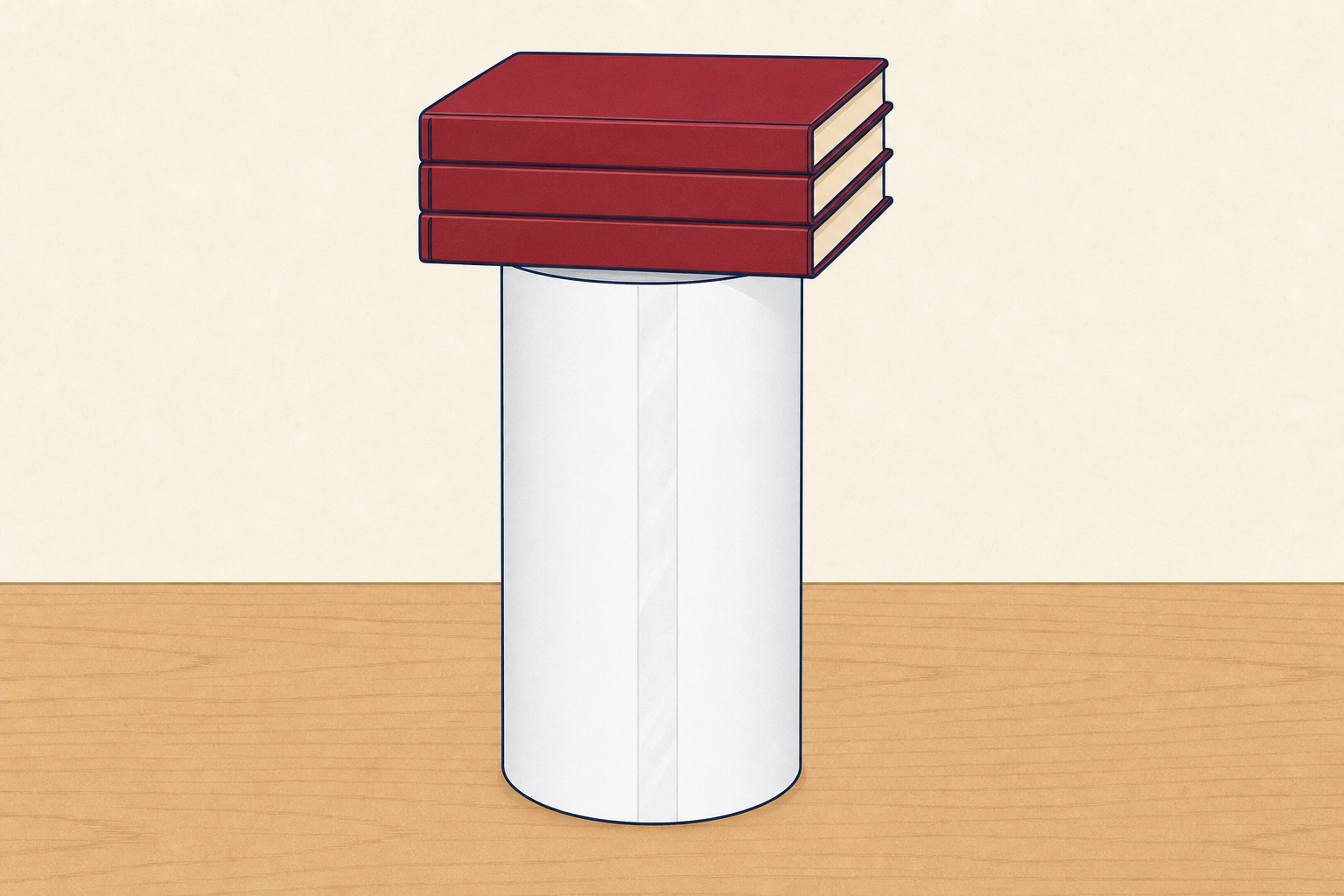
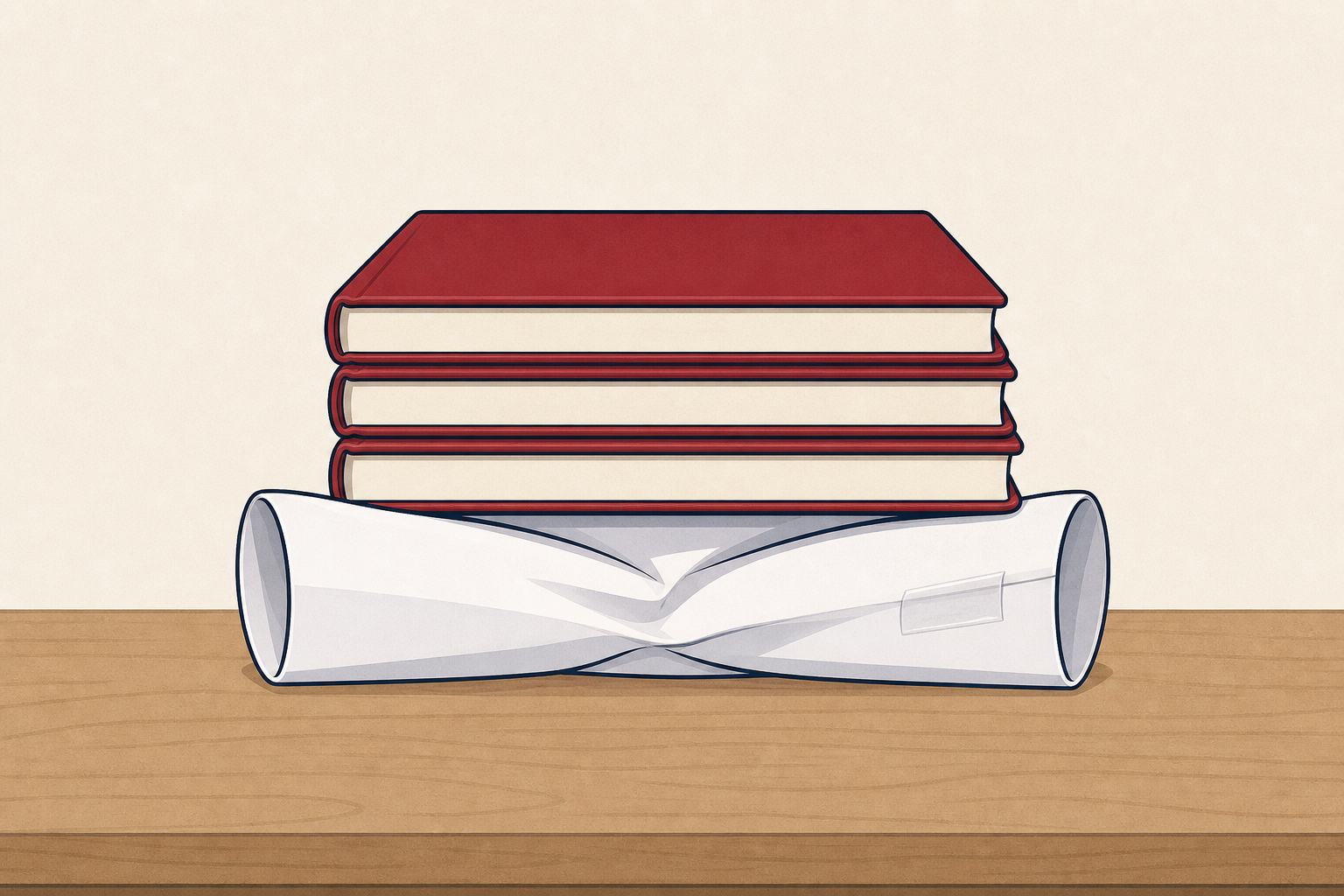 Test one shape at a time. Stack the same books, one by one and centred on top (in the middle of the top), until the column buckles.
Class rule: write the number of books on top when it first folds. Write that number on your Investigation Journal page straight away, before you test the next shape.
Keep the paper, the height and the stacking the same. Only the shape changes.
Unlock the full learning experience
You're previewing this lesson. Get full access to this lesson and hundreds more — each one ready to teach, with interactive activities, printable resources and pupil progress tracking built in.
This lesson is copyright of DigitalSkills.org 2017 - 2025. Unauthorised use, copying or distribution is not allowed.