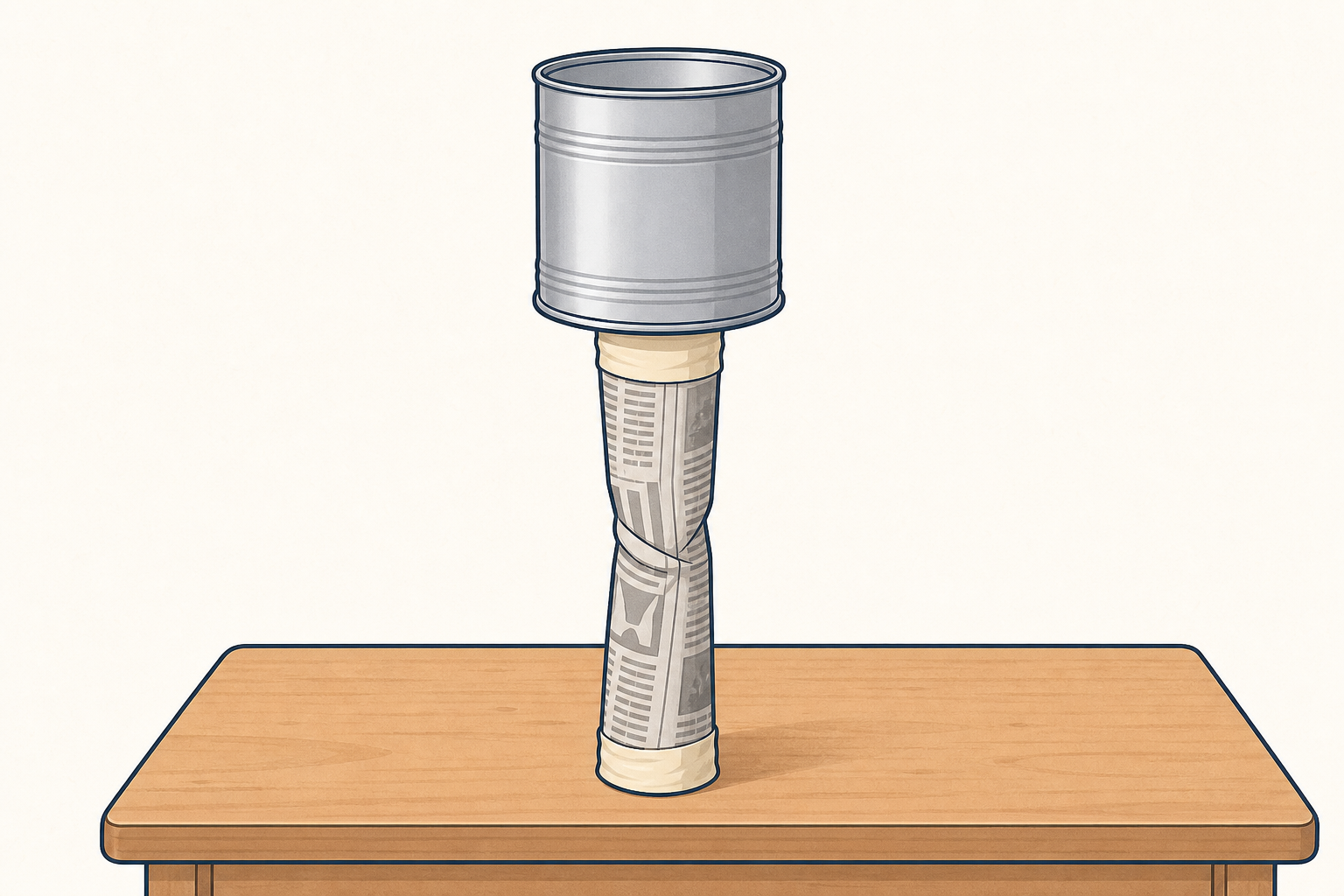
 Every tower gives way in the end. But where does it give way, and why there?
Watch this newspaper tube take a weight. When it lets go, keep your eyes on the spot that moved first.
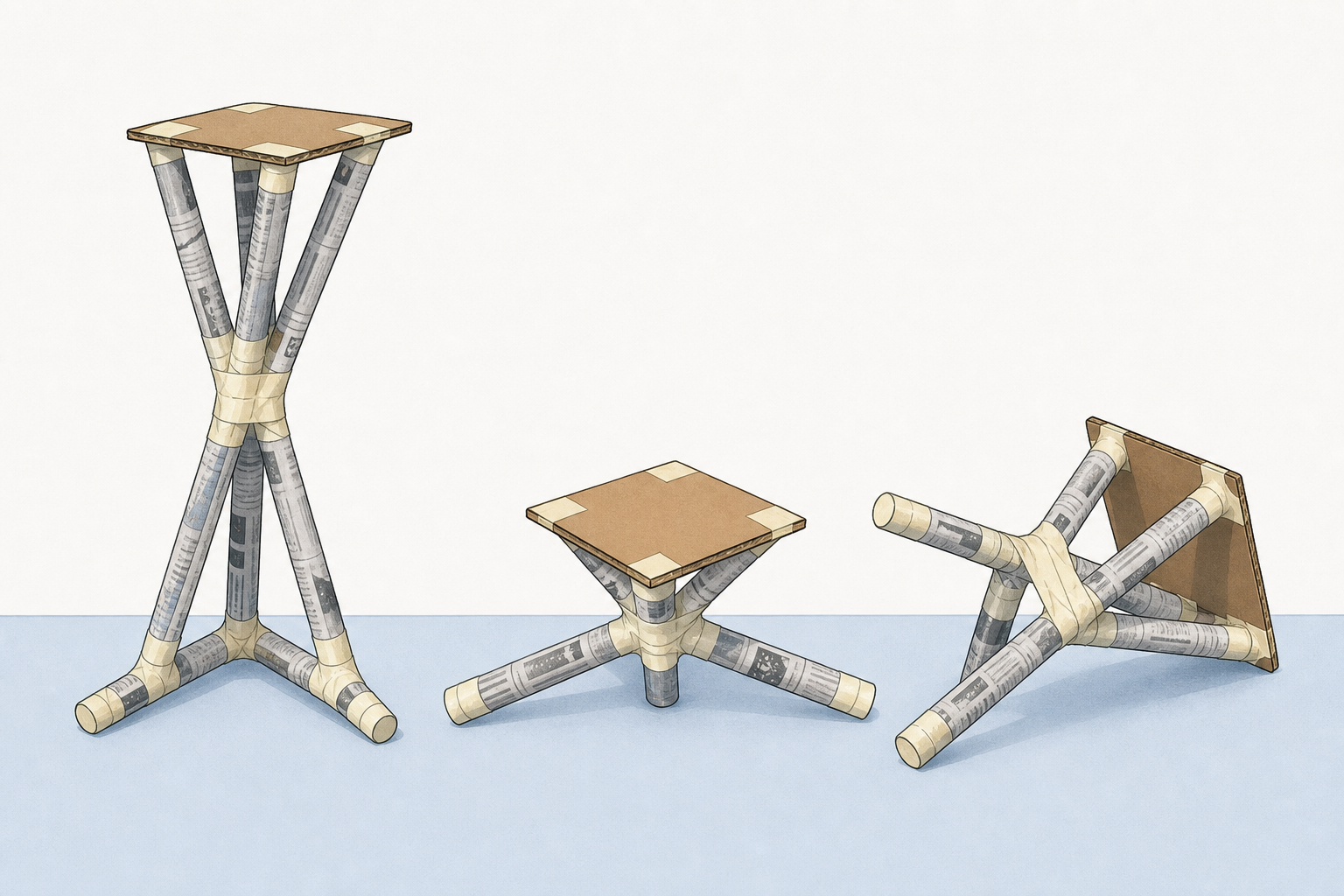
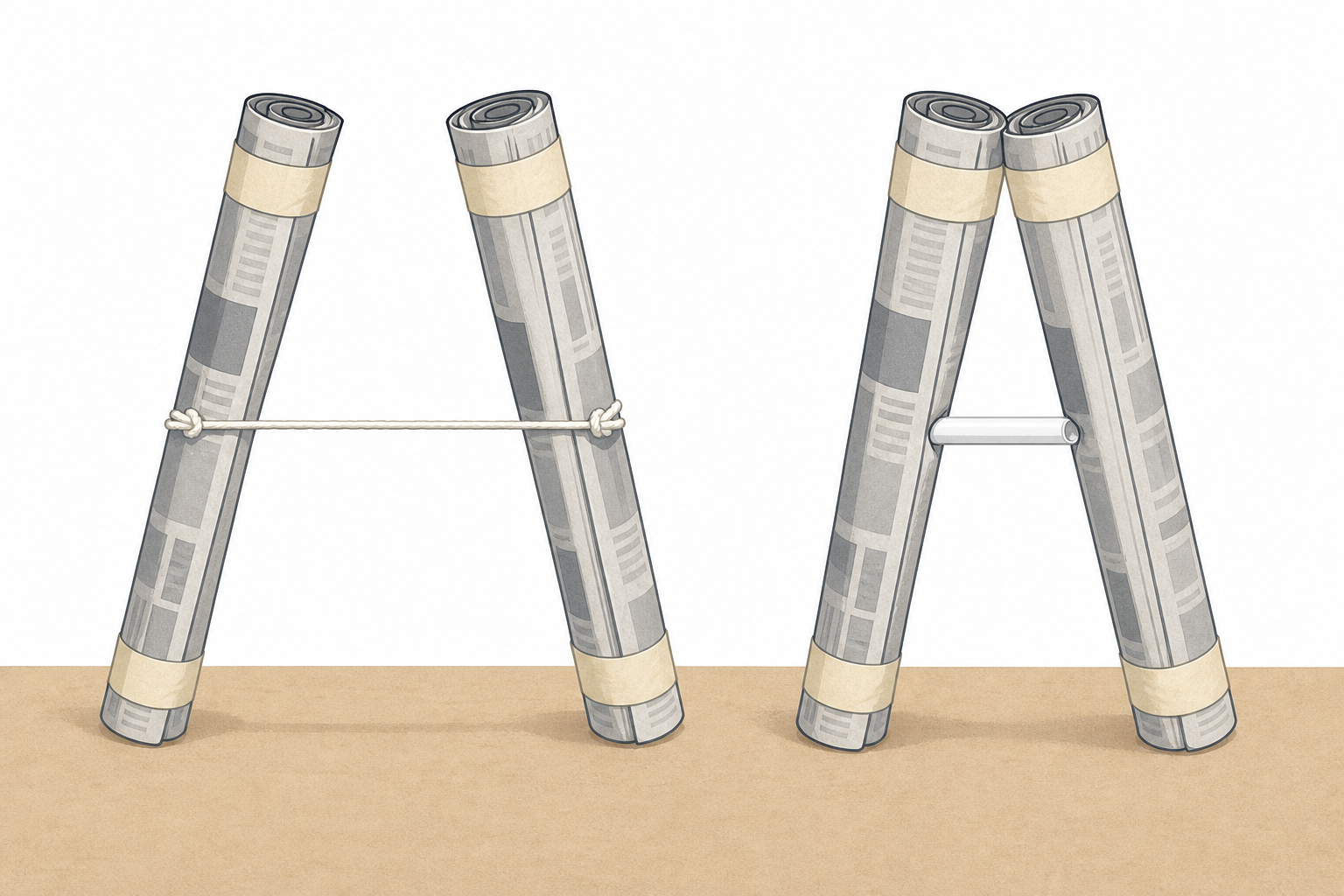 Today's words: buckle means a tall part folds in the middle. Splay means the feet slide apart. Twist means the tower turns and topples sideways.
A tie is a part that is stretched, like a string. A strut is a part that is squashed, like a stick pushed on end.
Which of the three do you think YOUR tower will do?
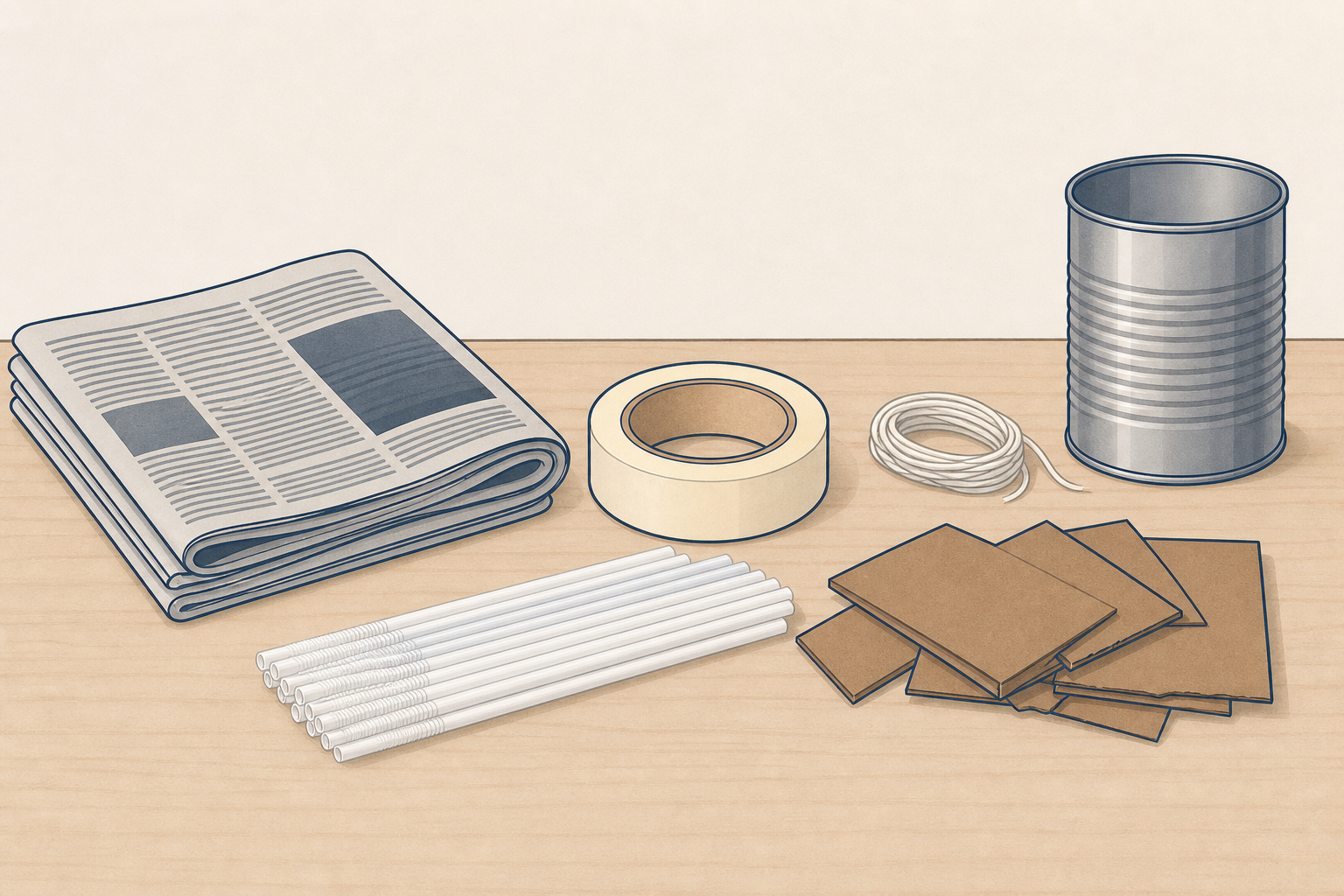 In your group, sketch the tower you are about to build, and label the parts. The brief is the same for every group: a free-standing tower, taller than it is wide, that stands on its own without leaning on anything and holds the test weight on top: a bean tin or 200 g masses. You have newspaper, masking tape, drinking straws and card offcuts on your table to build it from. The string stays to one side for now.
Then mark with an X the one place you think it will fail, and write which of the three it will be: buckle, splay or twist.
Build your tower from the newspaper, tape, straws and card on your table.
Leave the string aside for now. The tie or strut is a fix you add later, not part of your first build.
Add the test weight to the top, one piece at a time, and count as you go.
When it gives way, stop and record two things: how many weights it held, and which failure it was: buckle, splay or twist. Was your prediction right?
Unlock the full learning experience
You're previewing this lesson. Get full access to this lesson and hundreds more — each one ready to teach, with interactive activities, printable resources and pupil progress tracking built in.
This lesson is copyright of DigitalSkills.org 2017 - 2025. Unauthorised use, copying or distribution is not allowed.