1 - Start ~4 mins
 You have already published a piece of your own in this strand. Today you step back and audit what responsible publishing looks like in practice. You will judge four invented sample pieces - made up for this lesson, not anyone's real work - against four shared checks, then write the standards you will hold yourself to whenever you publish from now on.
2 - Examine and Discuss ~5 mins
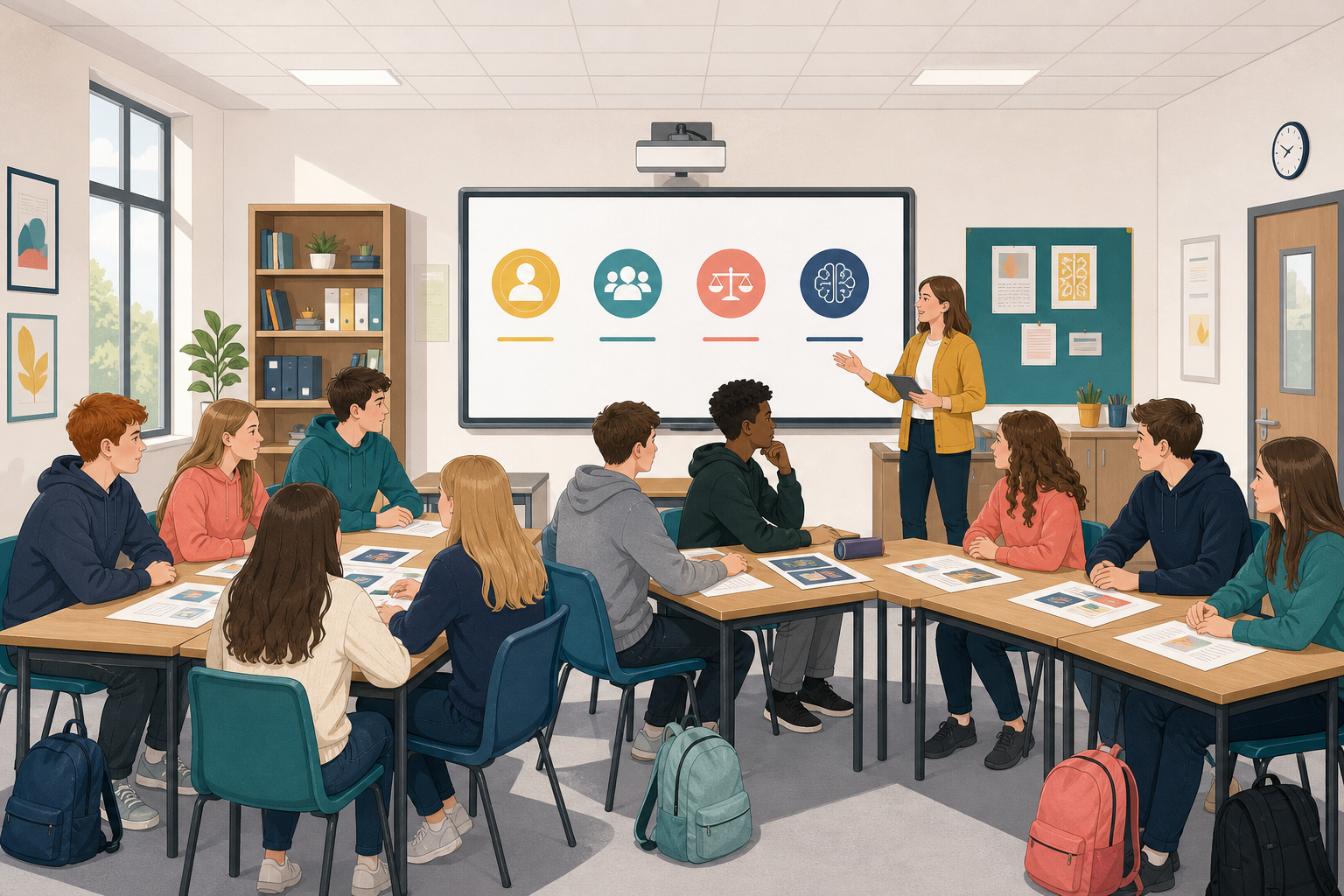 Responsible publishing is a set of habits you apply before something goes public. Put these four checks on the board and keep them up for the audit:
- Credits: name who made each borrowed image, clip, quote or fact, where it came from, and what the licence (the rule that says whether you are allowed to reuse it) allows. Example: creator, title, date, free-to-reuse licence.
- Safe and respectful: argue a strong view without attacking people, shaming anyone, or putting yourself or others at risk. Example: firm opinion, no personal digs.
- Consent and rights: no one else’s photo, message, name or story appears without a clear yes. Example: written permission noted before a classmate is named.
- Honest AI: if a tool drafted, rewrote or generated part of the piece, name that plainly. Example: one line at the end saying what the tool did and what you checked yourself.
These sit beside the charter you agreed as a class. They keep the good of publishing (voice, creativity, connection) while cutting real risks (harm, privacy breaches, stolen work, misleading claims).
If someone opened your next published piece cold, would it pass all four?
3 - Hands-on: Responsible Publisher Audit ~4 mins
Work through the interactive activity as a class. For each invented sample piece, weigh the four checks, then commit to a verdict: Pass or Needs fixing.
Be ready to say which check decided your call. After each verdict, the reasoning is revealed so you can compare it with yours. The goal is sharp judgement, not a perfect score.
When you finish the set, name the single change that would fix the biggest gap you saw across the pieces.
Responsible publisher audit
4 - Class Play: Everyone Answers ~8 mins
Now the whole class plays the rest, on your own devices.
Join with the code on the board. Everyone answers every round, not one person per table, and you can change your answer until the time is up. You also say how sure you are: just checking, fairly sure, or certain. The class's split appears on the board once the round closes, then the reasoning.
- Read the item, make your call, and lock it in.
- Your table scores when you get it right together, so talk it through quietly first if you want to.
- When the reasoning comes up, check it against the one you gave.
Getting it right matters less than being able to say why. A right answer earns what you staked and a wrong one loses it, so being unsure and saying so costs you very little - being certain and wrong is what costs. Every round has a defensible answer, and the reasoning behind it is what you are here for.
Class Play
5 - Your Turn: Publishing-standards Card ~13 mins
Build your own one-page publishing-standards card. This is yours to keep and reuse, including for bigger project work later.
Before you finish, check:
- You list at least four standards you will hold yourself to whenever you publish online (you may start from today’s checks and reword them in your own voice).
- Beside each standard you name one concrete habit that delivers it.
- You add one extra standard that matters to you personally, drawn from the opportunities and risks of sharing work in public. Opportunity example: more people hear your take. Risk example: a post you cannot pull back. Pick one opportunity you want to keep or one risk you want to cut, and write a standard plus habit for it.
- You save the card the class way so it is still there next session.
Level of concreteness to match (one filled example row):
Consent and rights: ask in writing before any face or chat appears.
Other habit shapes that work: “write the credit before I drop the file in”, “add one line naming any AI help”, “read the draft once looking only for named people”.
Unlock the full learning experience
You're previewing this lesson. Get full access to this lesson and hundreds more — each one ready to teach, with interactive activities, printable resources and pupil progress tracking built in.
This lesson is copyright of DigitalSkills.org 2017 - 2025. Unauthorised use, copying or distribution is not allowed.