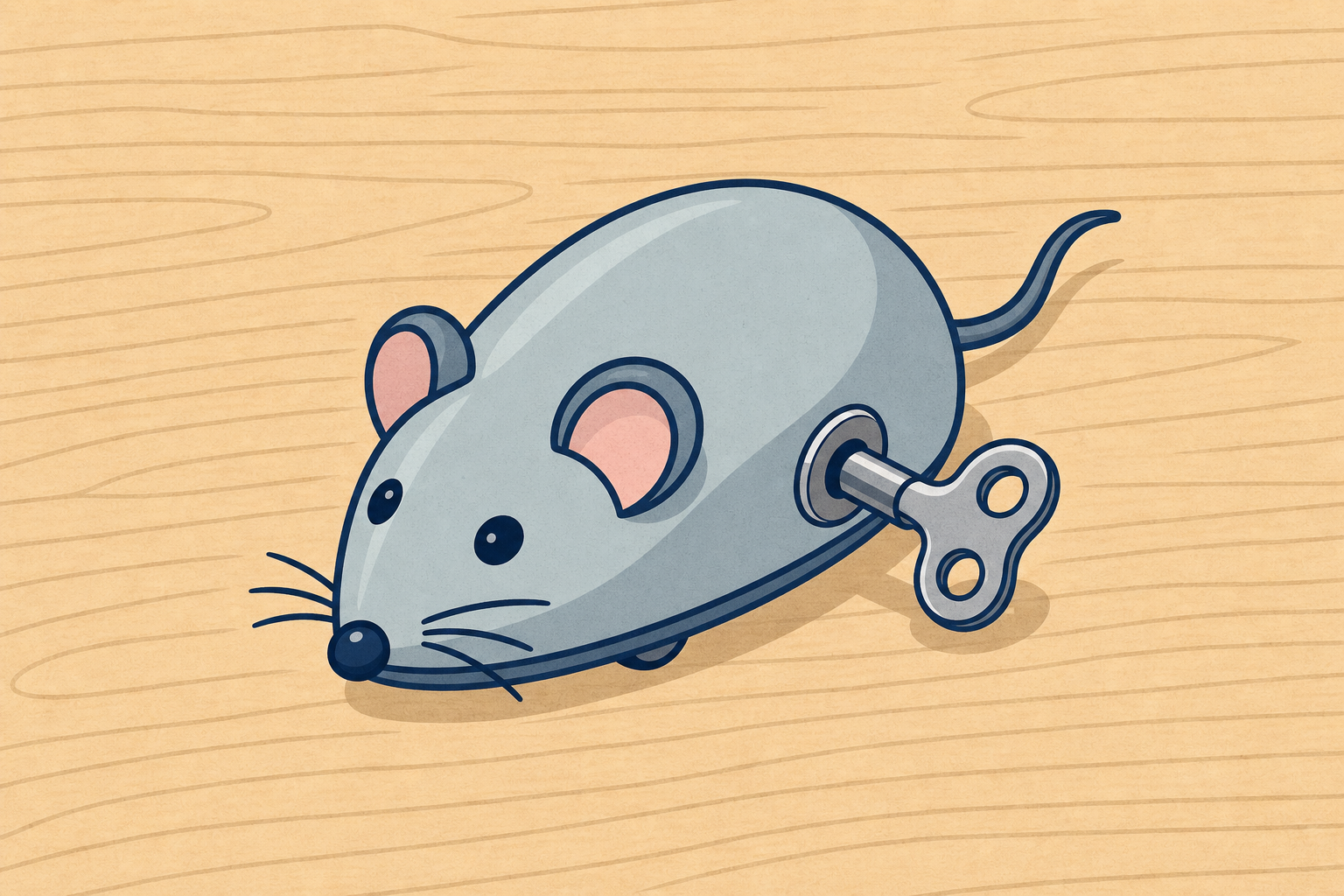
 Watch this wound-up toy. It sits still, then suddenly it moves. Where was the energy hiding while it waited? Today we will build our own stored-energy device, follow the energy as it changes form, and test what happens when we store more of it.
Two words for today. Stored energy: energy held ready to use later. Output: what the device does when that energy is released, such as how far a car travels.
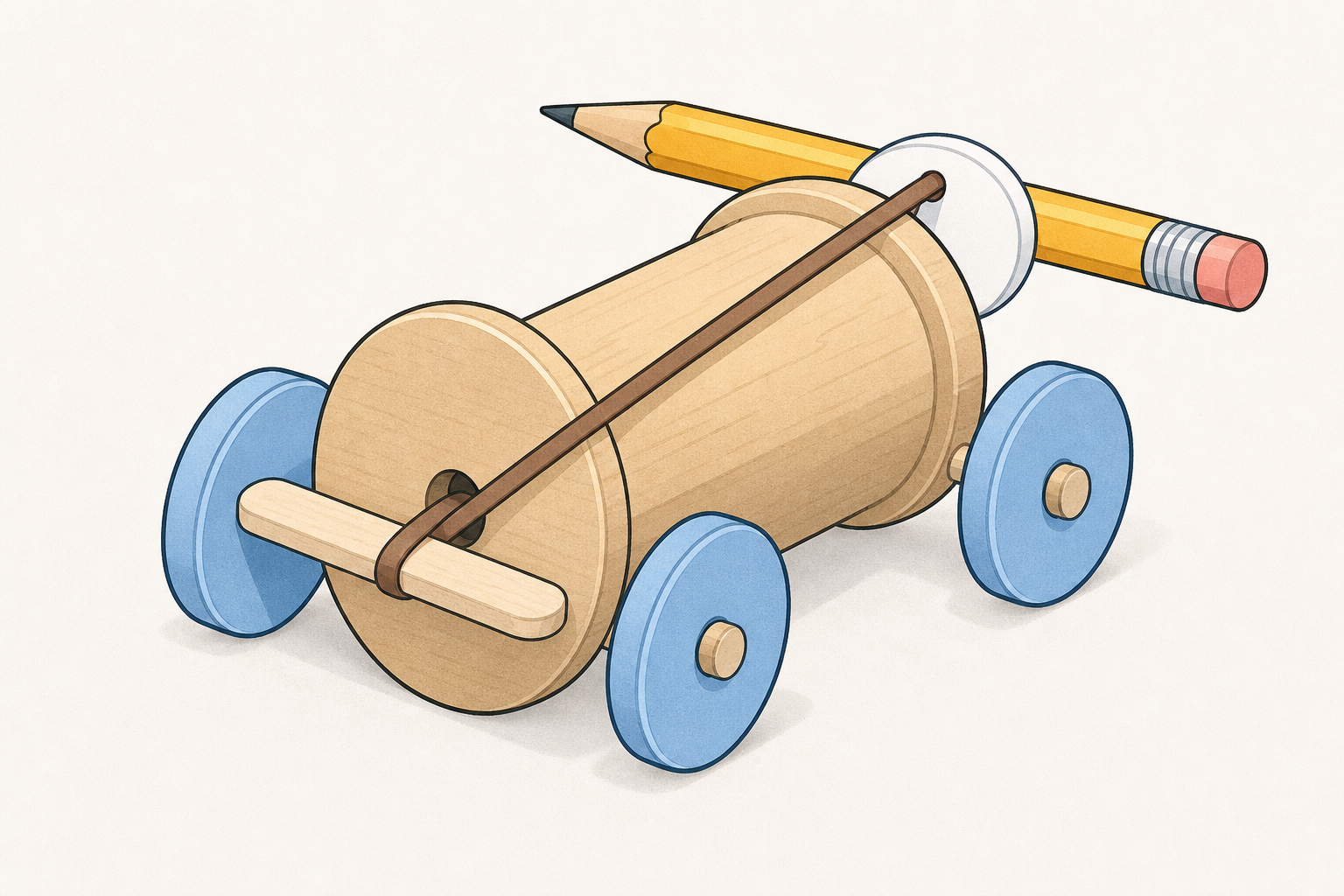 Watch the cotton-reel car on the desk. First we wind the elastic once, release from the start line, and mark where it stops.
Now, before we try again: if we wind the elastic more times from the same start line, will the car travel further, the same distance, or less far? Show me with your hands: further, the same, or less far?
In your group, build one elastic-band car from the tray. The elastic is already threaded through the reel. Follow the steps on the board:
- Push the short stick through the elastic loop at one end of the reel and tape it flat across the reel end, so it holds the band still.
- Thread the loop at the other end through the small card circle, then push the long pencil through that loop.
- Hold the reel still and turn the long pencil about twenty times, so energy is stored in the twisted band.
- Set the car on the floor, let go, and check it moves on its own.
Your car must store energy first, then release it to move. Fix any slips before we investigate.
 We will investigate this question: does more stored energy change how far the car travels?
We share one floor run. Two groups test at a time while the rest of the class watches and helps judge the fair test. Stay seated until your group is called.
When it is your group's turn on the run:
- Predict first: say aloud what you think will happen with more winds, and why, before the first run.
- Run a low-energy trial (a small number of winds). Mark how far it goes with a scrap of paper or by counting floor tiles.
- Run a high-energy trial (more winds) from the same start line. Let go the same way each time. Mark how far it goes.
- Compare the two marks, then clear the run for the next pair of groups.
Before your turn: write your prediction under I predict… because… on your Investigation Journal page.
While you watch: predict with the testing groups (will more winds take it further?), and help check the fair test: same car, same floor, same start line, same way of letting go?
Look and listen carefully as you compare your two trials. What was different about the movement? Was it faster, further, louder, or longer? Tell your group one thing you noticed that you did not predict. This is talk only; you will draw the chain on your journal page next.
Unlock the full learning experience
You're previewing this lesson. Get full access to this lesson and hundreds more — each one ready to teach, with interactive activities, printable resources and pupil progress tracking built in.
This lesson is copyright of DigitalSkills.org 2017 - 2025. Unauthorised use, copying or distribution is not allowed.