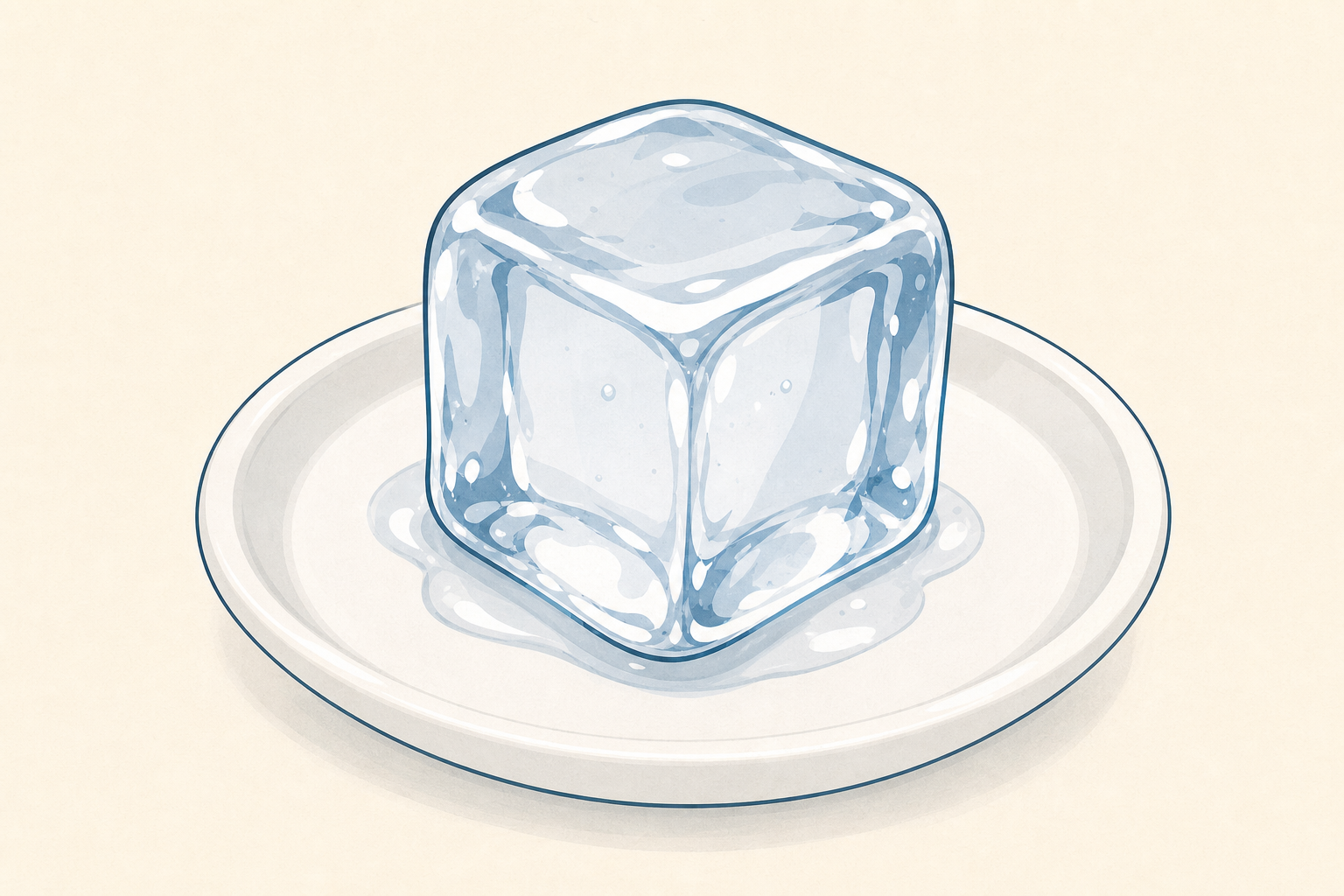
 Look at this ice cube. It is hard and cold and keeps its shape. In a few minutes we will watch what heating and cooling do to water. Will it stay a solid, become a liquid, or turn into something you can barely see?
Today’s words: solid: keeps its own shape. liquid: flows and takes the shape of its container. gas: spreads out to fill the space, and we often cannot see it. Which state is our ice cube in right now?
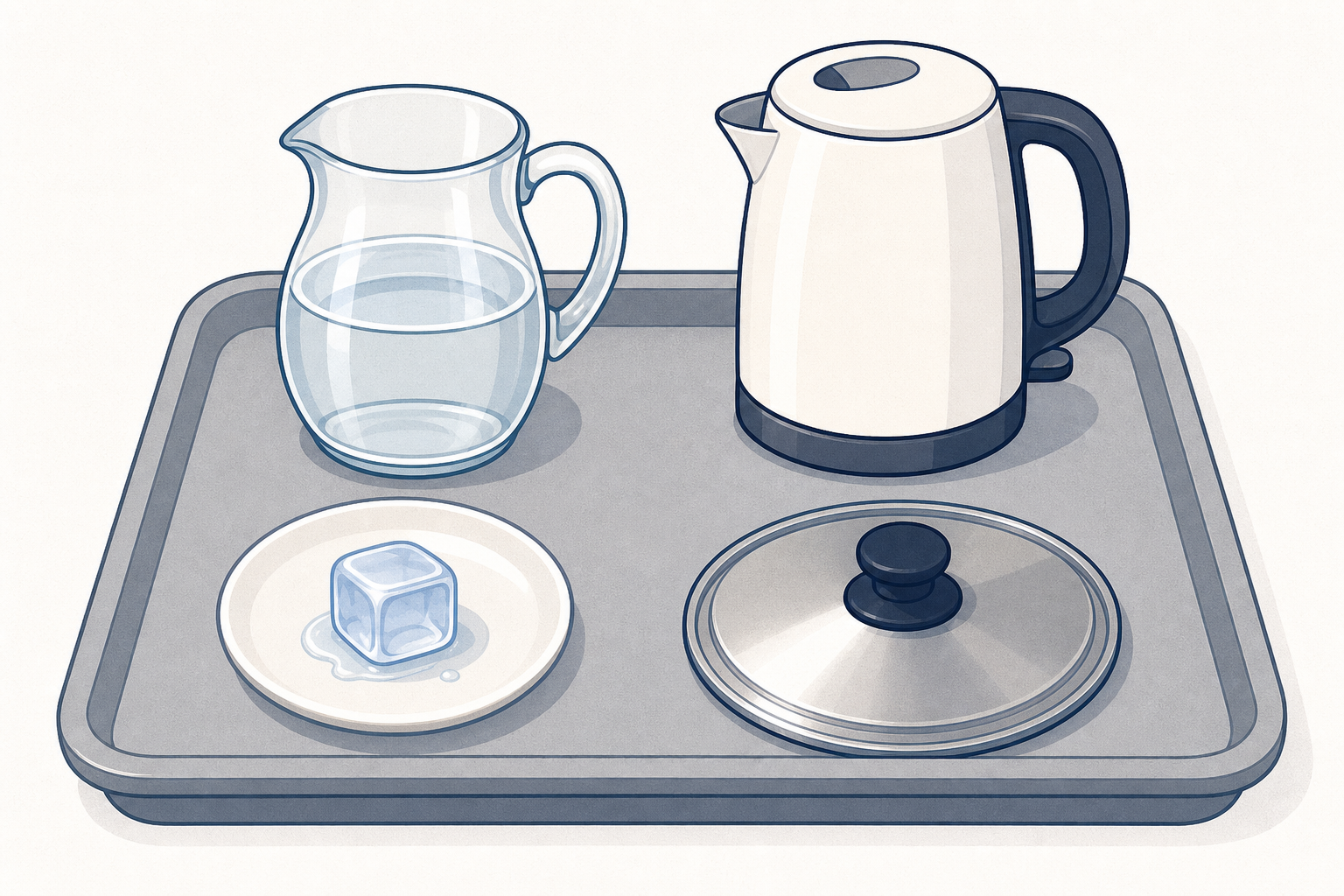 Look at the tray at the front: ice, a jug of warm water, the kettle the teacher will use, and a cold lid from the fridge. We are going to warm ice and hold the cold lid in the steam path. Talk with your partner: what do you think will happen to the ice when it is warmed? What do you think you will see on the cold lid? Write one short prediction on your Investigation Journal page, then be ready to share with the class.
Watch the teacher’s tray carefully. First we look at ice, then we drop an ice cube into warm water. Then the teacher uses the kettle and holds the cold lid in the steam path. Where do you think the water will go next: stay ice, become liquid, or leave as a gas you can barely see?
 On your Investigation Journal page, record each stage we watched. For ice, liquid water, steam and the cold lid, answer: What did you see? Solid, liquid or gas? Heating or cooling? Tick or note whether your earlier prediction matched what happened.
Unlock the full learning experience
You're previewing this lesson. Get full access to this lesson and hundreds more — each one ready to teach, with interactive activities, printable resources and pupil progress tracking built in.
This lesson is copyright of DigitalSkills.org 2017 - 2025. Unauthorised use, copying or distribution is not allowed.