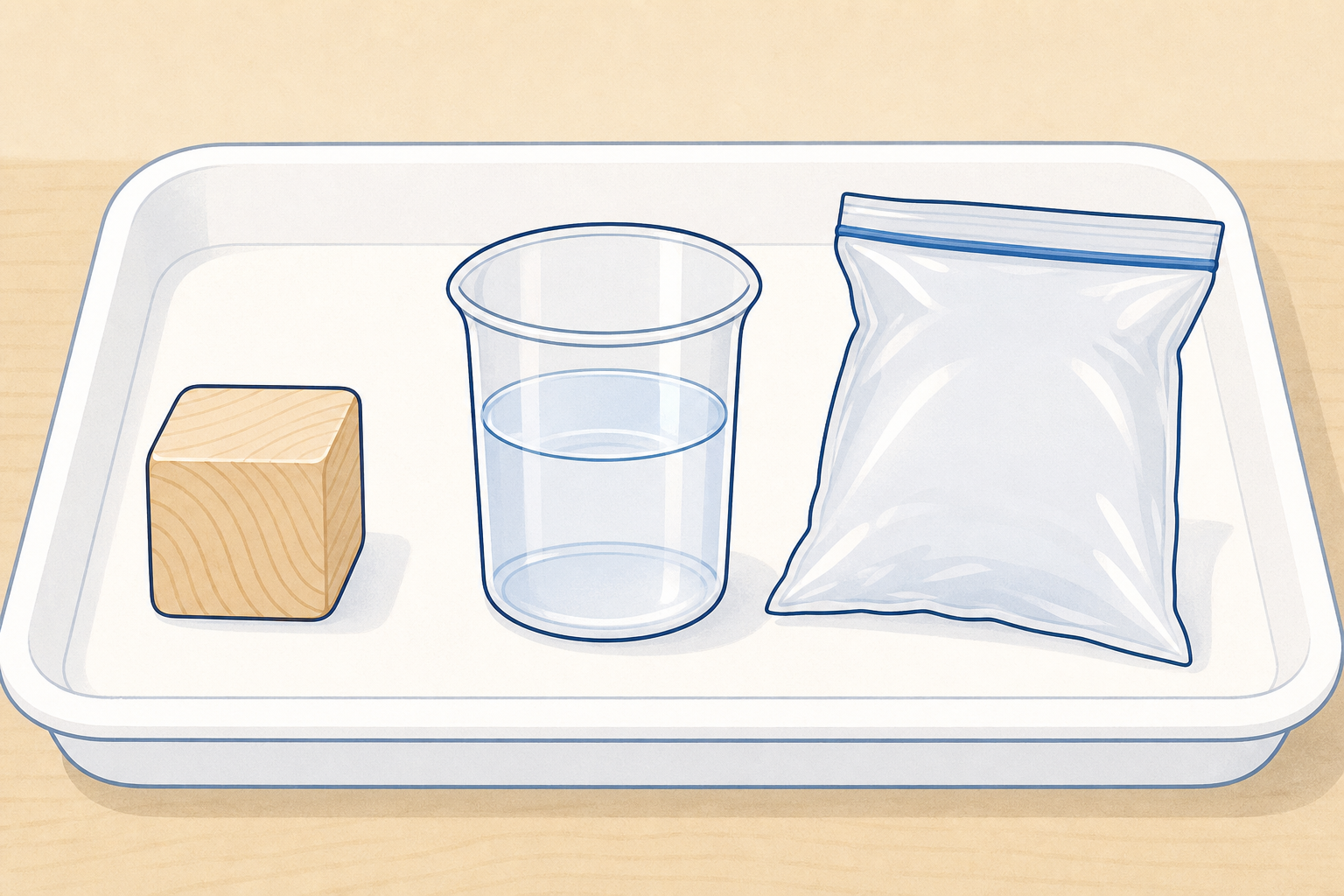
 Look at these three things on the tray: a wooden block, a cup of water, and a sealed bag of air. Which one keeps its own shape? Which one pours? Which one fills its whole container?
Hands up: can the same material ever behave in more than one of these ways?
The block keeps its own shape — we call that a solid. The water pours and takes the cup's shape — that is a liquid. The air fills the whole bag — that is a gas.
We will test real materials at stations. Later we will look at the tiny pieces inside materials that help explain what we see.
Visit each station with your group. At every station ask three questions: Does it keep its own shape? Can you pour it? Does it fill the whole container?
Touch and move the materials carefully. Talk about what you notice before you move on.
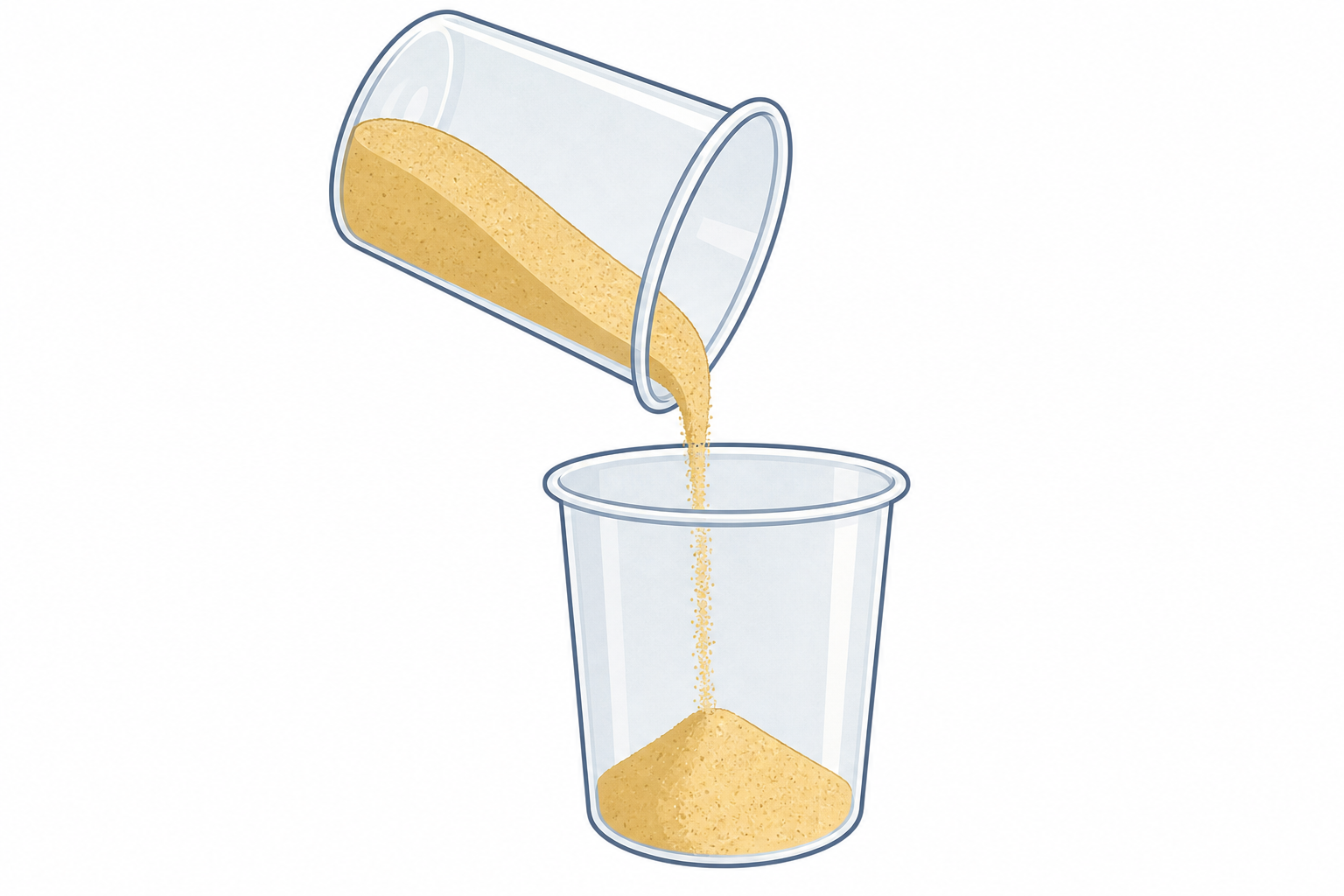 Back together. For the block, the water, the sand and the air bag, decide together: does it hold its shape, does it pour, and does it fill its whole container?
For sand, a short phrase is fine — you do not have to answer with only yes or no. Be ready to say one thing that surprised you.
 We are about to look inside ice, liquid water and water as a gas (invisible water vapour). Particles are the tiny pieces a material is made of — far too small to see, but they explain everything we tested.
This interactive activity shows what those particles are doing. Watch carefully. What are the particles doing that makes ice keep its shape? What changes when it melts?
What are the particles doing?
Unlock the full learning experience
You're previewing this lesson. Get full access to this lesson and hundreds more — each one ready to teach, with interactive activities, printable resources and pupil progress tracking built in.
This lesson is copyright of DigitalSkills.org 2017 - 2025. Unauthorised use, copying or distribution is not allowed.