 Your project package is ready. Today you will present your project. You will explain what it is, why you made the choices you did, and what your research log shows about how you did the work.
Your listeners will ask process questions, which are about how you planned, researched and made decisions, not just whether they liked it. You will also ask one process question about someone else's project.
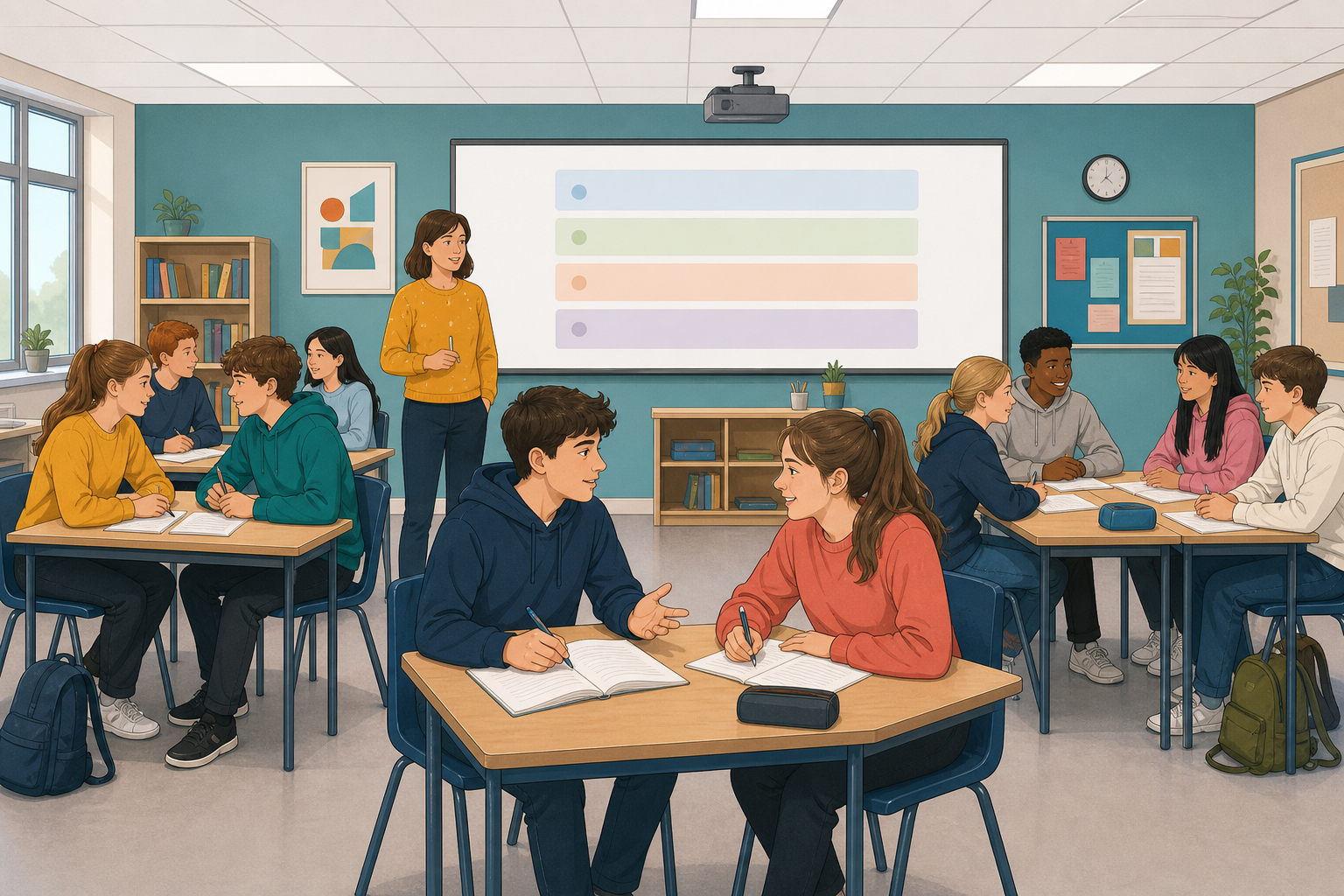 With a partner, turn a weak question about a project into a process question.
Process questions help the presenter show what they learned. An opinion question sounds like "Did you like it?", but a process question sounds like "How did you decide you could trust that source?"
A weak question is "Is this good?"
A stronger process question is "Which check on your source checklist made you decide to keep that source?"
Say your new question to your partner, then look together at the three parts of a presentation, in this order.
- What it is: your topic, the kind of piece and your audience
- Why those choices: two decisions you made and why you made them
- What the log shows: your research, a change of plan, or honest notes about tools you used
- Get into groups of three and decide who will present first, second and third. Your teacher will put a timer on the board.
- Present for about two and a half minutes, then take questions for about a minute and a half.
- When it is your turn, open your piece and your research log. Explain what your project is and why you made two important choices. Then show what your log says about how you got there, such as sources you checked, a change of plan or AI help you noted.
- After each presentation, each listener asks one process question. The starters below can help.
- Answer from your work and your log, not with a guess. If the evidence is not there, it is honest to say "I do not know yet."
- As a listener, do not just give an opinion like "I loved the colours." Link it to a choice, for example "The colours suit your audience because..."
- If part of your project is not finished, say so and present the parts that are ready.
How did you decide … was reliable enough to keep?
What does your log show about a choice you changed?
How did you handle consent (getting people's permission), credit, or AI help on this part?
What would you do differently next time when you are doing your research?
Before you finish, check that everyone has presented once and has asked and answered at least one question.
If your group finishes early, listeners can ask each presenter a second question.
Presenting your project is not about showing a perfect product. It is about explaining what you made, why you did it that way, and how your log shows the work behind it.
Process questions matter because they test habits you have built, like checking sources, giving credit fairly, getting consent (asking people's permission) and being honest about the tools you used. If a question was hard to answer, your presentation has not failed. It shows something you can still fix before you hand in your project.
Think about
- Which process question was hardest to answer about your project? What does that tell you about what still needs to be clearer in your log or piece?
- If you presented again tomorrow, which choice would you explain more carefully, and why?
Unlock the full learning experience
You're previewing this lesson. Get full access to this lesson and hundreds more — each one ready to teach, with interactive activities, printable resources and pupil progress tracking built in.
This lesson is copyright of DigitalSkills.org 2017 - 2025. Unauthorised use, copying or distribution is not allowed.