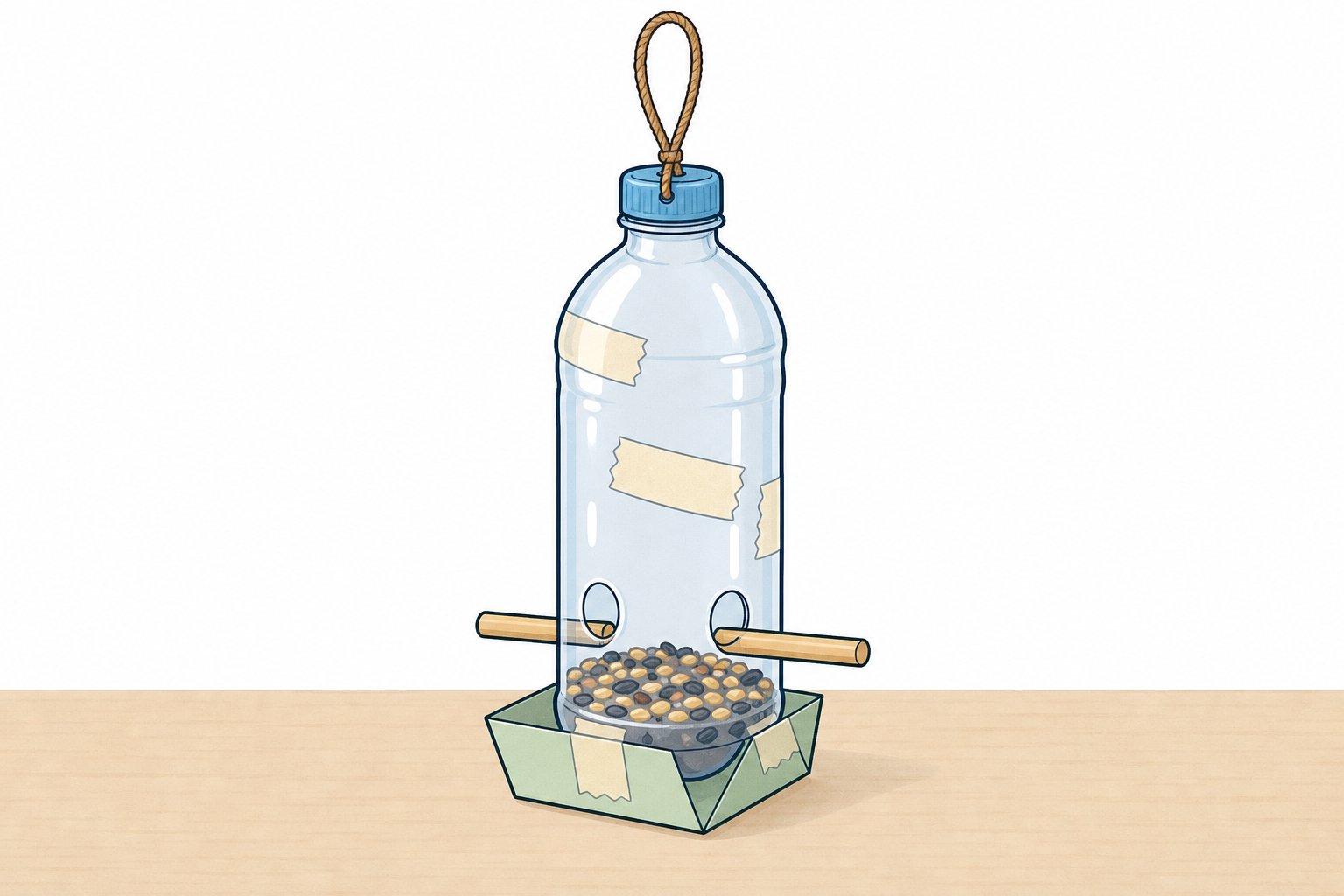
 Your feeder has been planned, built, tested and improved. Today you become the engineer who explains the story of that design.
Real engineers do not only show the finished object. They explain who it was for, what they changed, what the evidence showed, and what they would try next.
 A design analysis has five parts. Today your group will explain all five about your own feeder:
- User need: what the birds needed the feeder to do.
- Design choice: one decision you made and why.
- Test evidence: what the watering-can or balance test showed.
- What changed after testing: what you changed and why.
- Next step: one thing you would try if you built it again.
Turn to your partner for thirty seconds: which of those five will be hardest to explain in one minute? Be ready to share one idea.
In your group, prepare a short talk about your feeder. You have about one minute to speak.
Your journal and prototype are your evidence: that is what real engineers bring to a meeting.
Cover these five points:
- User need: what the birds needed the feeder to do
- Design choice: one decision you made and why
- Test evidence: what the watering-can or balance test showed
- What changed after testing: what you changed and why
- Next step: one thing you would try if you built it again
Each group presents its feeder. You may share with another group or with the whole class: your teacher will tell you which. Hold up the prototype. Tell us the user need, one design choice, what the tests showed, what changed after testing, and what you would do next.
Listeners: be ready with one thoughtful question about a design choice or the evidence. Strong questions help the next design as much as a neat build.
Think back over the presentations you have just heard. The question on the board asks you to pick out the one design choice that was backed by the strongest evidence, and you will talk it through in pairs.
Be ready to share one idea with the class.
Unlock the full learning experience
You're previewing this lesson. Get full access to this lesson and hundreds more — each one ready to teach, with interactive activities, printable resources and pupil progress tracking built in.
This lesson is copyright of DigitalSkills.org 2017 - 2025. Unauthorised use, copying or distribution is not allowed.