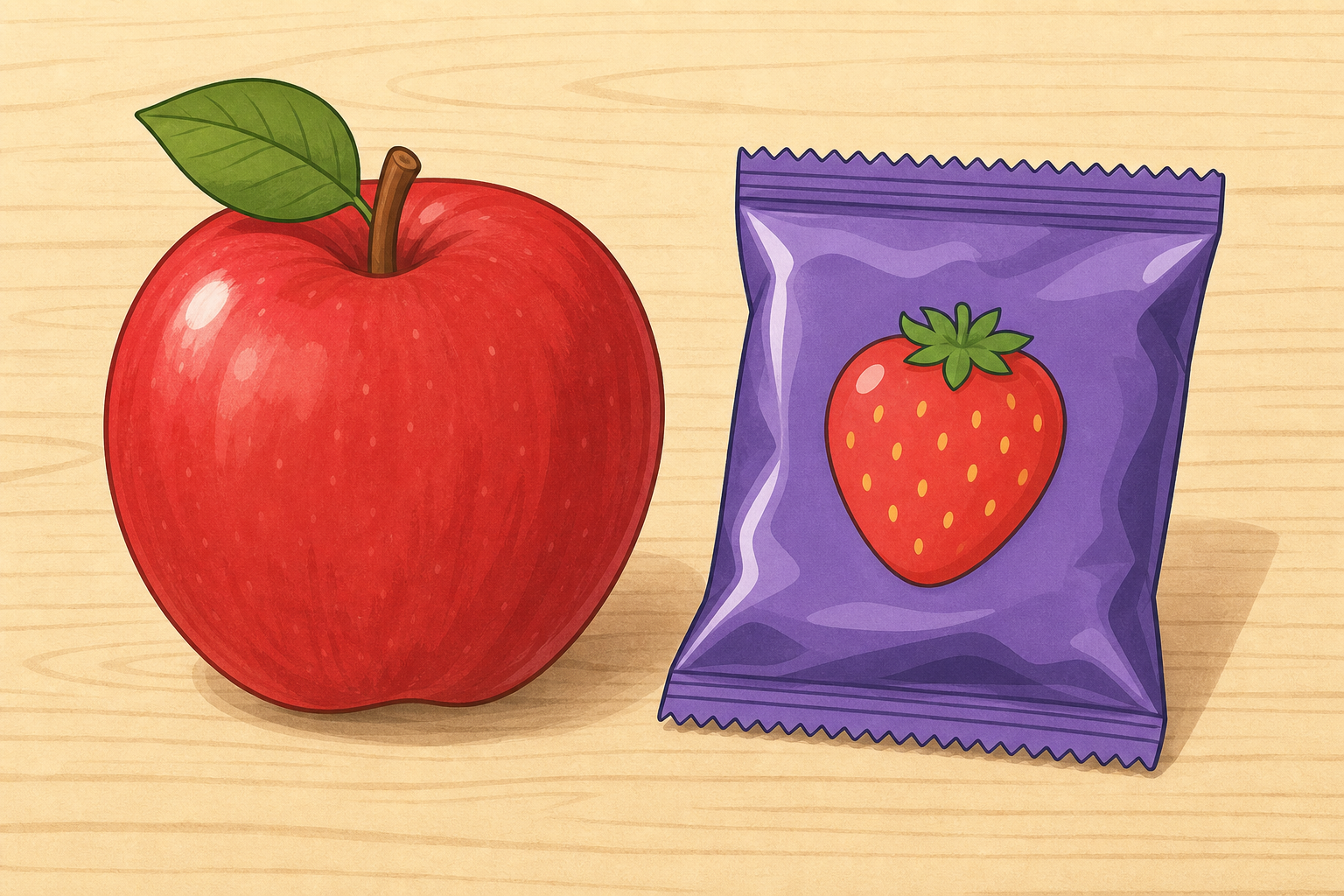
 Look at these two foods. One is a fresh apple. The other is a fruit-flavoured snack from a packet. Both say something about fruit. Which one do you think has been changed more from a real fruit, and what clue on the packet could help us decide?
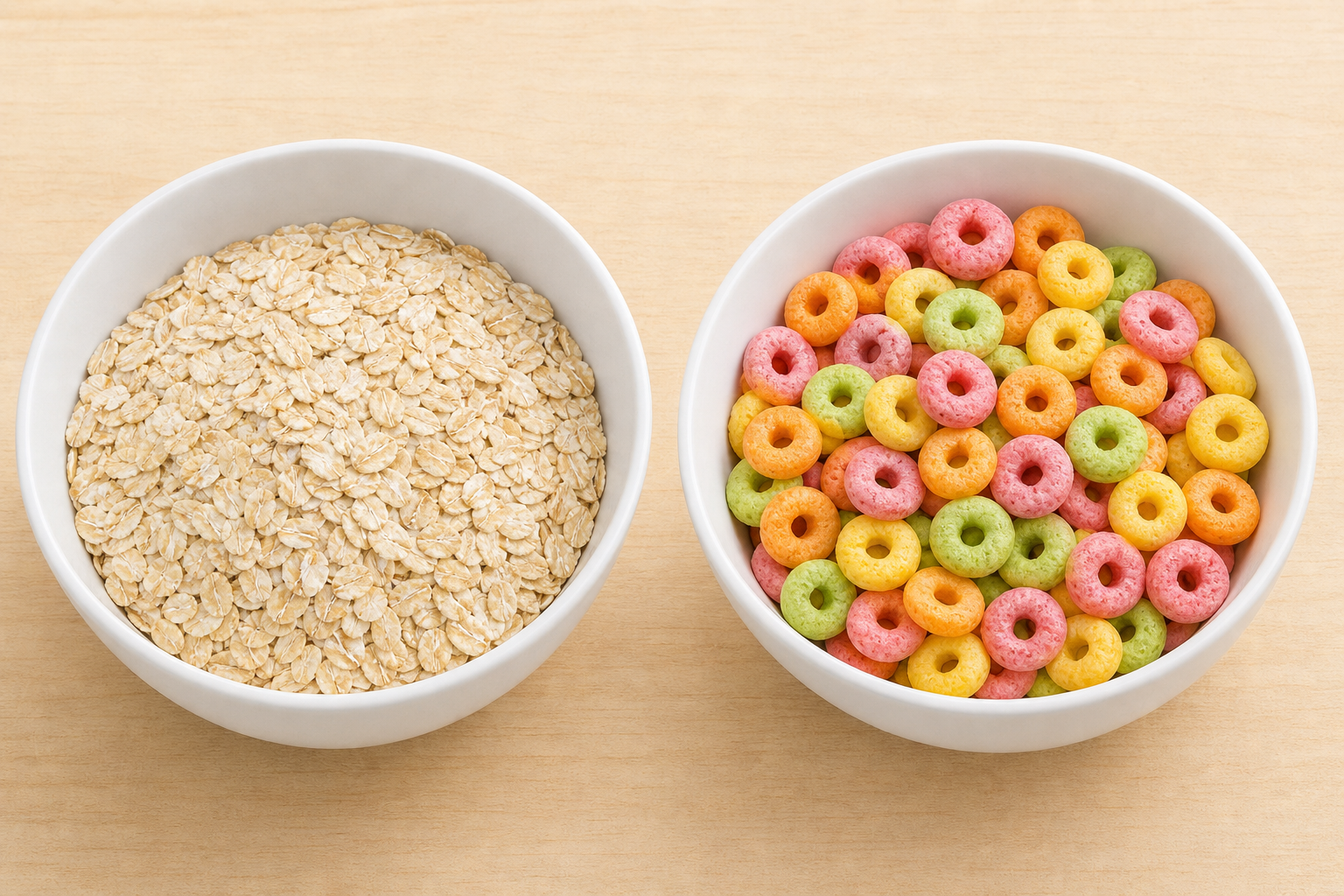 Food scientists do not guess from the cartoon on the box. They read the list on the back.
A whole food is still close to how it grew, with little or nothing added, like a fresh apple or plain porridge oats.
An ultra-processed food has been changed a great deal, often with a long list of ingredients you would not keep at home, like a sugary cereal with colours and flavourings.
Many lunchbox foods sit in the middle: a bit processed (baked, fermented or mixed) but still mostly kitchen ingredients, like plain yoghurt or brown bread.
The ingredients list names what is inside, largest amounts first. How can it help us judge how much a food has been changed?
Our question: which of two similar foods has been changed more from its natural state, and what does the ingredients list show?
Talk with your partner. For porridge oats versus a sugary cereal, and for an apple versus a fruit-flavoured snack, which do you predict will have the longer list and more words you cannot picture? Say why.
Then write your prediction on your Investigation Journal page, under I predict… because…
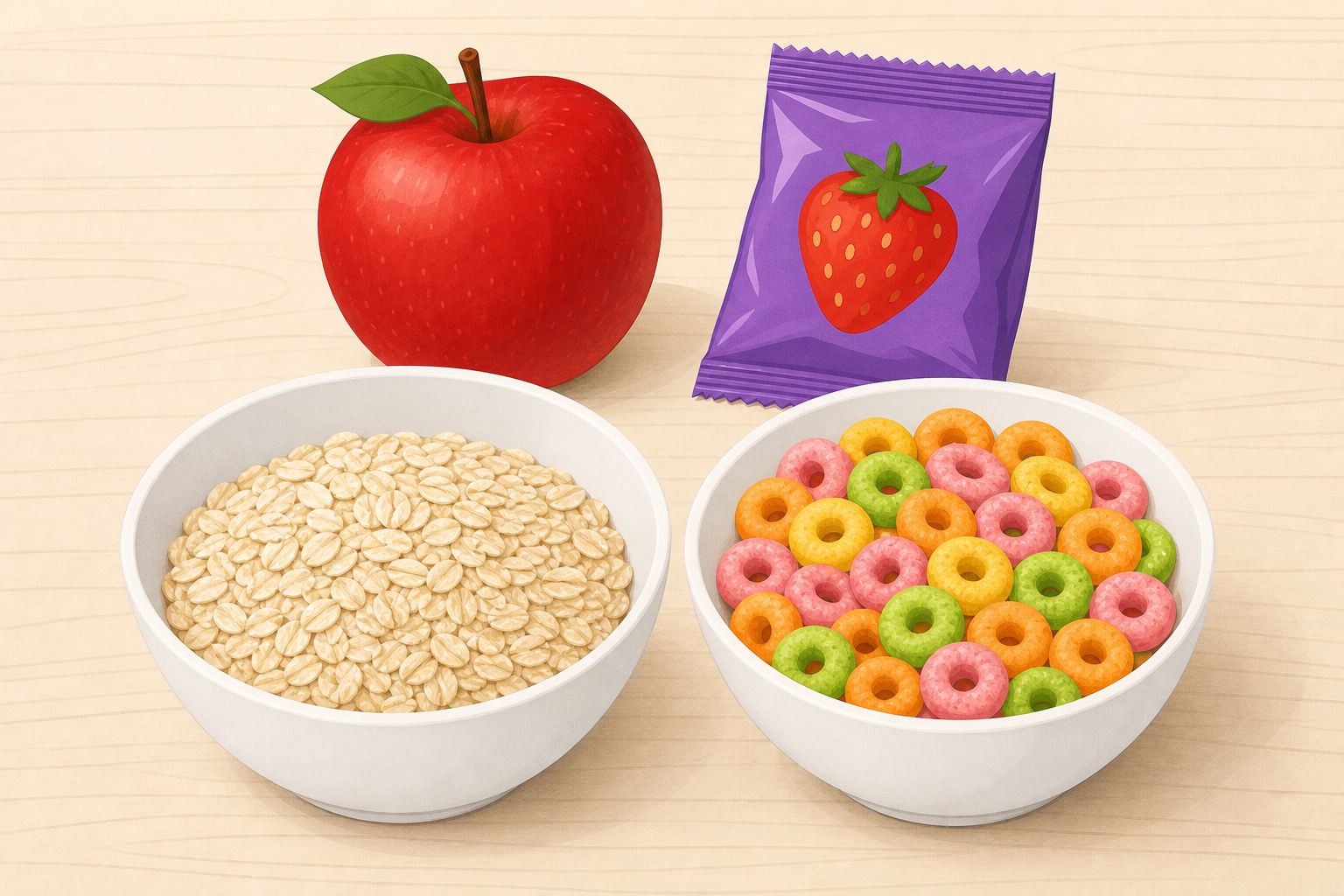 In your group, compare two pairs: porridge oats and a sugary cereal, then an apple and a fruit-flavoured snack. Test your prediction against the lists.
For each food, jot down three checks while the pack is on your tray (on scrap paper, or in the table on your Investigation Journal page):
- How many ingredients?
- How many do you recognise from a farm, garden or kitchen?
- Where is added sugar or salt on the list?
The apple has no packet: count it as one ingredient, with no added sugar or salt.
Then decide as a group: which check will you weight most when you say which food was changed more?
On your Investigation Journal page, fill in the Three checks table for each food from the notes you just made. Then write which food in each pair had been changed more, the evidence that convinced you, and which check your group weighted most.
Unlock the full learning experience
You're previewing this lesson. Get full access to this lesson and hundreds more — each one ready to teach, with interactive activities, printable resources and pupil progress tracking built in.
This lesson is copyright of DigitalSkills.org 2017 - 2025. Unauthorised use, copying or distribution is not allowed.