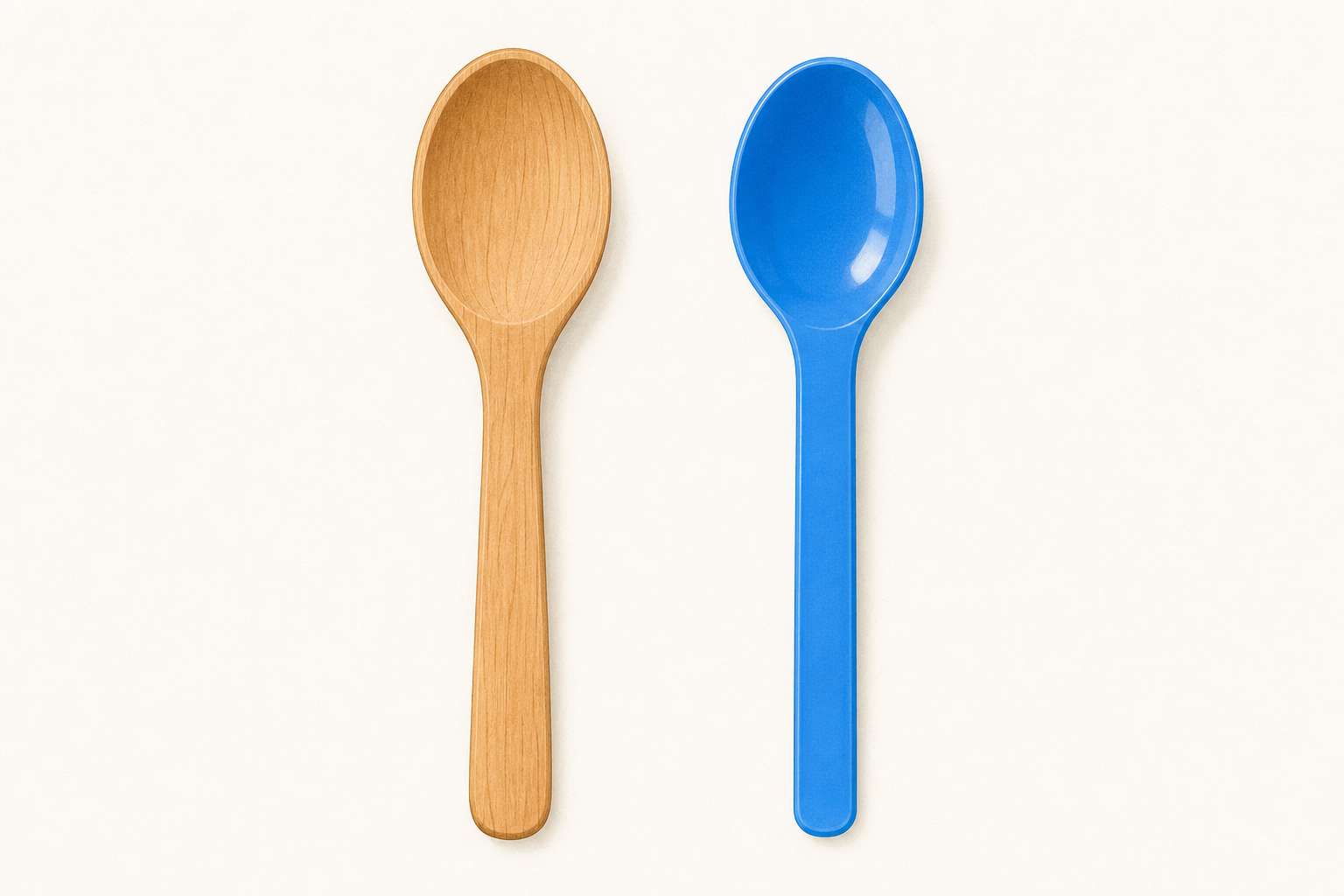
 Look at these two things: a wooden spoon and a plastic spoon. Both do the same job. Where do you think each one came from?
Hands up: which one grew or was found in nature, and which one was made by people?
 Some materials come straight from nature with only light change. We call those natural. Others are made or heavily changed by people. We call those manufactured.
Talk to your partner: is a cotton T-shirt natural, manufactured, or a bit of both? We will use the idea of a raw material (the starting stuff from nature) to help us decide.
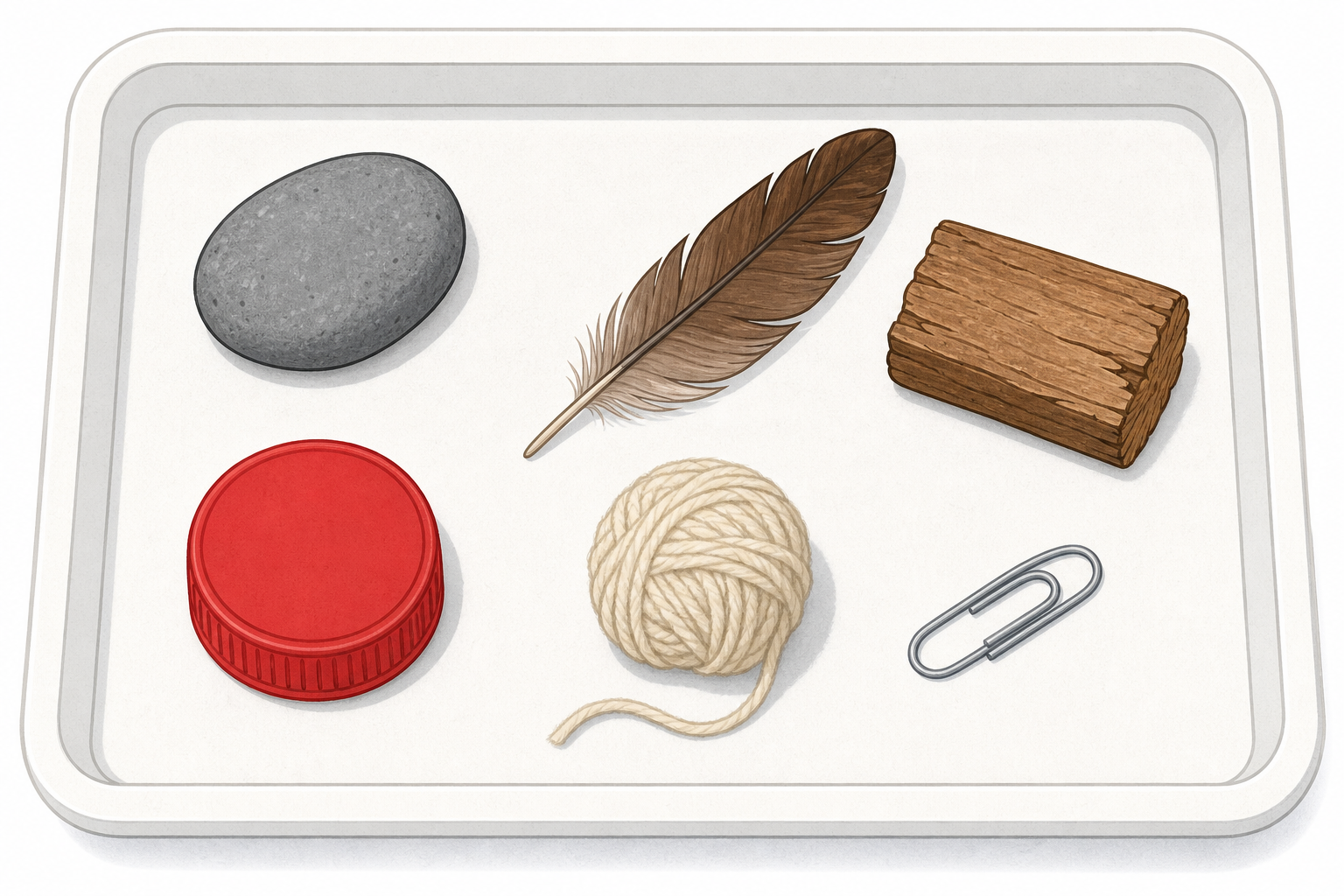 In your group, sort every sample on your tray into two piles: natural or manufactured. Talk about each one before you place it. If you disagree, put it on a third pile called not sure and be ready to say why.
Your trays mostly split into two piles. These six do not split cleanly.
For each one: what did it start as, and what did people do to it? Then decide which pile it belongs in, and be ready to argue.
One of the six is the only one that did not start as something natural. Which?
Started as what? Changed how?
Your group gets one material sample and a research card. First look at the sample only: where do you think it started, and what do you think people did to it?
Then read the card to check and add detail. Decide together: is it natural or manufactured, what was the raw material, and which change people made was the most important? Be ready to tell the class in three short sentences, including your own choice about the most important change.
Unlock the full learning experience
You're previewing this lesson. Get full access to this lesson and hundreds more — each one ready to teach, with interactive activities, printable resources and pupil progress tracking built in.
This lesson is copyright of DigitalSkills.org 2017 - 2025. Unauthorised use, copying or distribution is not allowed.