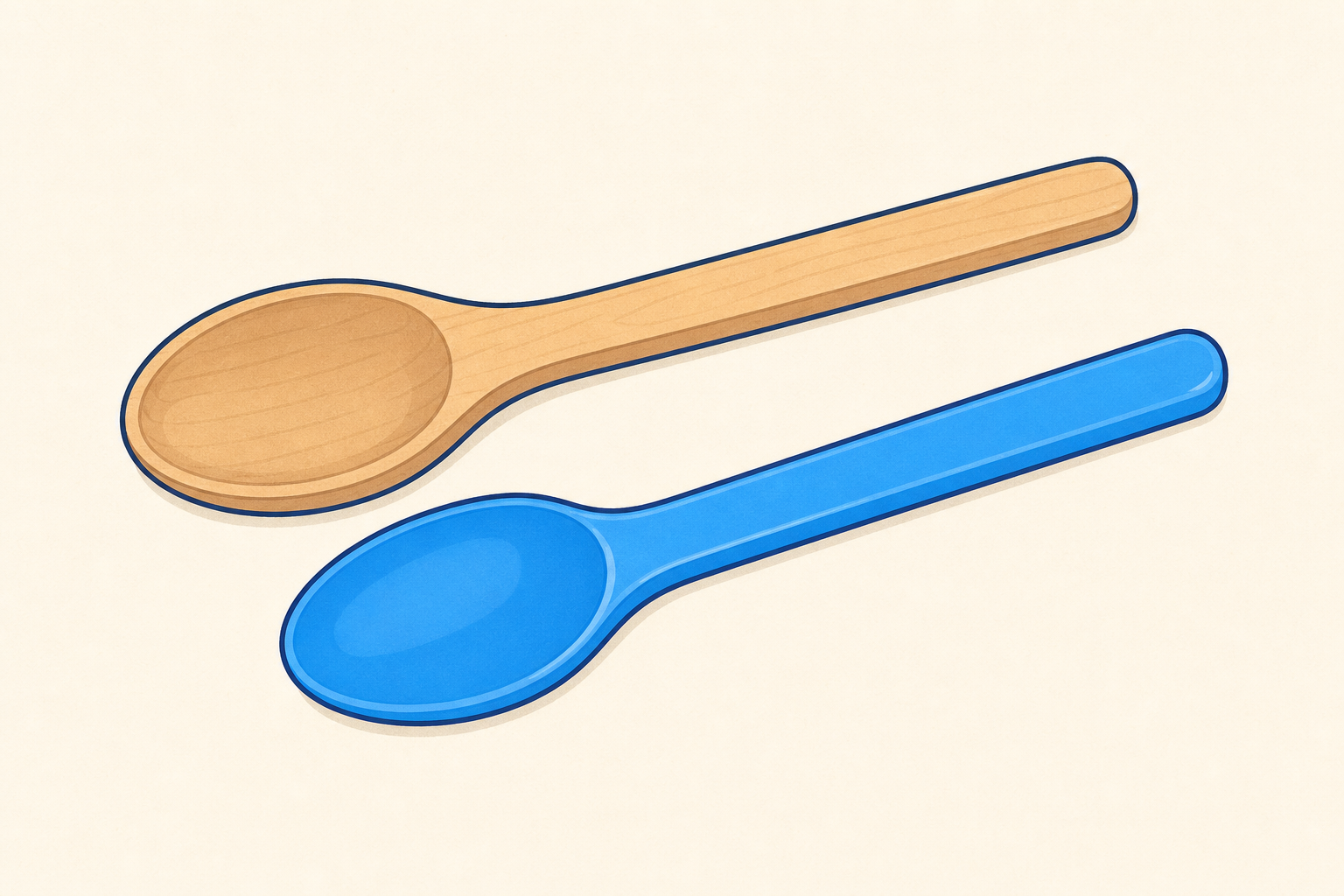
 Look at these two things: a wooden spoon and a plastic spoon. Both are spoons. Both hold food. But are they made of the same kind of material?
Where do you think each one came from before it was a spoon?
 Today we sort materials by where they came from.
Natural material: comes from plants, animals or the ground (even if people have shaped or cleaned it).
Synthetic material (made by people): people make it from chemicals, usually in a factory, and it does not grow ready-made in nature.
Look again at the wooden spoon and the plastic spoon. Which is natural? Which was made by people?
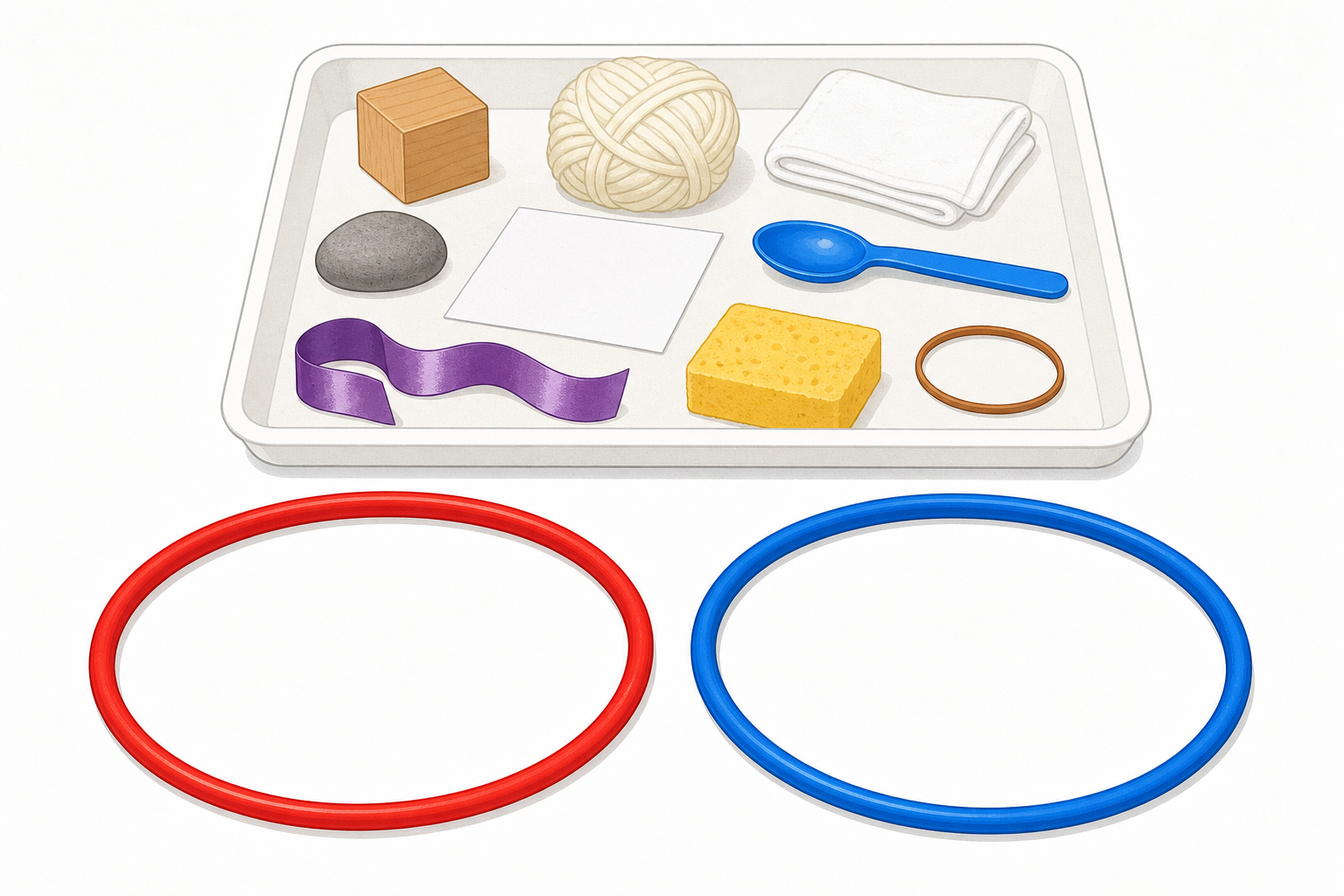 Before you place each item, say where you think it came from and whether you predict it is natural or made by people.
In your group, sort every item on the tray into two hoops: natural or made by people.
If you disagree, leave it on the line between the hoops. That is fine. Be ready to tell the class both reasons.
 Choose three items from your sort. For each one, say the material, whether it is natural or made by people, and where it came from.
Now find one object in the room that joins both kinds of material. We call that a mixed object. Be ready to point to the natural part and the made-by-people part.
You have already sorted the real materials. Now the five that are actually hard.
For each one, help us answer: did it come from a plant, an animal or the ground? And did people have to make it into this?
"I don't know" is a fine answer here, as long as you say what you would need to find out.
The five that are actually hard
Unlock the full learning experience
You're previewing this lesson. Get full access to this lesson and hundreds more — each one ready to teach, with interactive activities, printable resources and pupil progress tracking built in.
This lesson is copyright of DigitalSkills.org 2017 - 2025. Unauthorised use, copying or distribution is not allowed.