 Welcome to the first lesson of this science course. Over the course you will work the way scientists do: ask a question about the living world, predict what you expect, gather real evidence outside and in the lab, and then explain what the evidence shows.
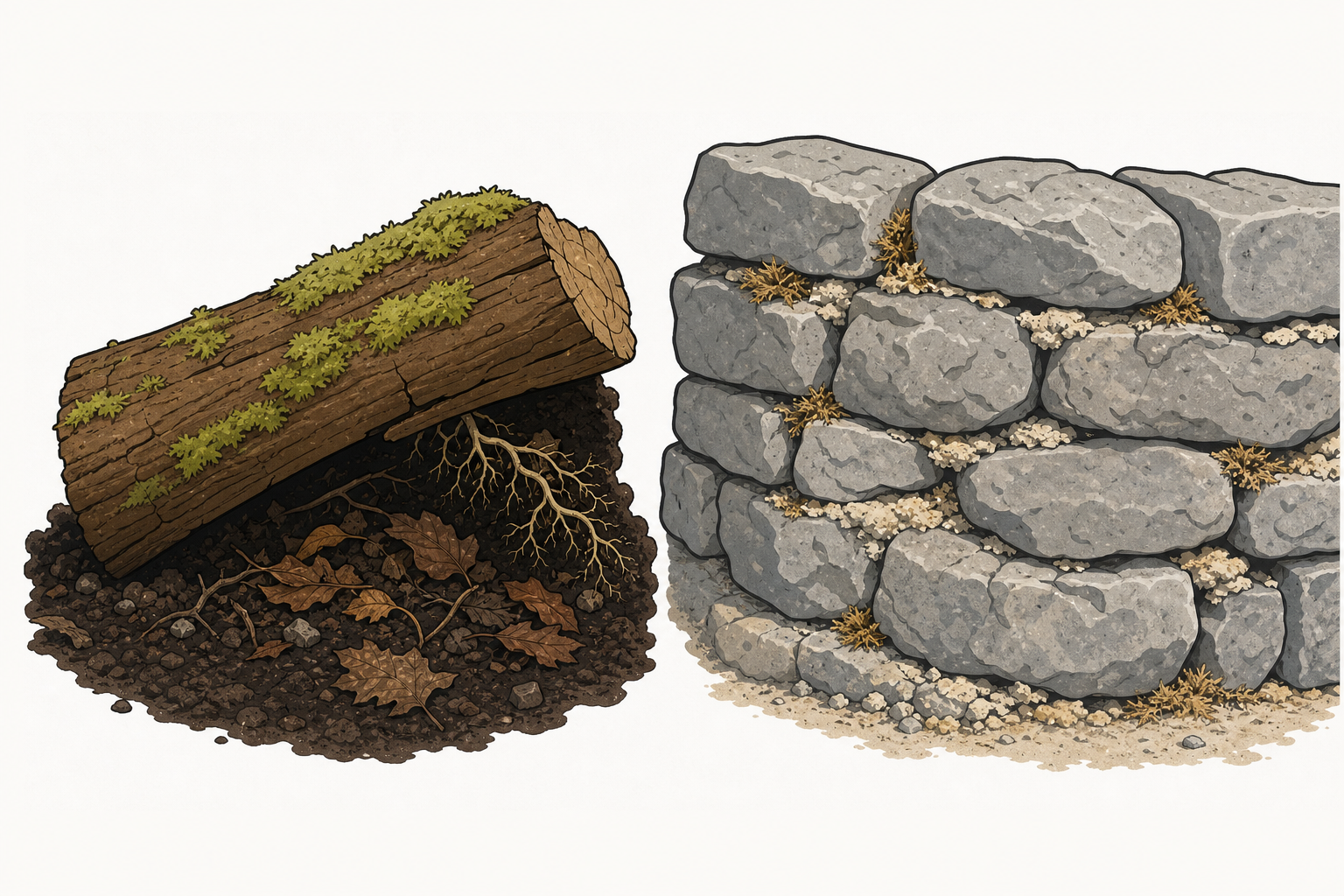
Today you start in the school grounds. Look at these two places in a school garden: the dark space under a log, and the sunny face of a stone wall. Do you think the same living things would live in both? Hands up if you think they would be different, and be ready to say why.
 Under a log is cool, damp and dark; a sunny wall is dry and bright.
Microhabitat means a small place like that, with its own conditions.
Adaptation means a body feature or behaviour that helps a creature survive there.
Suited means the creature’s features match the conditions of the place.
If a creature needs to stay damp and hidden, which microhabitat would suit it better: under a log, or on a sunny wall?
We are going to hunt in three microhabitats: under a log or stone, in grass, and on a wall. In your group, predict which creatures you think you will find in each place, and one reason why. We will test those ideas with real evidence outside.
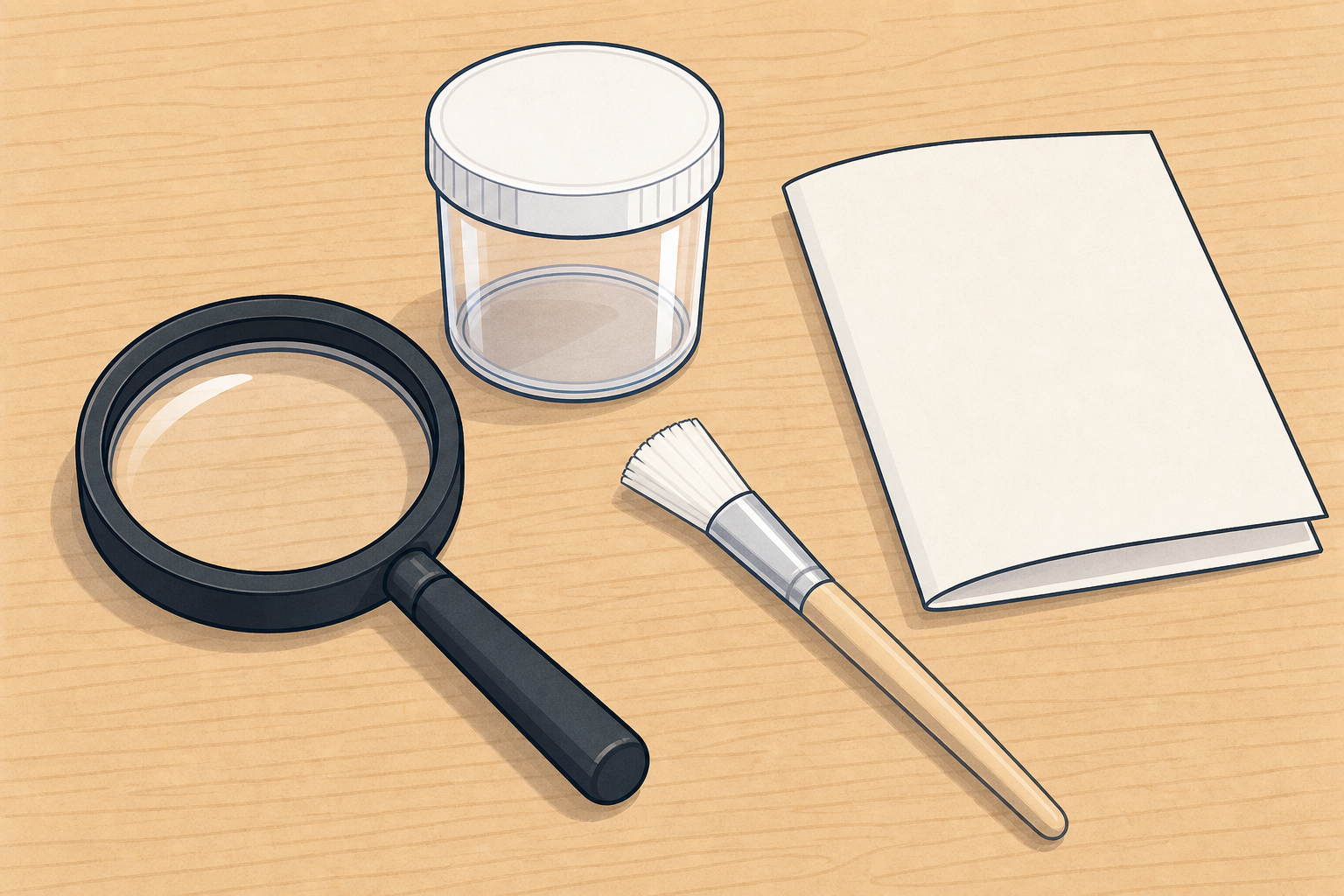 In your group, visit each of the three microhabitats. Use the magnifier and the ID sheet to name what you find. On your Investigation Journal page, note the microhabitat, what lives there, and one feature that might help it live in that place. Handle living things gently with the soft brush or pot, and put everything back.
Back inside, we share finds as a class first. Then, in your group, draft two matches on your Investigation Journal page. Each draft needs three parts: the living thing, one adaptation, and one evidence phrase from the hunt about the place (for example damp, dark or hidden). Aim for a clear draft, not perfect wording, because we tighten it next.
Unlock the full learning experience
You're previewing this lesson. Get full access to this lesson and hundreds more — each one ready to teach, with interactive activities, printable resources and pupil progress tracking built in.
This lesson is copyright of DigitalSkills.org 2017 - 2025. Unauthorised use, copying or distribution is not allowed.