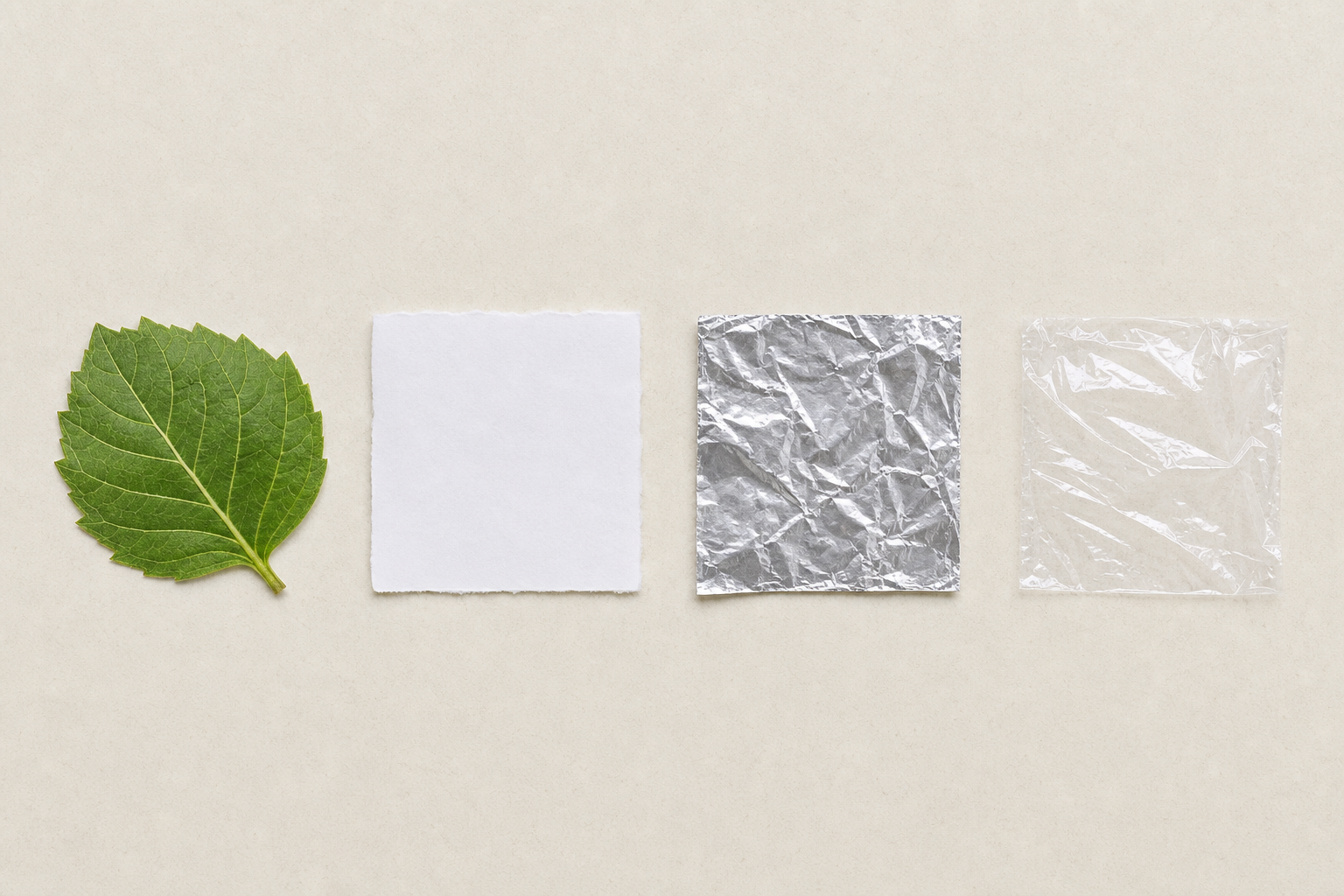
 Look at these four everyday things: a leaf, a scrap of paper, a bit of foil, and a plastic wrapper. If we buried them in soil today, which ones do you think would still be there in a few weeks? Hands up your guess for each one.
 A leaf can soften into soil because tiny living things eat it. Foil mostly just sits there.
That word is rot: living things in the soil break some materials down so they can become part of the soil again.
Look back at our four samples. Which ones do you think will rot a lot, a little, or hardly at all? Whisper your guess to your partner, then show hands when I call each sample.
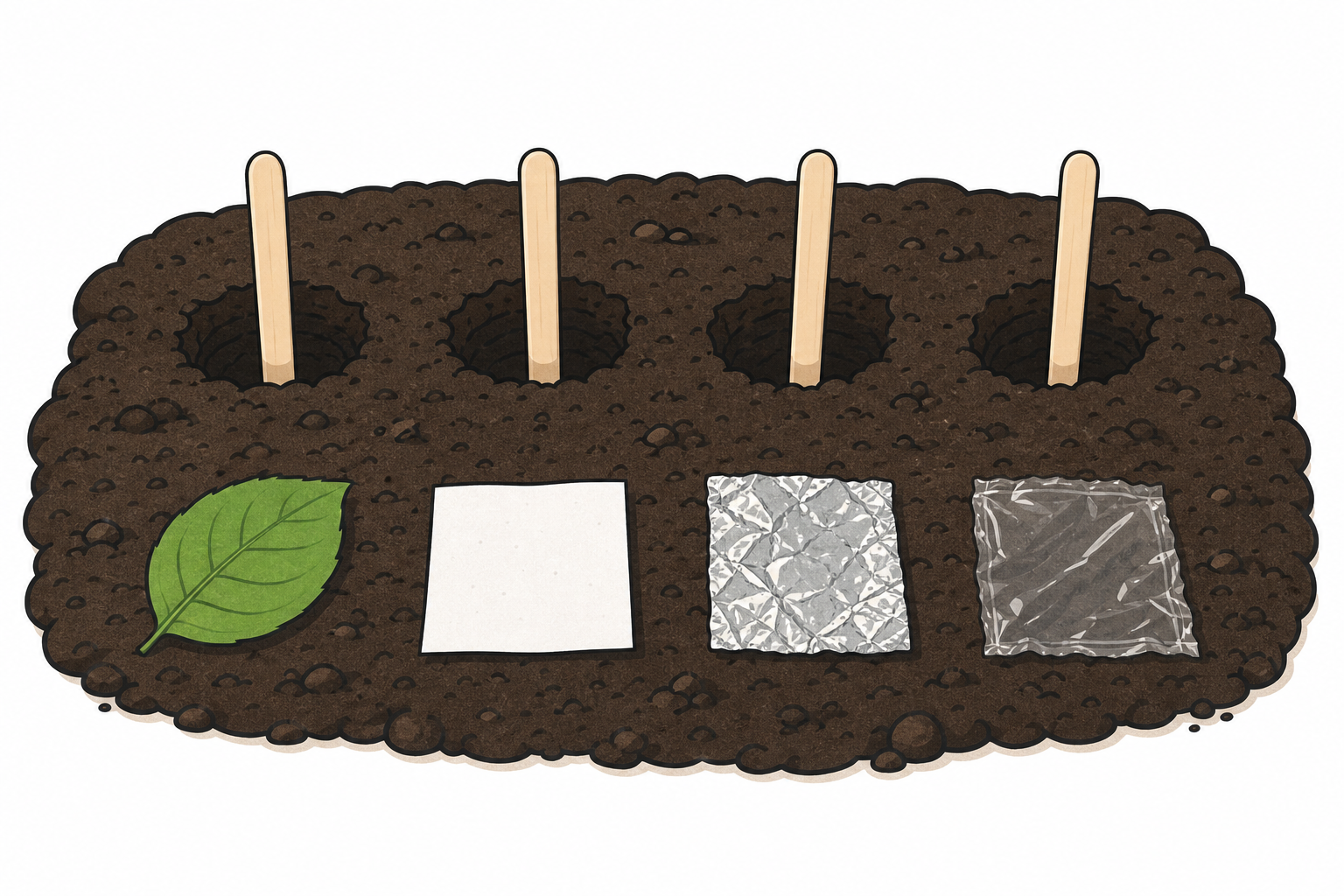
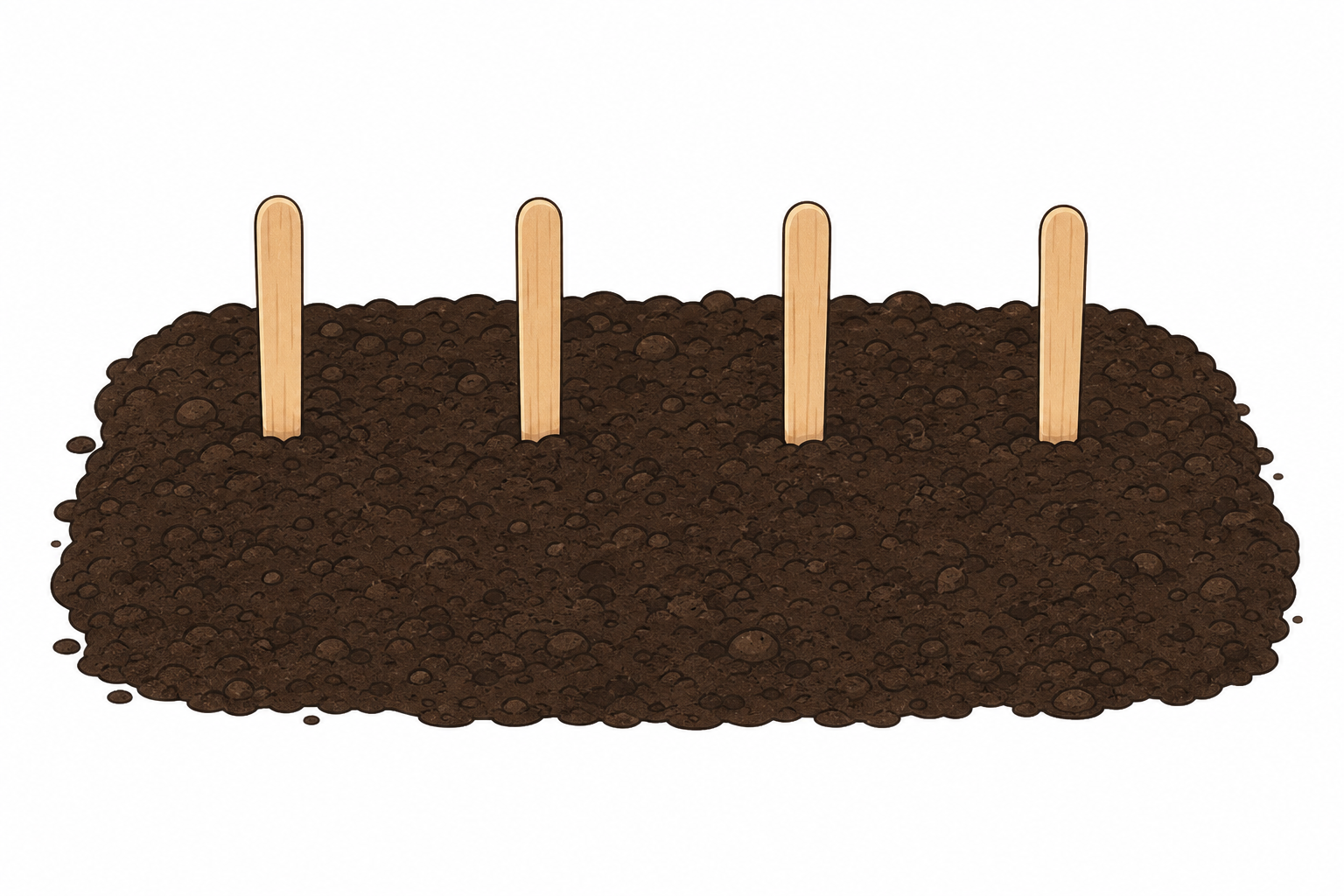 Work in groups of four. We will bury four equal pieces (a leaf, paper, foil and plastic) and watch them over the coming weeks. We do not dig them up today.
- In the prediction table on your journal page, write whether each sample will change a lot, a little, or hardly at all, with one reason if you can.
- Bury the four equal pieces at the same depth in the same soil so the test is fair. Label each spot with the material and your group name.
- As a whole class we will agree one dig-up day and what to photograph or measure when we come back. Write that class plan in the dig-up plan lines on your journal page.
 Environmental impact means how much help or harm a material causes for living things, soil, water and waste.
On the board is a sorting tree: a yes-or-no path. We will answer the on-screen questions one card at a time and land each material in one primary group:
- rots fairly easily
- reuse or recycle well
- lasting waste if thrown away
Call out where you think each card should go and why.
Sort materials by impact
Keep the three impact groups in view on the board:
- rots fairly easily
- reuse or recycle well
- lasting waste if thrown away
Your group gets two or three new classroom materials that were not on the board cards. Sort only those new finds into the same three groups. Use the table on your journal page: write the material, the group, and one reason. Pick one placement you found tricky. A few groups will tell the class why; everyone else listens and may agree or disagree with a reason.
Unlock the full learning experience
You're previewing this lesson. Get full access to this lesson and hundreds more — each one ready to teach, with interactive activities, printable resources and pupil progress tracking built in.
This lesson is copyright of DigitalSkills.org 2017 - 2025. Unauthorised use, copying or distribution is not allowed.