1 - Getting Started ~4 mins
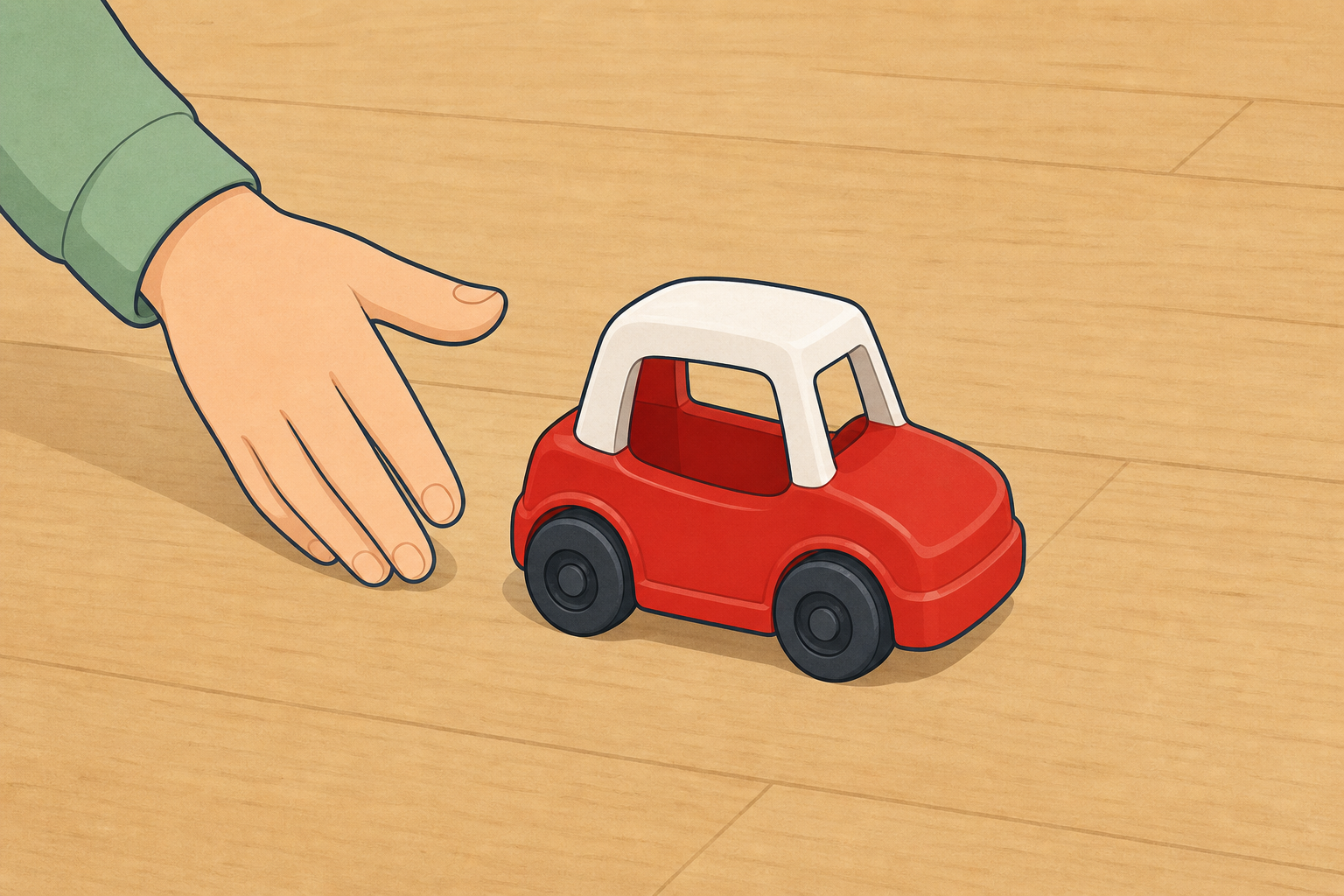 Look at this toy car (or soft ball). If I give it a tiny push, and then a really big push, which one do you think will go further along the floor?
Show me with your hands: small push, or big push?
2 - What Makes Something Go Further? ~5 mins
Watch the car in my hand. Small push. Bigger push. Further means it rolls a longer way before it stops.
Today we will find out: does a bigger push send the same car or ball further?
3 - Practise Changing One Thing ~5 mins
Quick practise on the board before our floor test. We will run the car twice and leave both marks so we can see them side by side.
Watch what stayed the same and what we changed.
The board was only practise at changing one thing. Our real test is flat floor, same car or ball, small push then big push — no ramp.
Practise: change one thing
4 - Small Push, Big Push ~12 mins
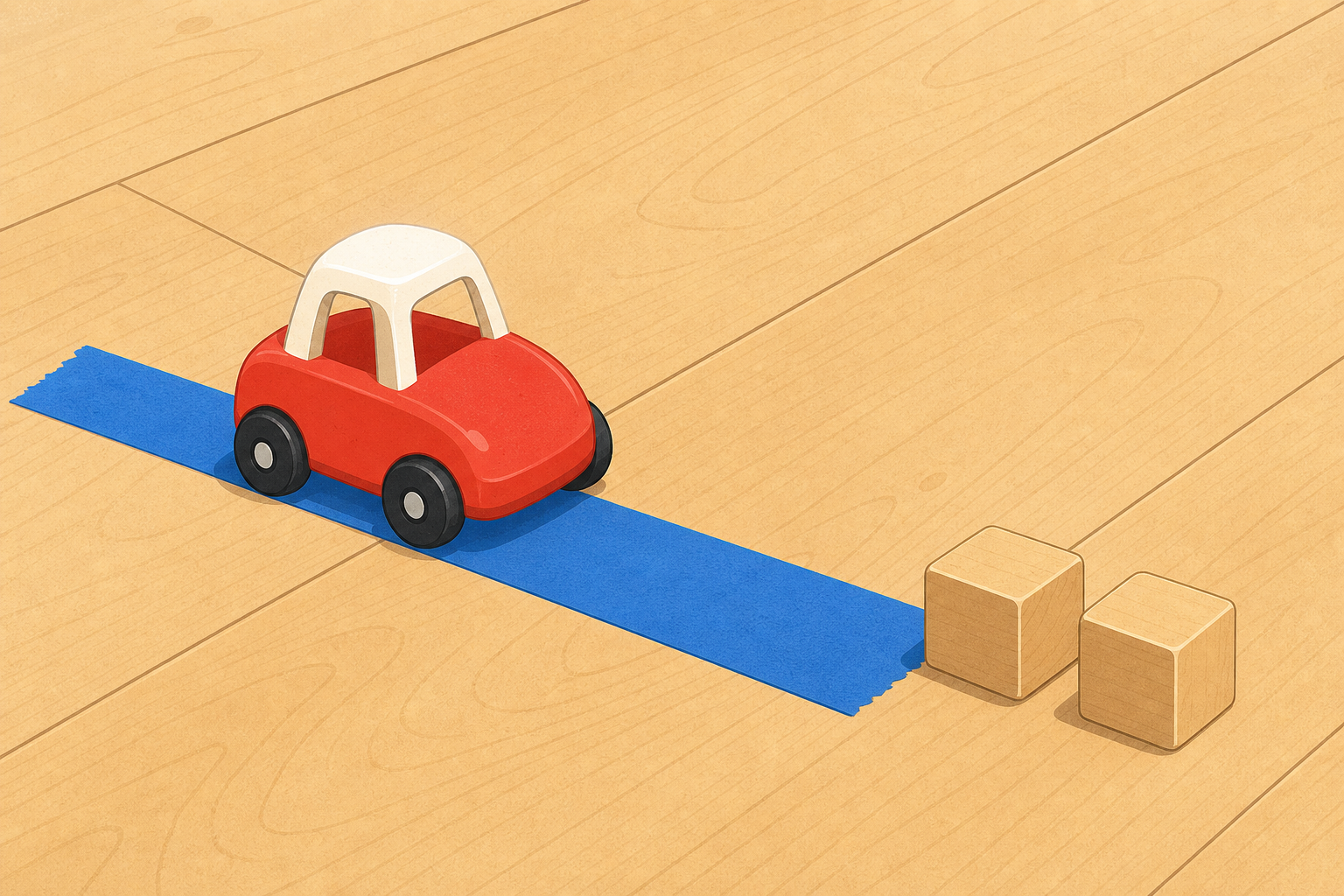

Our real question today: does a bigger push make the same car or ball go further?
First, say your group prediction out loud: small push or big push?
Then take turns at the lane. One child pushes. One child marks where it stops. Keep the same car or ball, the same floor and the same starting line. Change only how hard you push. Each group does one small push and one big push, then steps aside when the teacher signals.
While you wait your turn, join in with the class: will their big push go further? What must they keep the same?
5 - Mark and Compare ~7 mins
Look at your two marks on the floor. On your Investigation Journal page, draw two short lanes and put an S mark and a B mark where each push stopped. Circle which one went further.
That is your main job. If you have time, add a tick for your prediction and one short phrase about what you found out.
Unlock the full learning experience
You're previewing this lesson. Get full access to this lesson and hundreds more — each one ready to teach, with interactive activities, printable resources and pupil progress tracking built in.
This lesson is copyright of DigitalSkills.org 2017 - 2025. Unauthorised use, copying or distribution is not allowed.