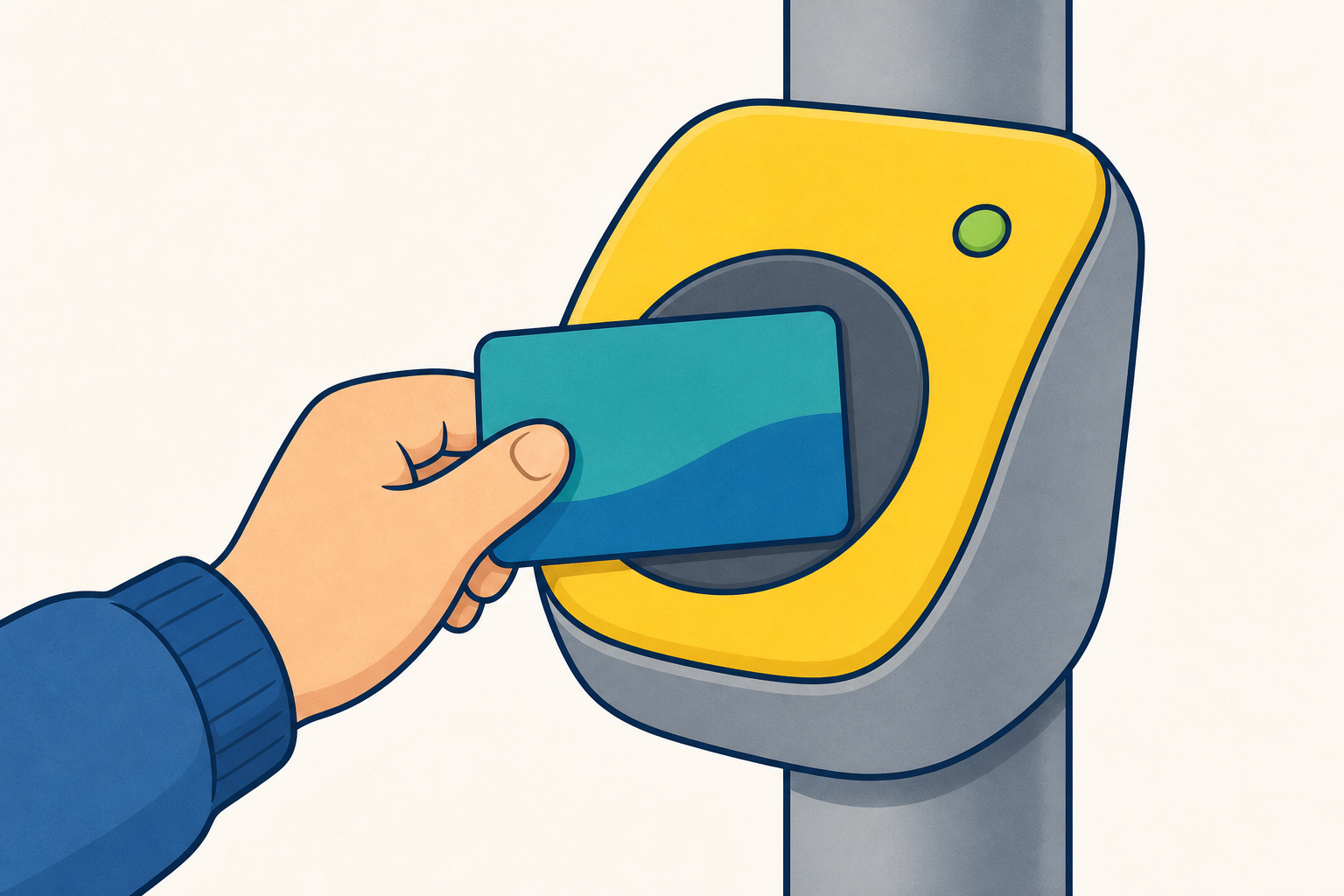
 Think of a Leap card on a Dublin Bus or Luas stop. You hold the card to the reader. Something beeps. Sometimes a light goes green. What actually happened between the card and the beep?
Hands up: what do you think the machine had to notice, and what do you think it had to decide, before it answered you?
 Today we will use three words for any device or app that does a job.
Input is what goes in. Process is the hidden work in the middle. Output is what comes back out.
We will place real cards on the board next, and say each word as the card lands. Keep the Leap card example in mind: the card goes in, something hidden happens, then we hear a beep.
Look at the Leap card map on the board. Notice the three columns: Input, Process and Output.
Three cards will appear: hold Leap card to the reader, check card and work out the fare, and beep, green light and journey recorded. Call out which column each card belongs in. We will place them together, then check the arrow runs from input through process to output.
When all three sit correctly, those parts working together make a system.
Leap card reader: input, process, output
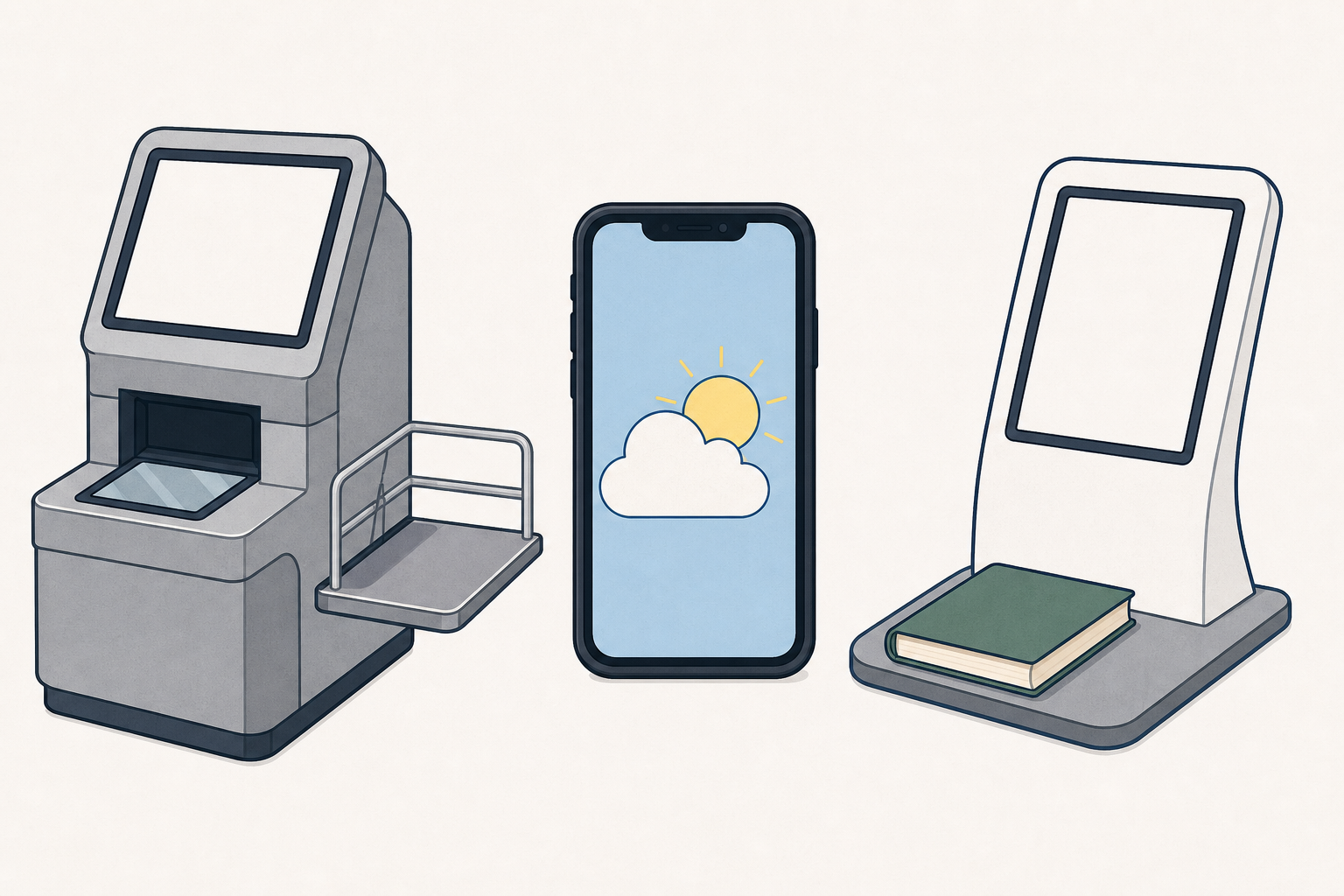 Your group gets one system card: a supermarket self-checkout, a weather app, or a library self-issue machine. Read the card together.
On scrap paper, list at least one input, one process and one output for your system.
When your list is ready, say this stem out loud once to each other (practice for sharing later): The input starts…, the process works out…, so the output can…
On your Investigation Journal page, draw your system as three clear parts: Input → Process → Output.
Label each part in your own words and put the name of your system at the top. Write the hidden process clearly in the middle so a classmate could read it.
Unlock the full learning experience
You're previewing this lesson. Get full access to this lesson and hundreds more — each one ready to teach, with interactive activities, printable resources and pupil progress tracking built in.
This lesson is copyright of DigitalSkills.org 2017 - 2025. Unauthorised use, copying or distribution is not allowed.