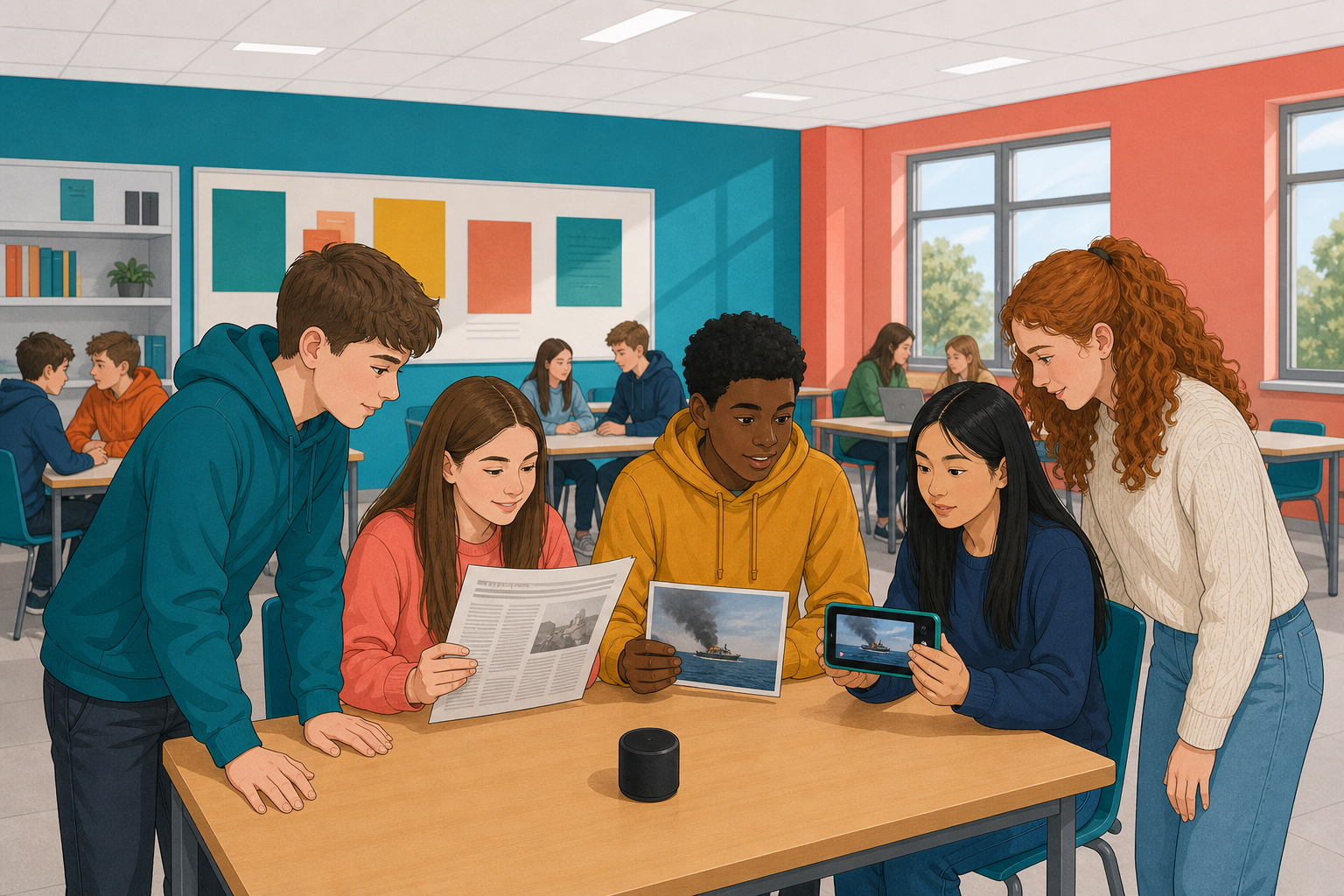
 Today one story reaches you in four formats. A format is the shape a story arrives in, such as text, a picture, audio or video. You will compare what each format makes you notice, what it leaves out and how easy it is to share. Then you will pick the format you would trust most and the one you would share most, and say what you gain and lose with each. What you gain and lose is called the trade-off.
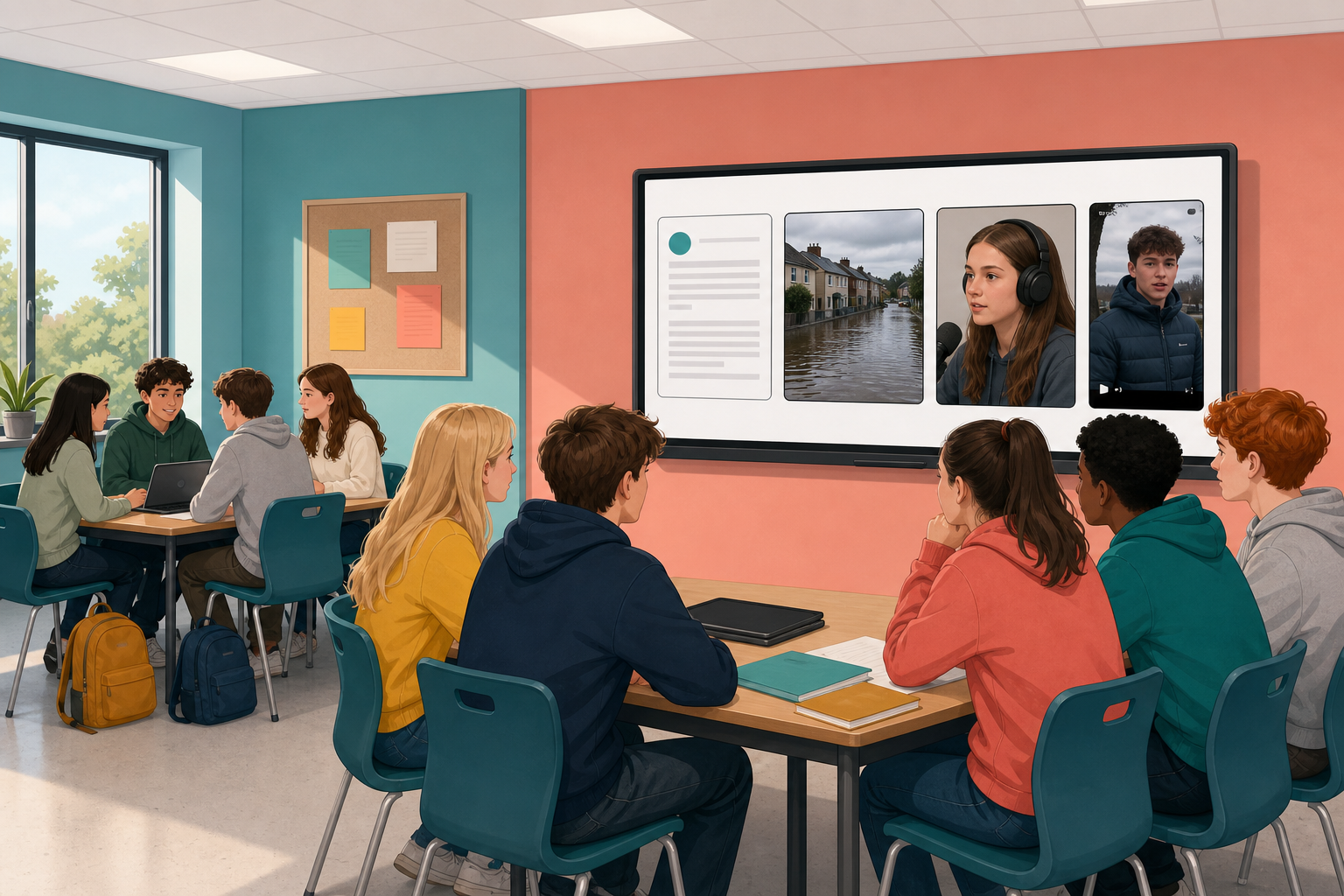 Format is the shape a story takes. The facts can be the same and the story can still feel different. In a different format you notice different things first, you spend more or less time on it, and it is easier or harder to pass on.
Take a flood warning. A short text can list times and official advice. A photo of high water makes you feel something first. A calm voice or an urgent voice changes the mood. A dramatic phone video can make normal water look frightening.
When the facts stay the same, what does the format change about how the story reaches you?
Work with the person next to you. Below, one made-up news story is told in four ways, as a photo, a short video, a radio bulletin (a short news report) and a text post. Look at them with your partner in order, from 1 to 4, and do not skip ahead.
All four versions below tell this same story.
- Last night a lorry shed its load on the N72 bridge near Glenford, a made-up town. This means the things it was carrying fell off onto the road.
- The bridge is closed until Friday.
- Traffic is diverted through the town centre, which means cars are sent a different way. This is called a diversion.
- Nobody was hurt.
- The load was sealed cartons of soft drinks, and local crews cleared most of it by morning.
- Glenford Community College opens as usual. The diversion adds about ten minutes to the school bus route.
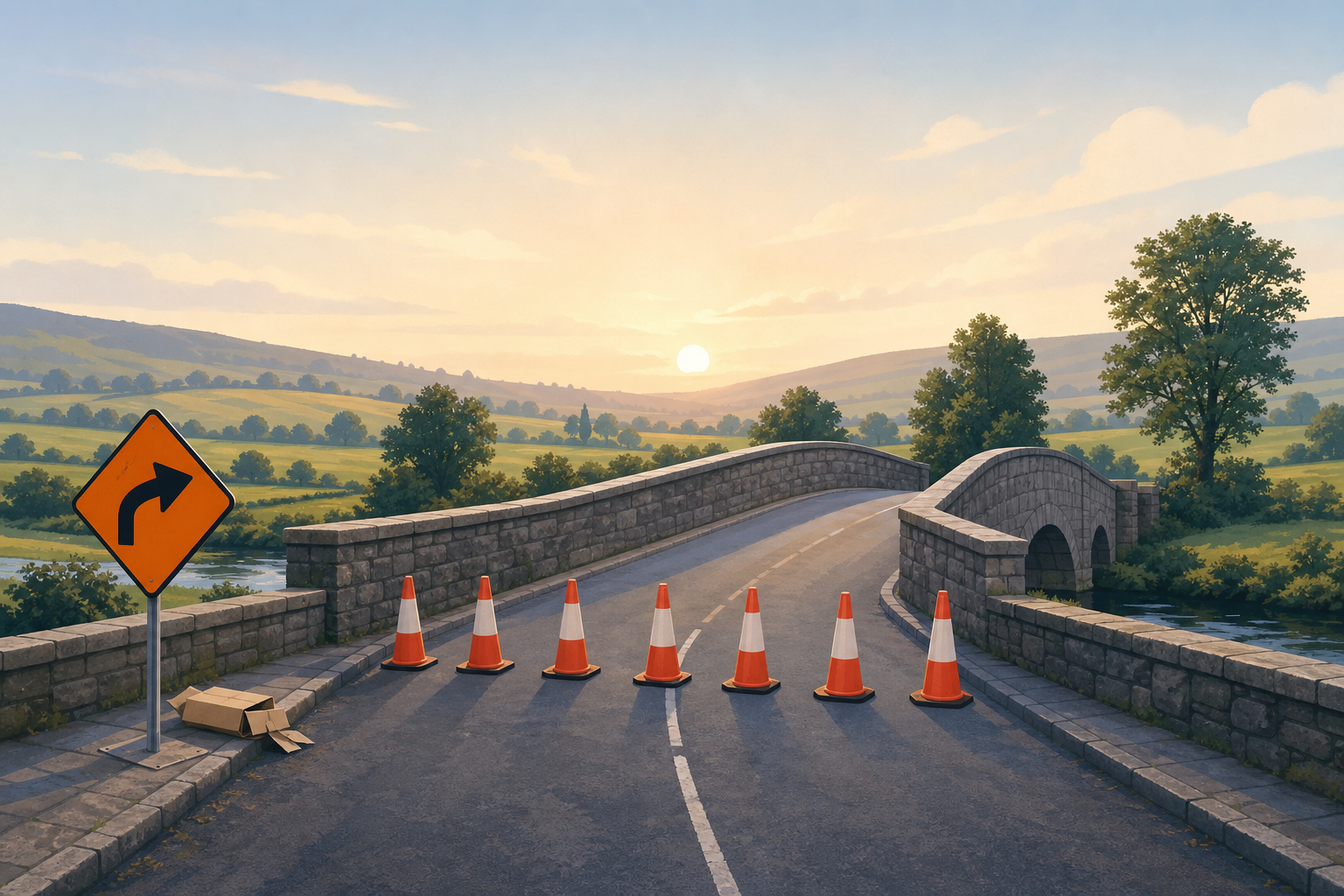
Look at it for about 20 seconds.
It plays once and you cannot pause it. Watch the words on screen as well as the picture.
Play it once, the way you would hear it in the car.
Open the text post
N72 bridge at Glenford closed until Friday after a lorry shed its load last night. Nobody hurt. Diversion through the town centre is in place. Soft-drink cartons mostly cleared by morning crews. Glenford Community College open as normal; school buses add about 10 minutes. Check live traffic before you travel.
Open this one last, after you have notes on the other three.
If the radio bulletin will not play, tell your teacher, who will read it out. You do not need to copy down the words in the video.
Now fill in the table
Talk about each version with your partner, then fill in your own table in the activity below.
Before the next step, finish the sentence below so you can read it out.
Format changes ___ about this story, because ___.
Same story, four ways
Now tell the Glenford story twice, first as a headline card like the ones on news sites, then as a version made to be shared on a phone. The activity below has the instructions.
- Last night a lorry shed its load on the N72 bridge near Glenford, a made-up town. This means the things it was carrying fell off onto the road.
- The bridge is closed until Friday.
- Traffic is diverted through the town centre, which means cars are sent a different way. This is called a diversion.
- Nobody was hurt.
- The load was sealed cartons of soft drinks, and local crews cleared most of it by morning.
- Glenford Community College opens as usual. The diversion adds about ten minutes to the school bus route.
Each picture is marked free to reuse, needs a credit, or off limits. A credit means naming who made the picture, and off limits means you must not use it. The activity will not let you place a picture that is off limits. That is meant to happen, so pick another. At the end, open Credits for anything that needs a credit.
Your work saves as you go. When you finish, use the download button to keep a copy as a picture, then press Send to Teacher under the activity.
The same story, two shapes
Your teacher will show one pair's versions A and B. Put your hand up for the one you would trust more, then for the one you would share more.
Then each pair reads out their sentence, and the class talks about these questions.
- What did the text post include that other formats left out?
- What did the video add that was not in the facts?
- Which version would most of you trust, which would most of you share, and what do you give up?
Choosing a format is a trade-off, which means you gain one thing and lose another. The version people trust is often not the one they share.
Unlock the full learning experience
You're previewing this lesson. Get full access to this lesson and hundreds more — each one ready to teach, with interactive activities, printable resources and pupil progress tracking built in.
This lesson is copyright of DigitalSkills.org 2017 - 2025. Unauthorised use, copying or distribution is not allowed.