1 - Getting Started ~4 mins
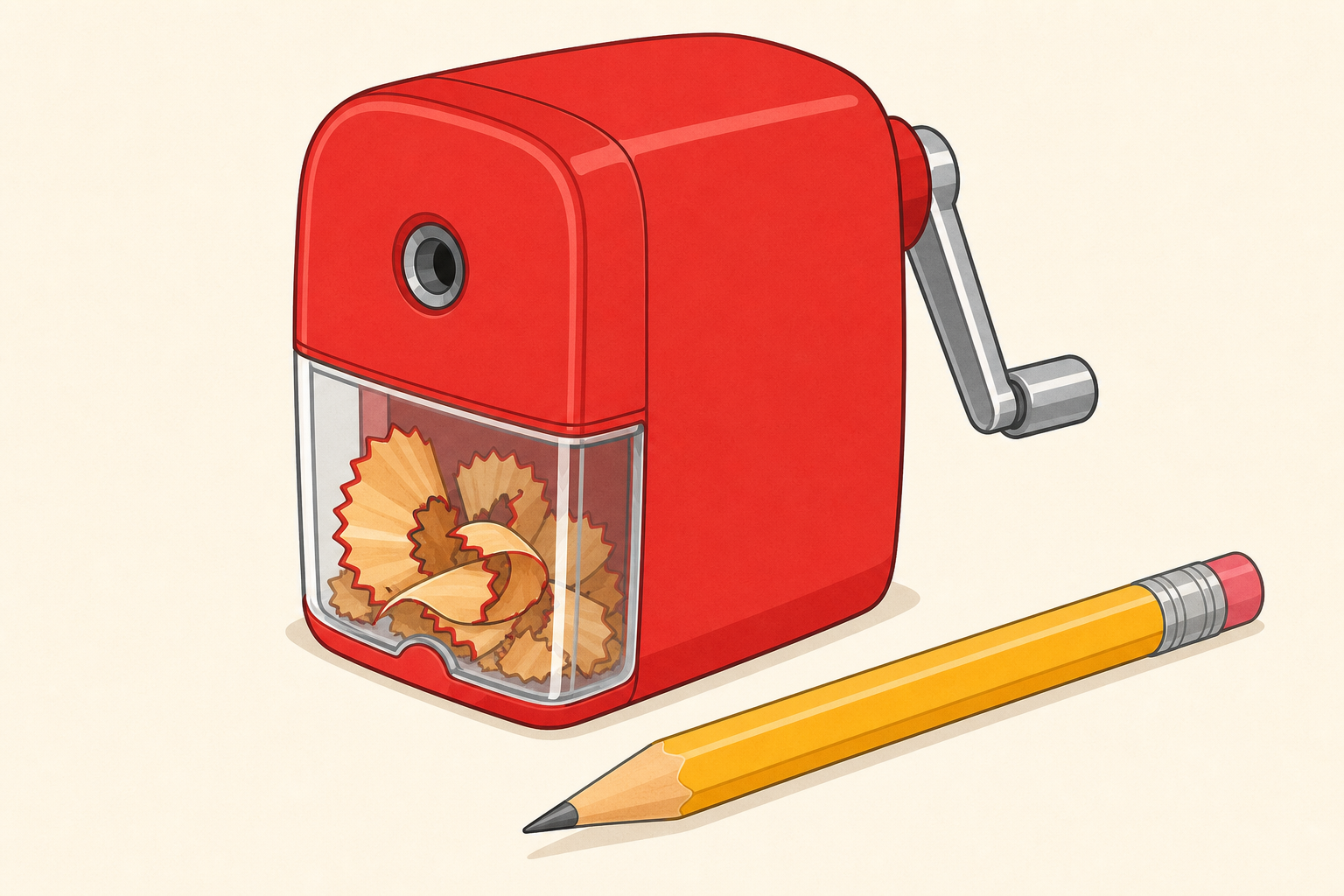 Think of something you do every day, like tying a shoe or washing your hands. Could a robot do that job if we only told it half the steps?
If we forgot to turn the sharpener handle, would the pencil ever get a point?
Today we will break everyday jobs into ordered steps, then play robot and spot what is missing.
2 - Jobs Work in Steps ~5 mins

Today's big idea: jobs work in steps in order — small actions from first to last, like a recipe.
If one step is missing, the job fails.
Sharpening a pencil is one of those jobs. Think about what you do first, what you do next, and what you do last — then see if the class can agree on the order.
3 - Order the Steps and Play Robot ~16 mins
In your group, you get one job: pencil sharpener, sending a message, or washing hands.
1. Mix the four step cards, then put them in the order that makes the job work.
2. One pupil is the robot. The others read each card aloud. The robot does only what that card says — nothing extra.
3. Now hide one card. Run the job again. What goes wrong? Which step is missing?
4 - Record Our Steps ~6 mins
On your paper, show your job in two parts.
1. Number or draw the four steps in order.
2. Draw or label only the missing step, and write or say what went wrong without it.
Full sentences are optional — a short label or a quick drawing is enough.
5 - Devices Follow Steps Too ~5 mins
 Share one thing with the class: which step did your group hide, and what went wrong?
That ordered list of steps you built is called an algorithm — like a recipe that tells how to finish a job.
Now think of making toast, unlocking a door, or loading the dishwasher. What would go wrong if one step was skipped?
Spotting the missing step is how people who make apps and machines fix jobs.
Unlock the full learning experience
You're previewing this lesson. Get full access to this lesson and hundreds more — each one ready to teach, with interactive activities, printable resources and pupil progress tracking built in.
This lesson is copyright of DigitalSkills.org 2017 - 2025. Unauthorised use, copying or distribution is not allowed.