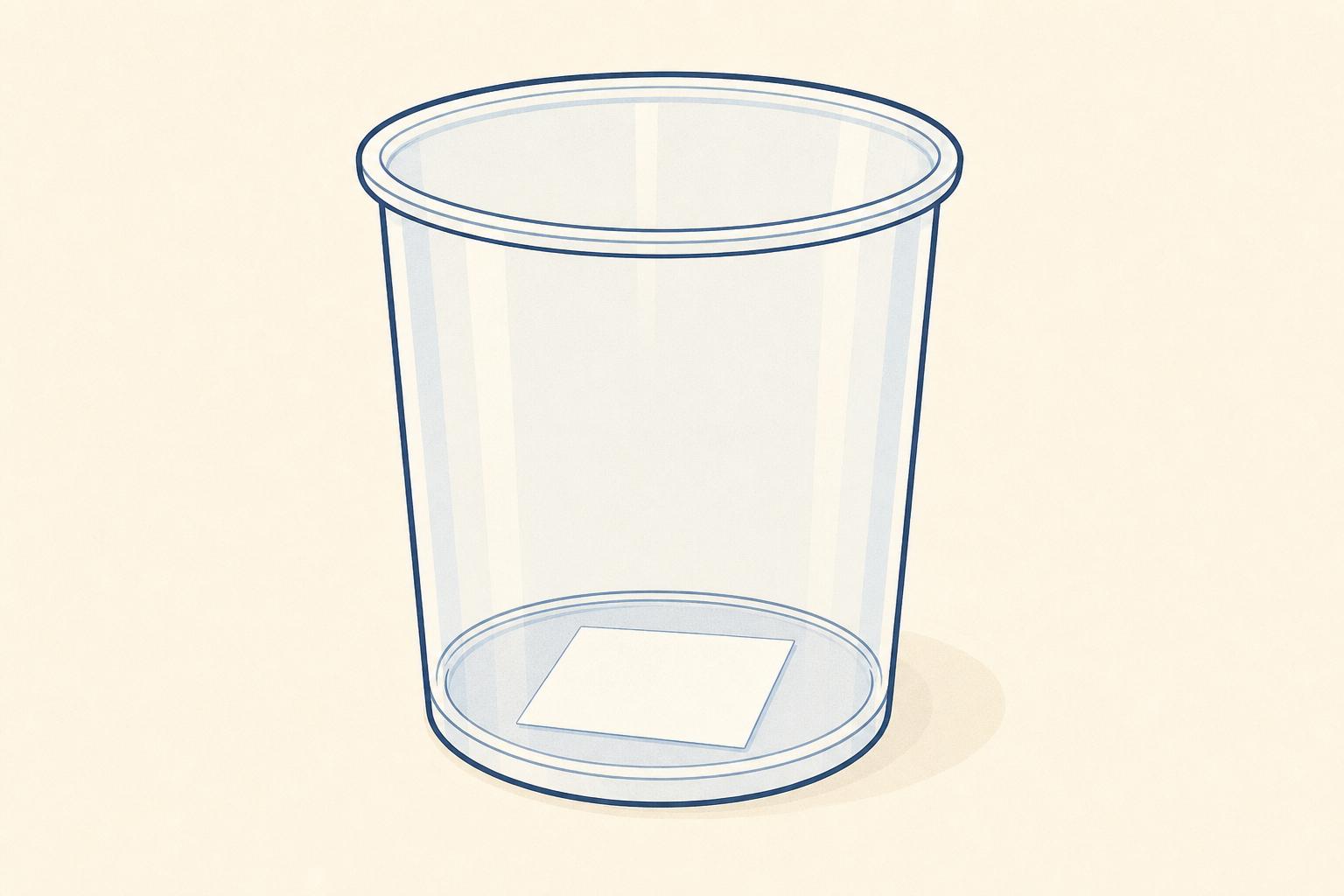
 Look at this cup. It looks empty. Is it really empty, or is something invisible inside it?
If air is real stuff, what should we be able to show about it today?
We have two questions to test.
1. Does air take up space?
2. Does air have mass? Mass means how much stuff something is made of. We can compare it fairly on a balance.
Talk with your partner. What do you predict for each question, and why?
Jot each short prediction on your Investigation Journal page now, before we test anything.
In your group, push an upturned cup straight down into the water with a small scrap of paper stuck in the top of the cup. Keep the cup level. Lift it out carefully and check the paper.
Then tip the cup slightly under the water and watch what happens.
Was your prediction right? What does this tell you about air?
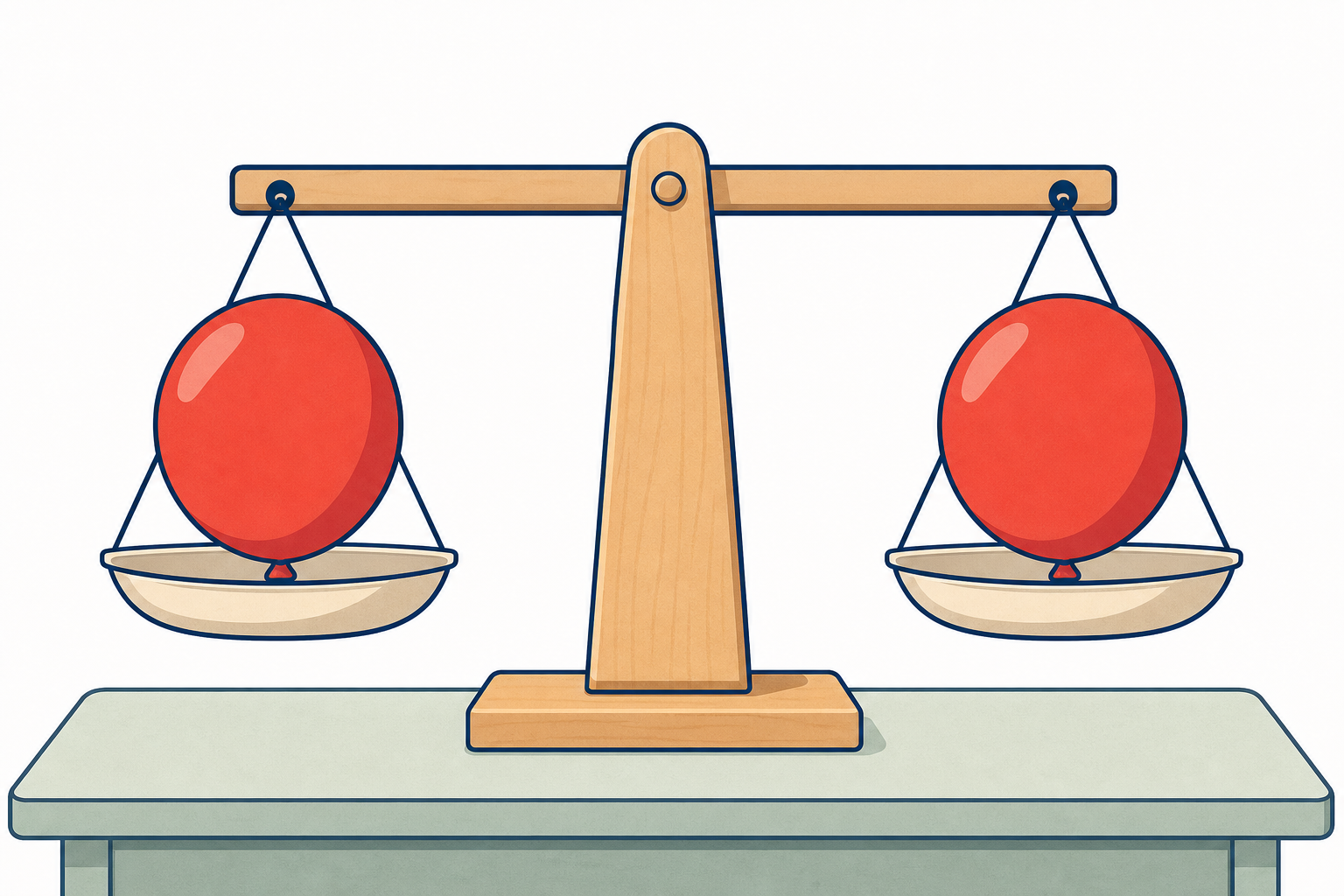 Watch the beam balance carefully. Two balloons start the same. We will change only one thing: the air in one balloon.
Predict first with a clear show of hands. When the air leaves one balloon, will the balance: stay level, tip so the inflated side goes down, or tip so the empty side goes down?
On three, vote with one hand for your choice. Then watch what actually happens.
Look back at both tests. What did you see when the cup stayed level under water? What did you see on the balance after the air left one balloon?
In your group, agree on one observation that best supports "air takes up space" and one that best supports "air has mass". Share those clear observations with the class. Save explanations for the next steps.
Unlock the full learning experience
You're previewing this lesson. Get full access to this lesson and hundreds more — each one ready to teach, with interactive activities, printable resources and pupil progress tracking built in.
This lesson is copyright of DigitalSkills.org 2017 - 2025. Unauthorised use, copying or distribution is not allowed.