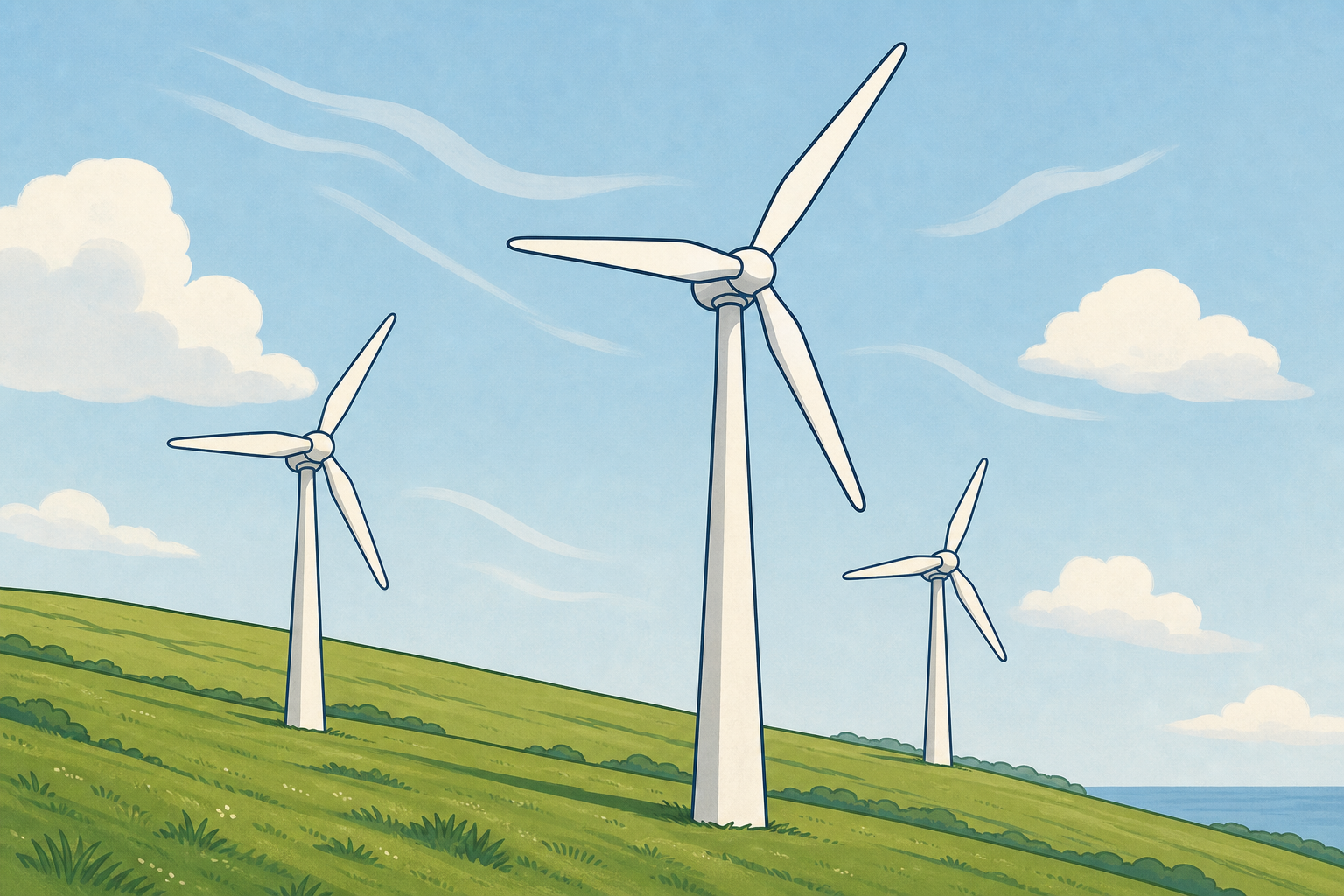
 What powers the lights in this classroom right now? Hands up: wind, the sun, gas, peat, or something else?
Today we sort Irish energy sources and rank how sustainable they are. We also build a wind catcher and weigh the good and hard parts of a wind farm near a town.
 Start with one energy source: wind. Wind keeps coming back on Irish hills. That makes it renewable: energy nature replaces quickly enough that we will not run out.
For a long time many Irish homes burned turf from the bog; now more of our electricity comes from wind on hills and coasts.
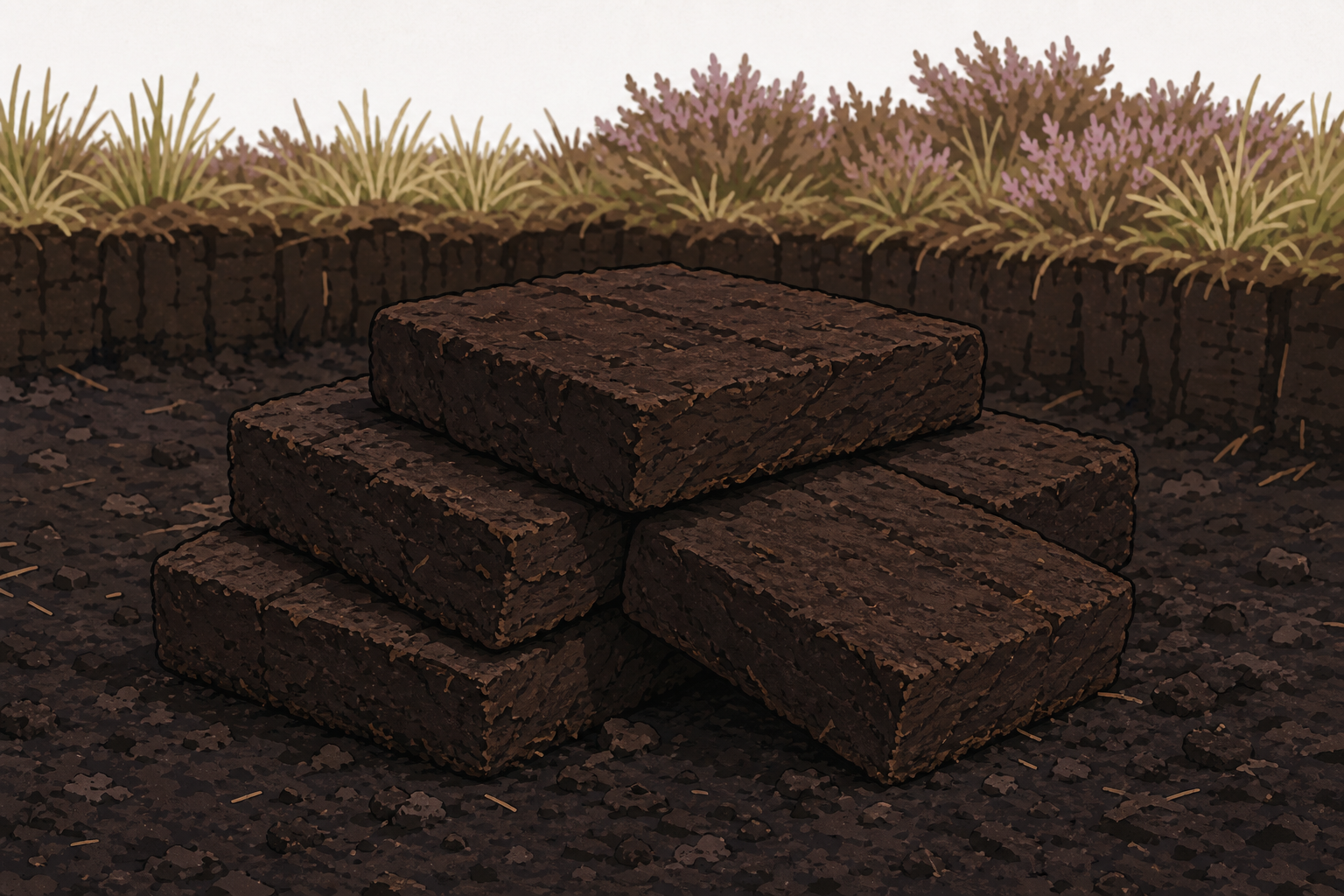
Non-renewable is the opposite: the source will run out because nature cannot replace it quickly. We will meet peat from a bog as one example.
Which word fits wind on an Irish hill: renewable or non-renewable?
Five energy sources appear on the board: wind, sun, hydro (river water), peat (turf), and natural gas.
For each one we will hear a short clue first, then decide: renewable or non-renewable? Call out your answer and why before we check.
Before we clear the board, write the five source names under What I found out on your Investigation Journal page as two short lists: renewable first, then non-renewable (names only).
Renewable or non-renewable?
We will use a simple idea called sustainability: choosing energy so it can keep going for people after us.
Renewable answers "will it run out?". These zones also ask about land, air and wildlife.
In your group, place the five cards into three zones:
- more sustainable
- in the middle
- less sustainable
Wind here because it keeps coming back.
When you talk, try starters like: It keeps coming back… / It will run out… / It can harm land or air… Agree out loud. There is no single right order.
In the last minute only, jot the five source names into the three zones on your Investigation Journal page (names only).
Now we place the same five sources on the board into three groups: more sustainable, in the middle, and less sustainable.
This is our class argument, not a test. Be ready to say why a card belongs where you put it. We will leave this ranking on the board for later.
How sustainable is each source?
Unlock the full learning experience
You're previewing this lesson. Get full access to this lesson and hundreds more — each one ready to teach, with interactive activities, printable resources and pupil progress tracking built in.
This lesson is copyright of DigitalSkills.org 2017 - 2025. Unauthorised use, copying or distribution is not allowed.