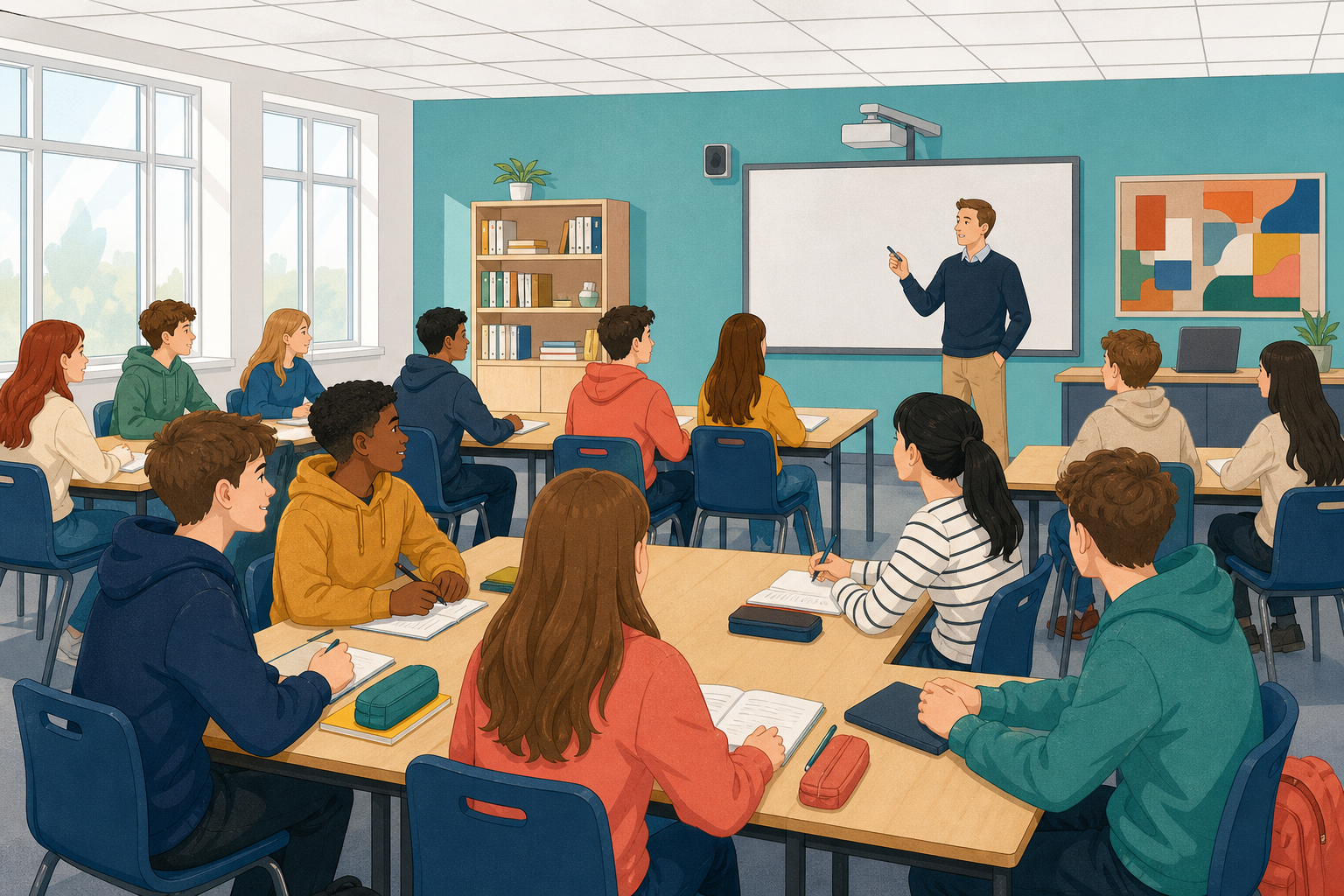
 In recent lessons you worked out some basic rules about consent, privacy, fair use and what to do when something goes wrong online. Today you will turn them into the first draft of your class charter, which is a list of rights and responsibilities the class agrees to follow online. By the end, the class will have draft statements under five headings. Next time you will improve them and agree the final version.
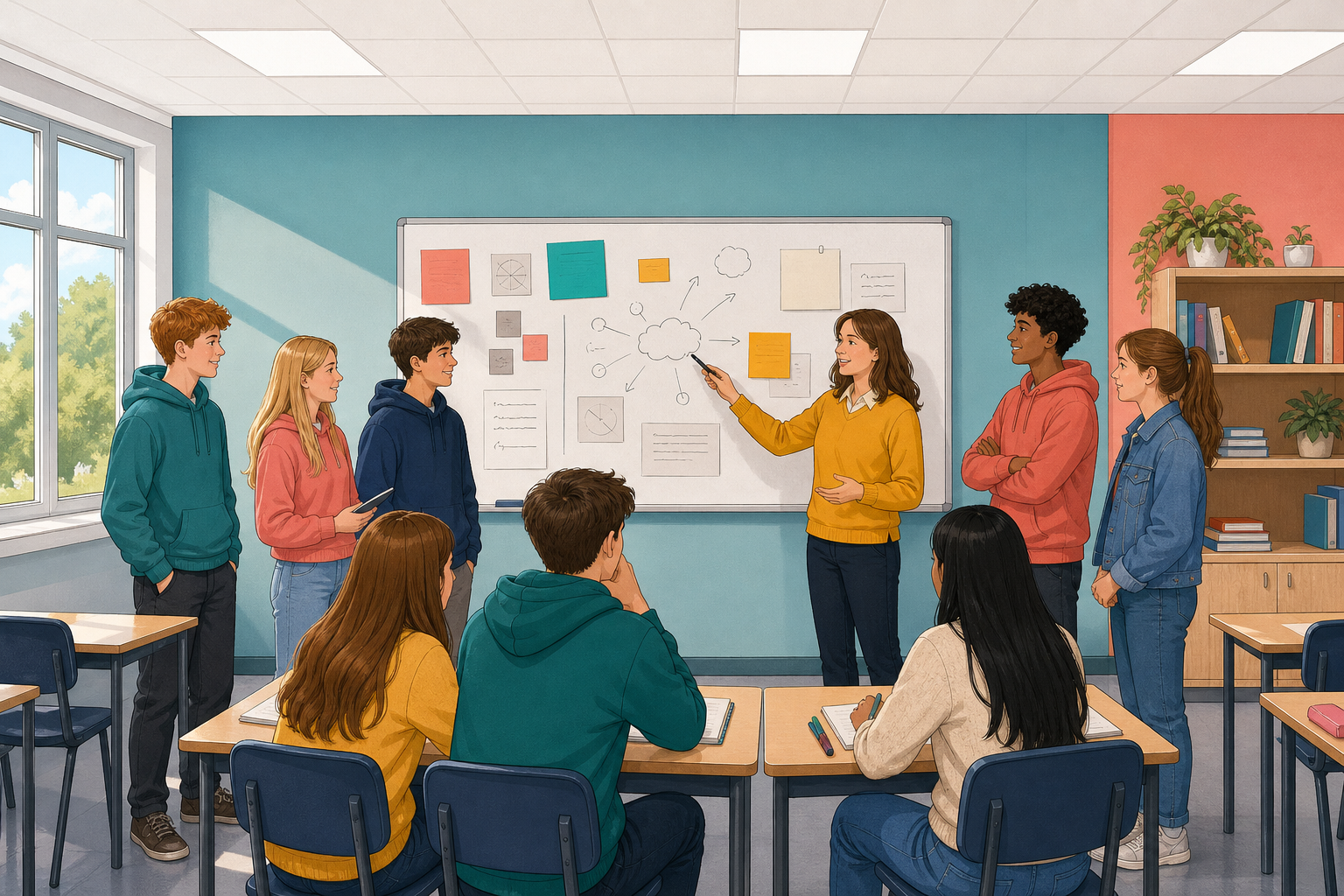 A charter is a list of rights and responsibilities the class agrees to follow online. Rights are what you can expect. Responsibilities are what you will do.
A weak statement sounds like a poster slogan, such as "Be nice online." A strong statement is something you can check yourself against, such as "I ask before I post a photo or clip of someone else."
There are five headings:
- Respect: how we treat people
- Consent: asking before sharing photos or clips
- Privacy: personal information and private messages
- Responding to harm: what to do when things go wrong
- Fair use: crediting other people's work
Your teacher will type the class's statements into the activity below.
- Read the headings and starter statements together. You can use a starter, reword it, or write your own.
- As a class, write two or three statements under Respect.
- Then, with the person next to you, write one statement in about 60 seconds. Your teacher will add some to the board.
- Keep going under the other headings until every heading has at least one statement. Then add more under any heading that only has one or two.
- Every statement must be something a student can actually do, or expect, online.
- As a class, pick the ones worth keeping. Next time you will improve them before they become final.
Draft our class charter
Now work in small groups to make the draft stronger. Your teacher will give your group one heading, usually one that still only has a few statements.
- For 5 minutes, write two more statements for your heading in your group. Each one must be something you can check, which means something a student can do or fairly expect online.
- If a line already under your heading sounds like a slogan, such as "be kind" or "think first", rewrite it as a real action. If none do, just add your two new statements.
- For the next 3 minutes, your teacher will choose just two groups to read one of their best statements aloud, and everyone else listens.
- In the last 2 minutes, every group hands its best statements to your teacher, who types them into the list on the board.
Every group's statements go into the draft today, whether you read them aloud or not. That way the whole draft is ready for next time, when the class will join similar statements together, vote and agree on the charter.
Look at the draft on the board. In the strongest statements, you can picture a real student doing the thing, or expecting it from others, online.
That is what a charter is for. It is not a poster of nice words. It is a short list you can actually use when you post, share, credit someone's work or deal with something harmful.
Next time the class will combine these drafts and vote on one agreed charter. Your teacher keeps a copy of today's draft until then.
Unlock the full learning experience
You're previewing this lesson. Get full access to this lesson and hundreds more — each one ready to teach, with interactive activities, printable resources and pupil progress tracking built in.
This lesson is copyright of DigitalSkills.org 2017 - 2025. Unauthorised use, copying or distribution is not allowed.