 Think about a cup of tea with sugar, or pasta water with a pinch of salt. The sugar or salt seems to vanish. Does it really go away forever, or is it still there somehow?
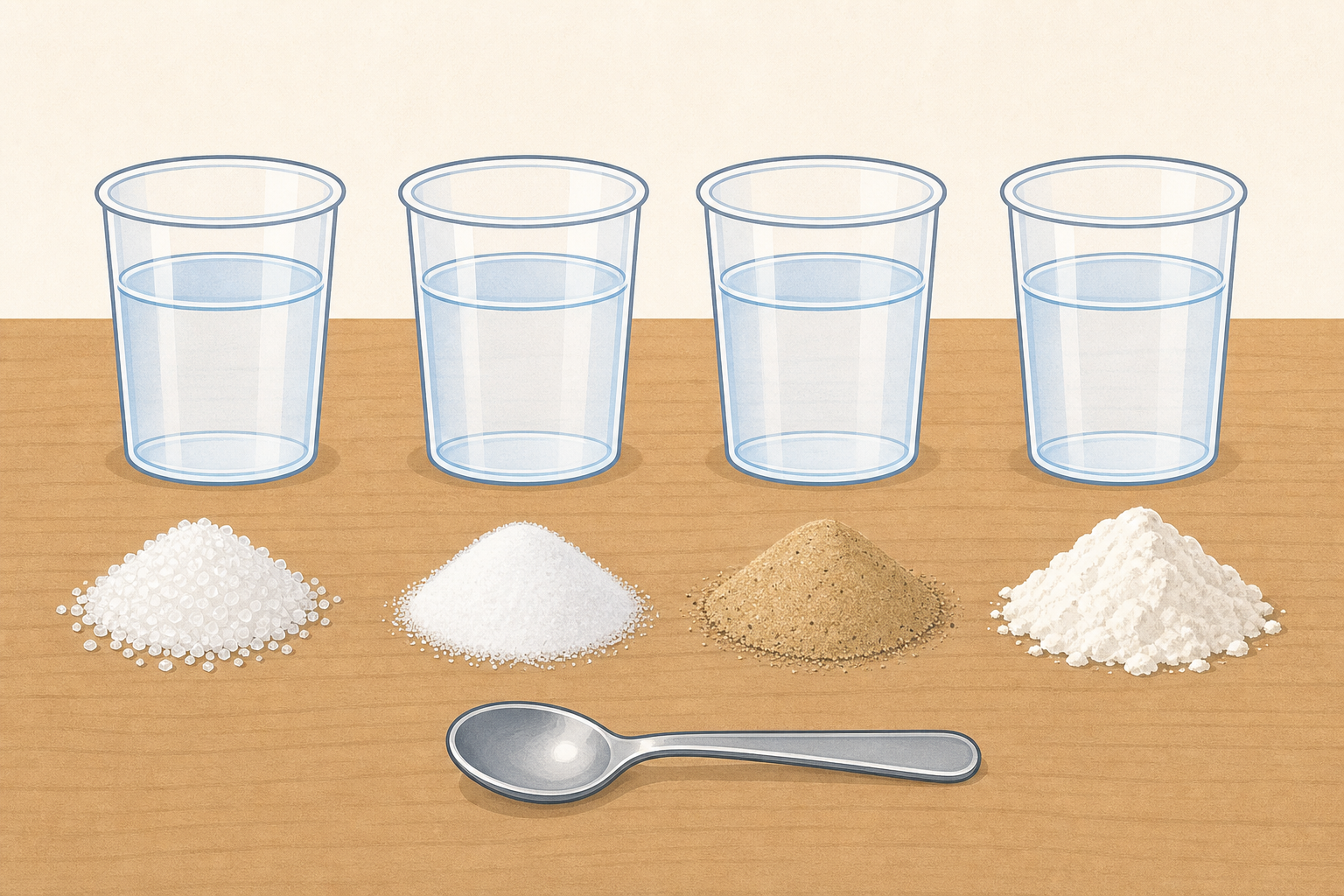
Today we will test four materials in water and find out which ones dissolve.
Our question: Which materials dissolve in water?
We will try sugar, salt, sand and flour.
Dissolve means a solid mixes into the water so we cannot see the pieces any more.
Which ones do you think will dissolve? Tell a partner why.
 Before we test, we plan so the test is fair.
Help sort the cards on the board into three groups: what we change, what we measure, and what we keep the same.
What do we change? What do we measure? What must stay the same?
Which materials dissolve in water?
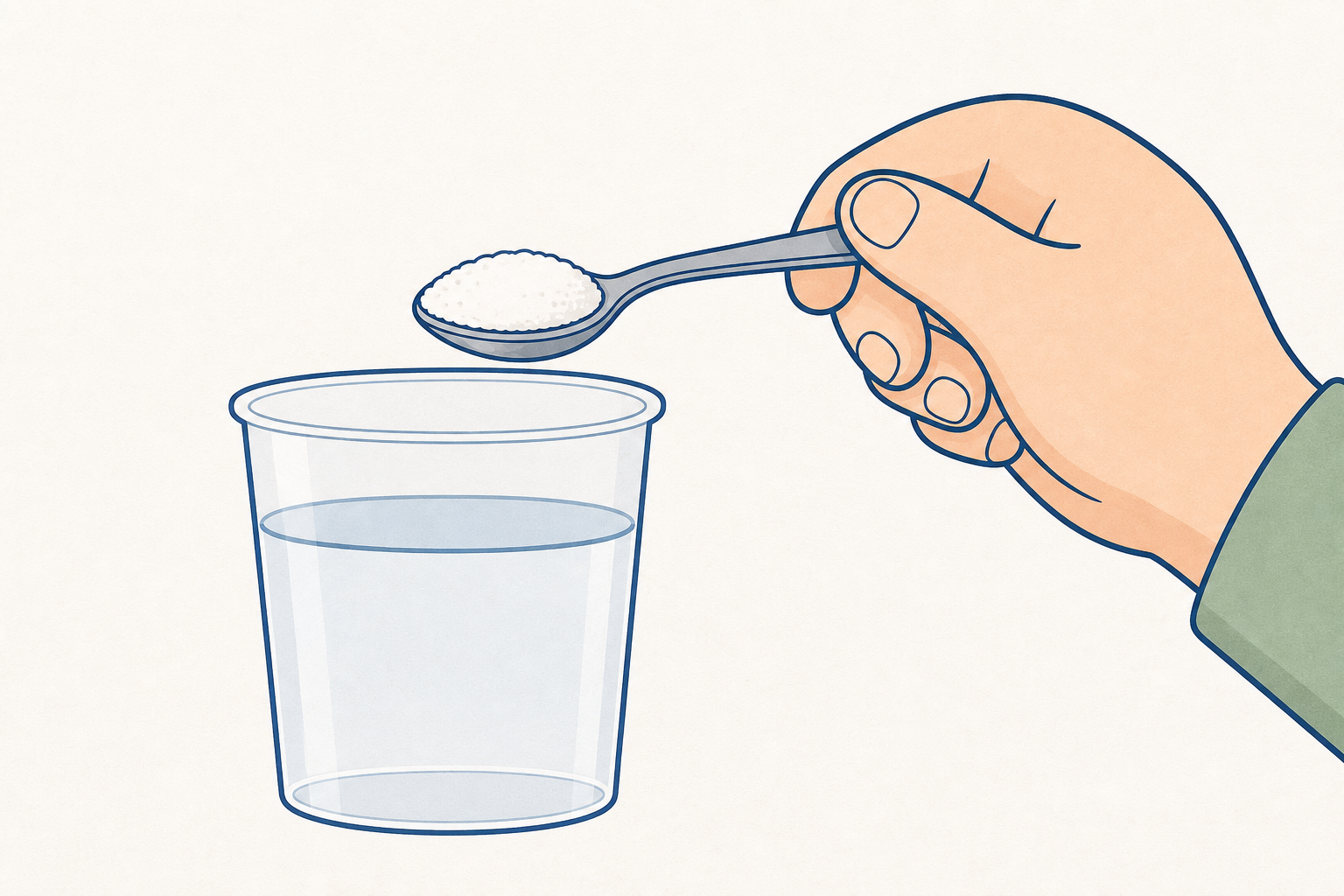
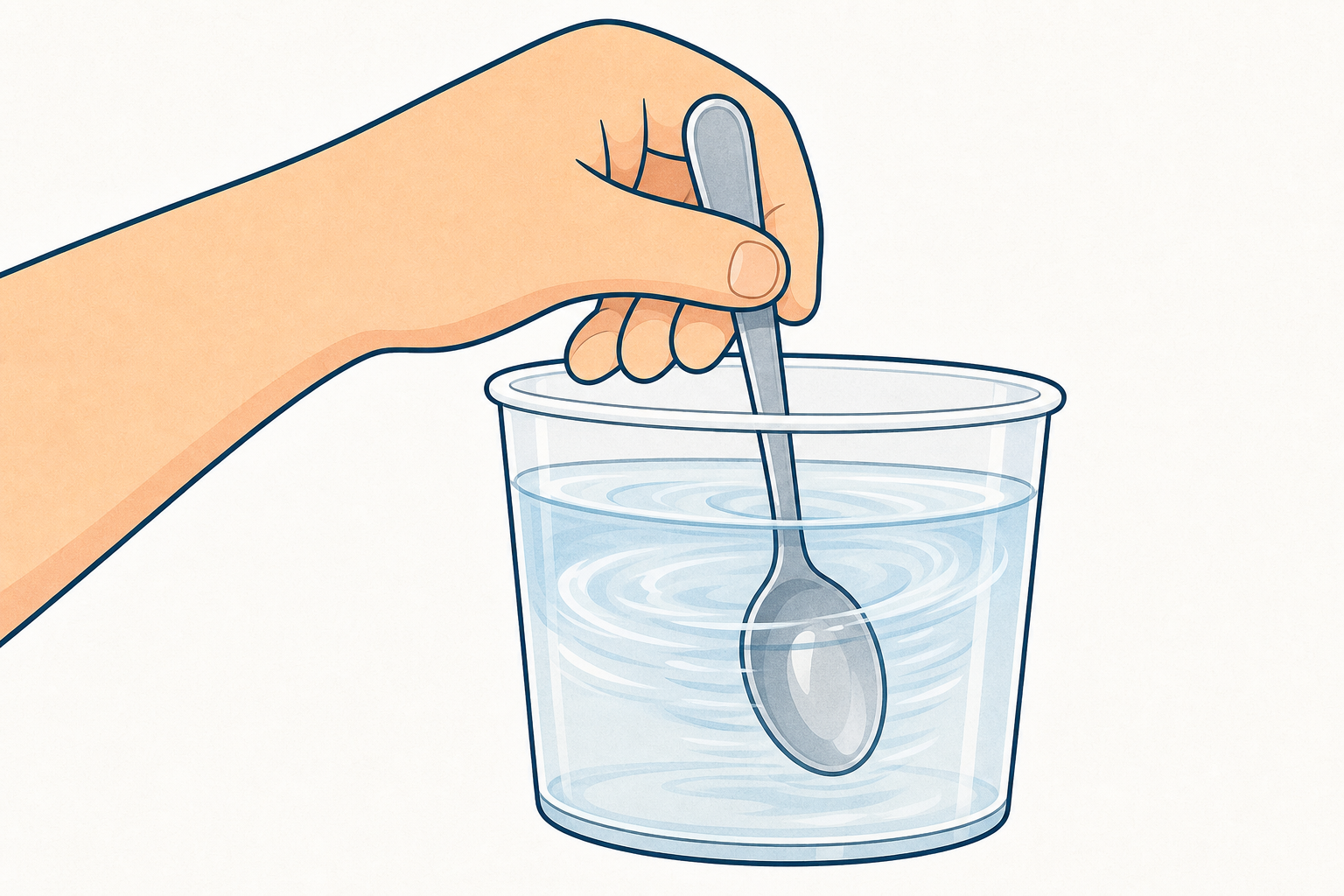 In your group you have four clear cups of water and four materials: sugar, salt, sand and flour.
For each material: add one level spoonful to a cup. Stir twenty slow times the same way every time. Watch carefully. Does it dissolve? Use this timing language: quick, a while, or not at all.
After each cup, make a quick tick or word on your Investigation Journal page (or a scrap) before you move to the next material. You will write it up more carefully in a moment.
Do not taste anything. Keep the cups still when you have finished stirring so you can look again.
Before you write, look at this pair:
- I saw: grains on the bottom.
- I think: sand does not dissolve.
On your Investigation Journal page, finish the results table from the ticks and words you jotted during the test. There is one row each for sugar, salt, sand and flour. For each one write:
- Did it dissolve? (yes or no)
- Quick, a while or not at all
- What I saw: clear or cloudy, and anything on the bottom
Then write one I think... sentence underneath the table.
Keep what you saw separate from what you think it means.
Unlock the full learning experience
You're previewing this lesson. Get full access to this lesson and hundreds more — each one ready to teach, with interactive activities, printable resources and pupil progress tracking built in.
This lesson is copyright of DigitalSkills.org 2017 - 2025. Unauthorised use, copying or distribution is not allowed.