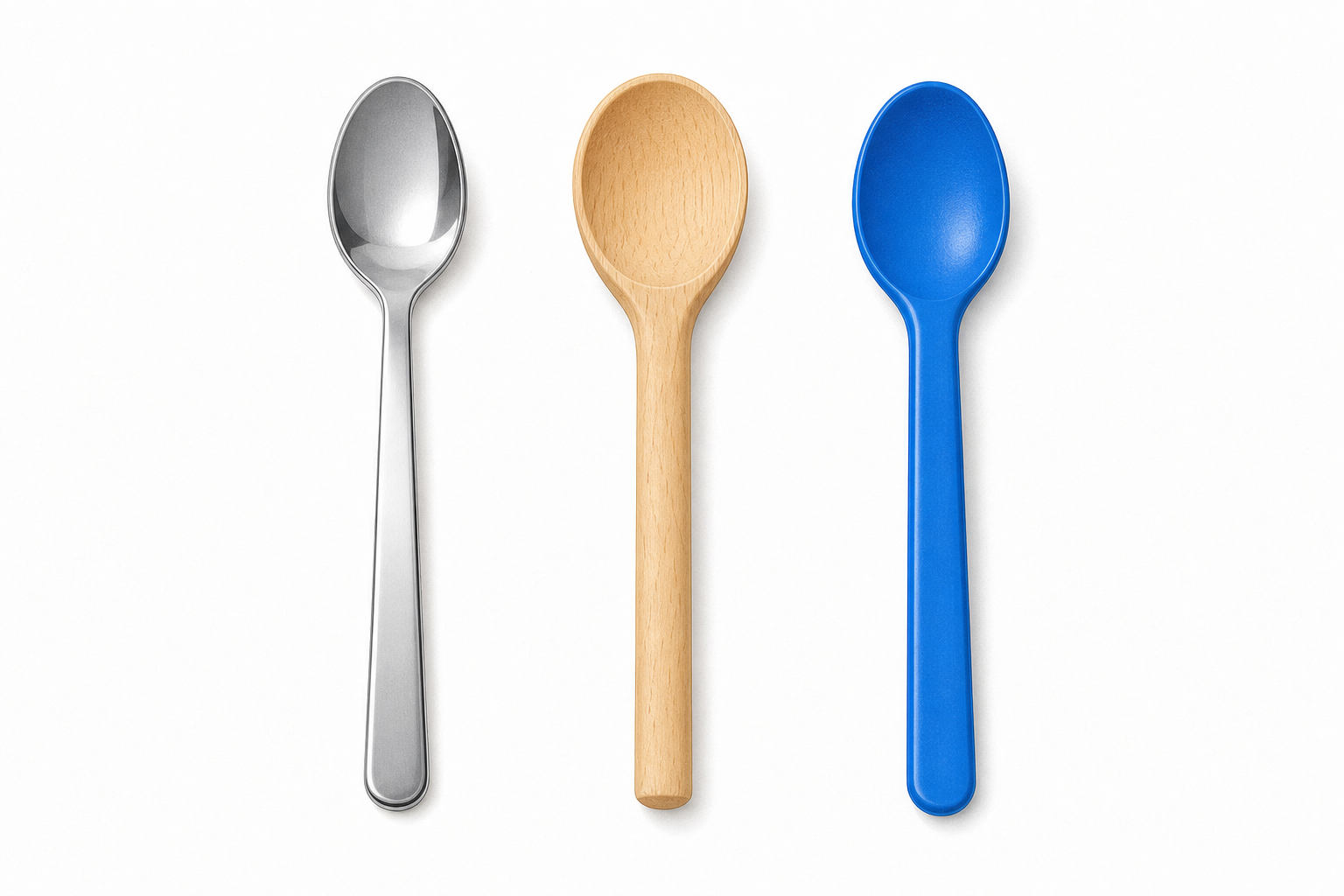
 Imagine a pot of soup bubbling on the hob. Why is the handle plastic or wood, not bare metal? Hands up: which spoon do you think will stay cooler longest in warm water, metal, wood or plastic?
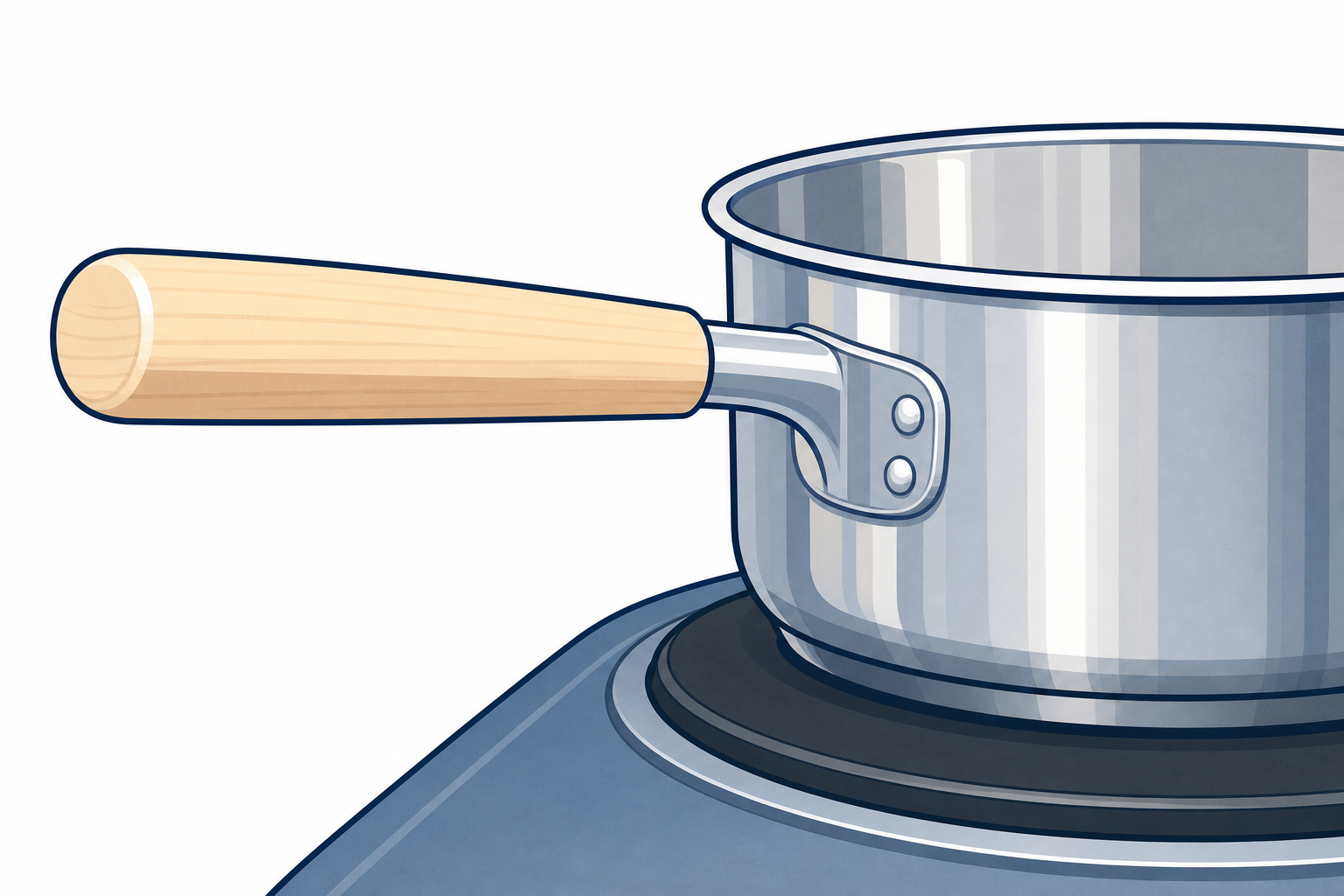 A heat conductor lets heat travel through it quickly, like a metal pan on the hob.
A heat insulator lets heat travel through only slowly, like a wooden pot handle or an oven glove.
Look around the room: point to something that should be a conductor, then something that should be an insulator. Why might a pan be metal but its handle wood?
Our class question: which spoon handle warms fastest in warm water, metal, wood or plastic? In your group, say your prediction and one reason. Predictions are the start of the science, not a test to get right.
 Your group plans a fair test. Every group follows this plan:
- Change: only the spoon material (metal, wood or plastic).
- Measure: time until the handle feels warm (same judge, same fingertip, stopwatch).
- Keep the same: cups, water amount, water warmth, spoon depth, and who judges.
- Three trials for each material so we can choose a middle reading later.
Before any water is poured, write your plan at the top of your Investigation Journal page: change, measure, keep the same.
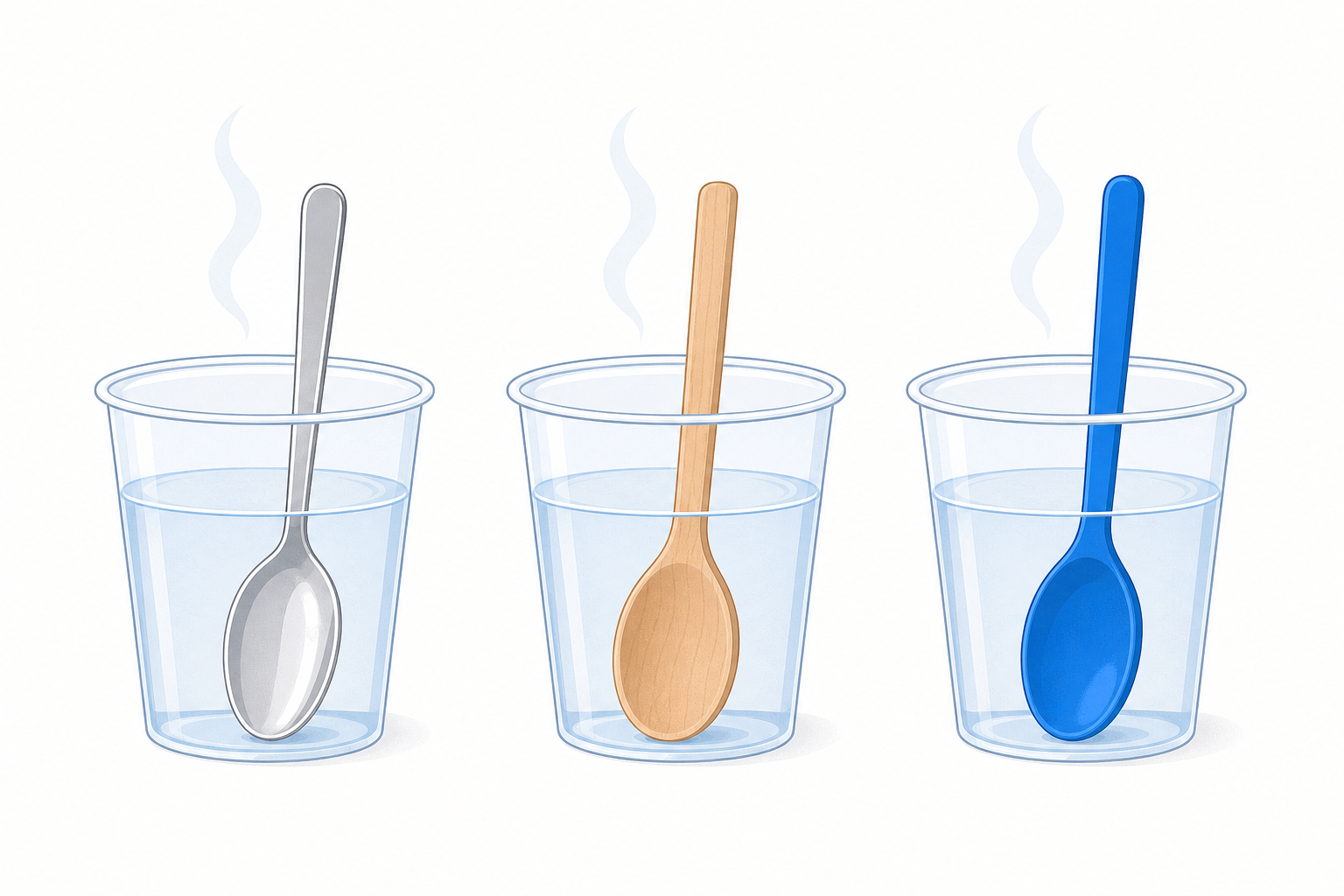 Run the fair test your group planned, changing only the spoon material. Your teacher pours the warm water. Do three trials for each spoon and write each reading straight away, because next we pick the middle reading from each three.
Unlock the full learning experience
You're previewing this lesson. Get full access to this lesson and hundreds more — each one ready to teach, with interactive activities, printable resources and pupil progress tracking built in.
This lesson is copyright of DigitalSkills.org 2017 - 2025. Unauthorised use, copying or distribution is not allowed.