 Someone in our school needs something that can hold a real load without falling or tipping. Who might that be, and what might they need held up?
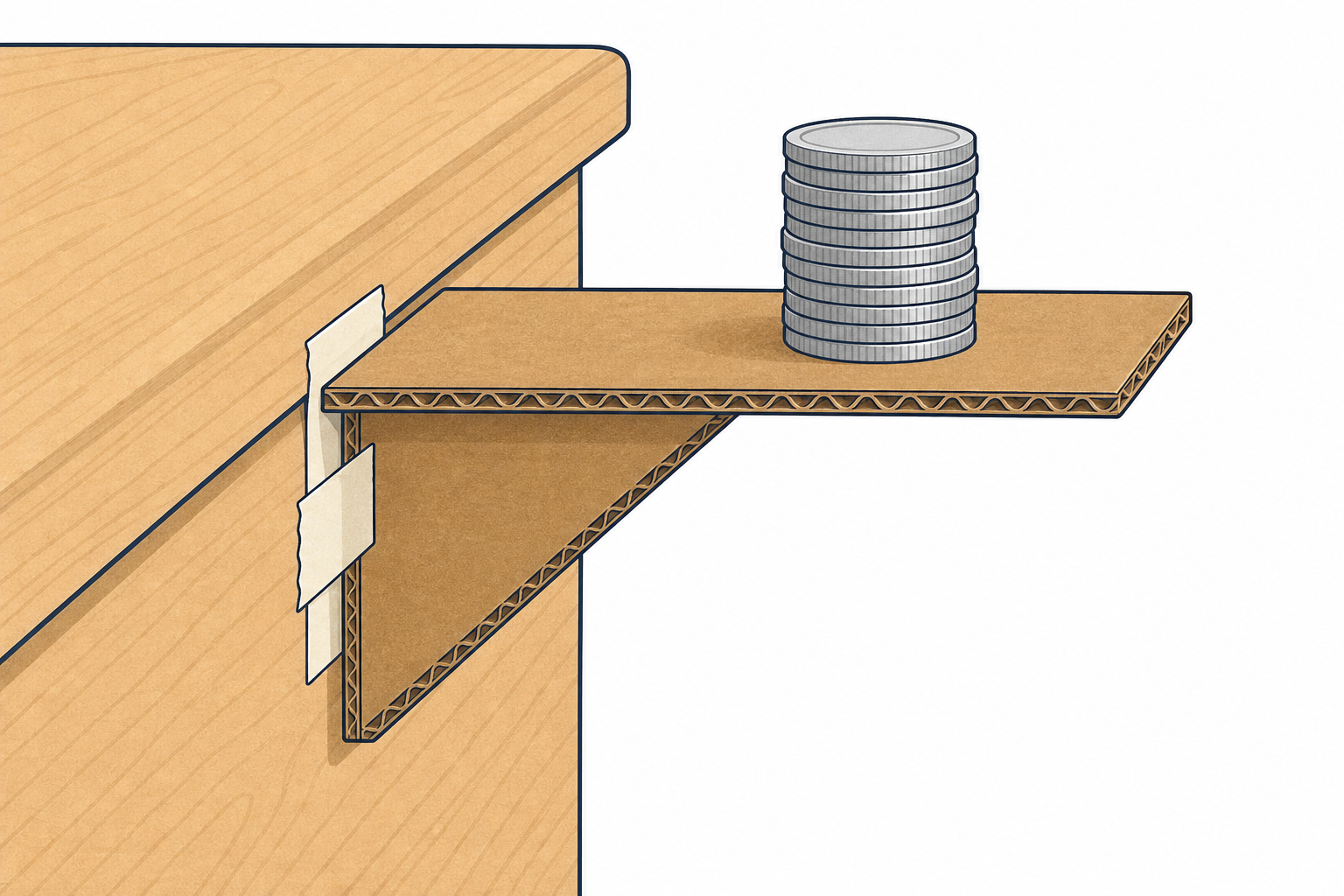 While we load: Watch this small shelf bracket on the desk edge. I will add coins one at a time until something gives way. What do you think will fail first: the triangle shape, or the tape join?
In your group, pick one real school job that has to hold something up. Someone nearby is waiting for a better answer than a pile on the floor. Ideas on the board:
- a shelf for the classroom library
- a stand that holds a tablet at reading height
- a hook rail that takes wet coats
- a small classroom model of a bridge for the wet corner of the yard
Name who it is for, what load it must hold, and why that person or place needs it. Use a board idea or invent another school job that holds a real load and can later be built on a desk from card, sticks, tape, pins or string. No building yet: talk it through first.
Now build a half-size version of your idea. Half-size means a model that fits on the desk: roughly half as tall or half as long as a full classroom version of the job (a shelf or stand that could sit on a table, or a short desk-edge span for a bridge model). Neat measuring is not the point today. A rough piece is enough.
Use one strong shape you trust (a triangle, a tube, an arch, or a flat strip with a triangle stuck under it) and one main join that holds straight away (tape, a split pin, or string). It only needs to stand and have a place to put a load. You have about fifteen minutes. Keep it small so we can break it on purpose next.
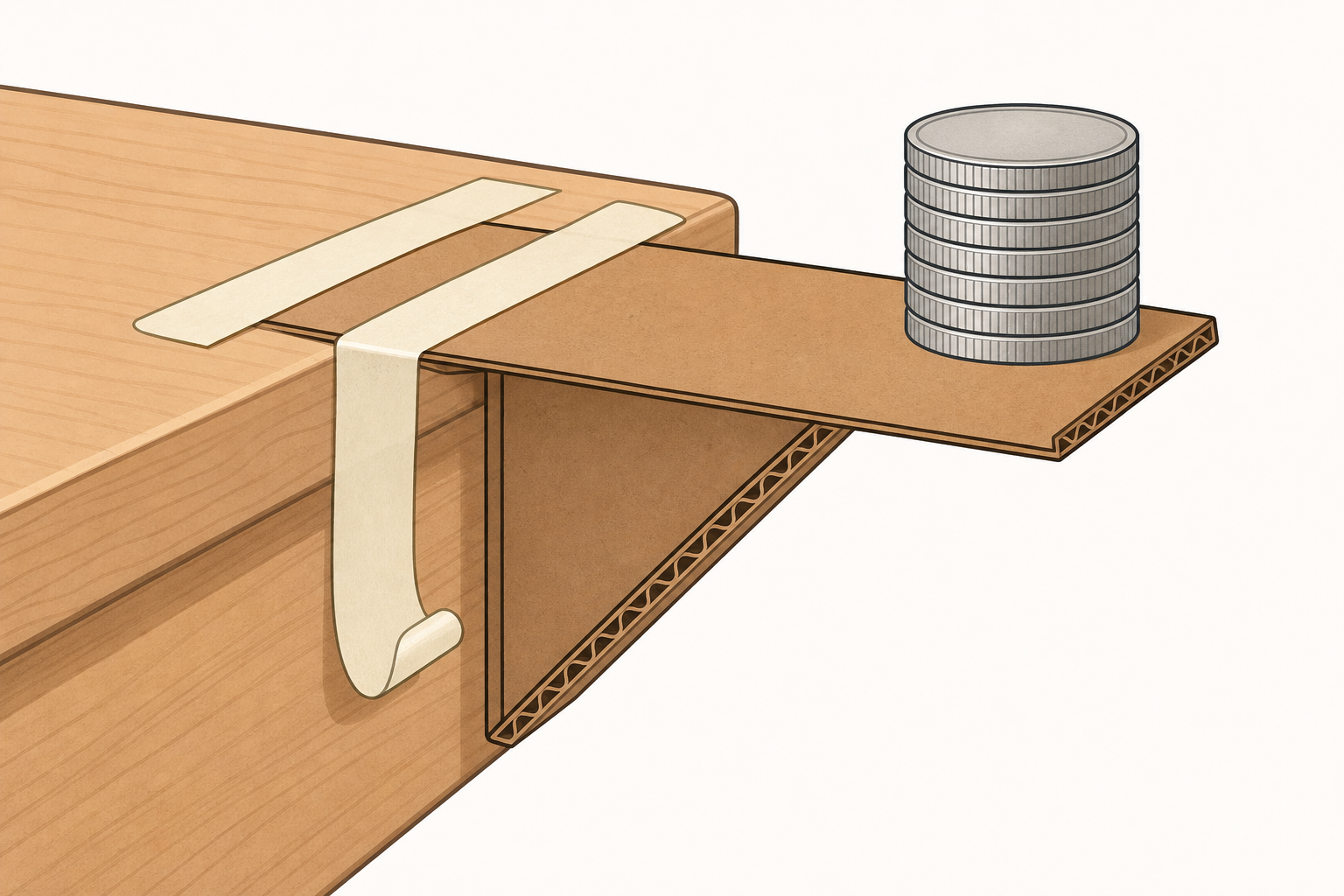 Engineers break the small one on purpose so the weak spot shows early. Add light weights one at a time at the load point. Stop when something sags, tips, peels or breaks. Say out loud what gave way first and roughly how much it held: that failure is useful news, not a mess.
Unlock the full learning experience
You're previewing this lesson. Get full access to this lesson and hundreds more — each one ready to teach, with interactive activities, printable resources and pupil progress tracking built in.
This lesson is copyright of DigitalSkills.org 2017 - 2025. Unauthorised use, copying or distribution is not allowed.