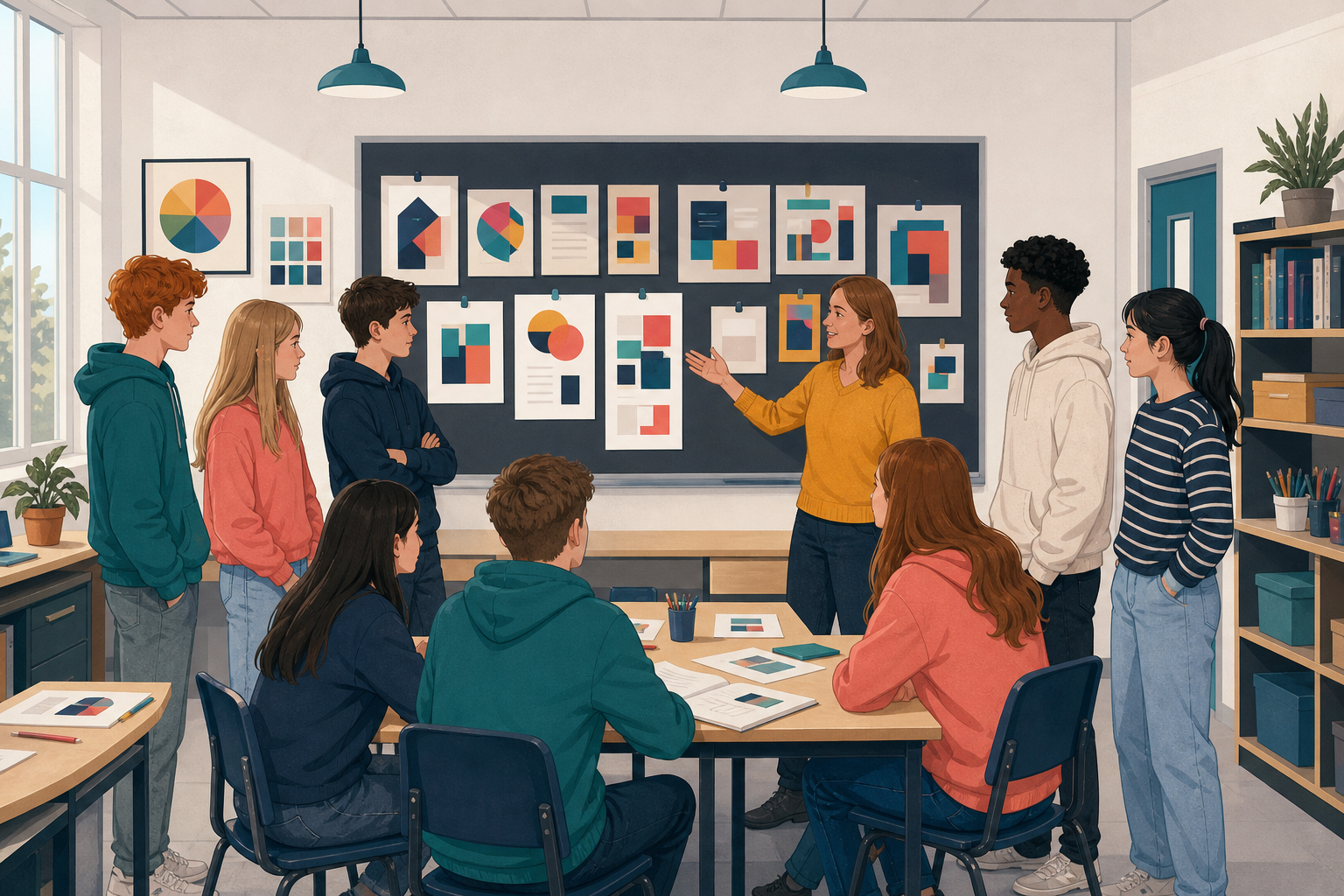
 You already know that an app's algorithm chooses what goes in your feed. Today you will look at the posts, adverts and pictures themselves, and practise spotting when they rely on a ready-made idea about a group of people.
First you will judge some made-up examples for bias. Then the class will talk about what happens when the same stereotype shows up again and again.
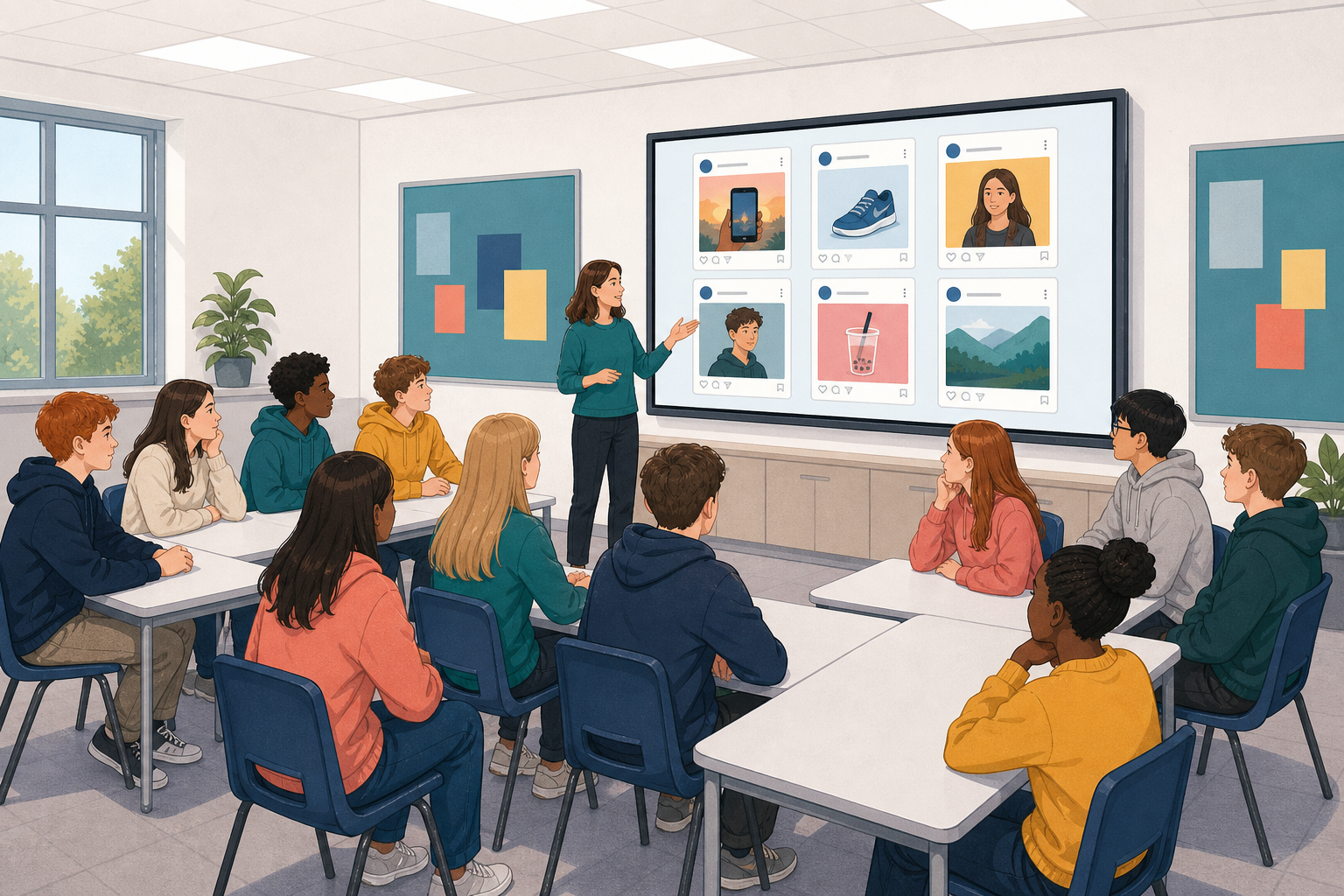 Bias is when something leans toward one view or group and leaves others out or makes them look worse. A stereotype is a ready-made idea about a whole group, like "teenagers are always on their phones", treated as if it were true of everyone in that group.
For each example, you choose one of three answers.
- Balanced means it is fair to the people in it.
- Shows bias means it leans on a stereotype or tells only one side.
- Cannot tell from this means there is not enough detail to judge.
First, think of one stereotype you have seen online about people your age, and keep it to yourself.
The class will work through the first Bias detective example together. Make your own call first, then vote as a class and hear the reasoning. You will do the rest in the class poll on your own device.
Each time, ask two questions. Who is shown, and who is left out? And which ready-made idea about a group does the example depend on?
Agreeing with an example does not make it balanced. The hardest part is spotting bias in something you agree with. One example has very little detail on purpose, so Cannot tell from this can be the right answer.
Bias detective
Now everyone votes on each item on their own device. Round 1 is the example you just did together, so it will be quick.
There is no score and no clock. Once the class has voted, the board shows how the class split, and then it shows the reasoning. After the discussion, your teacher can open the vote again to see who changed their mind.
- Read the item and make your call.
- When the reasoning comes up, compare it with your own reason.
Being able to say why you made your call matters more than getting it right. The reasoning behind each answer is the important part.
Class Poll
As a class, talk about what can happen when people see the same stereotype again and again. There is no single right answer.
- If the same kind of person is never shown in "clever", "brave" or "leader" roles, what might that quietly teach people about who those roles are for?
- Sometimes you notice a real pattern that has evidence behind it. How is that different from turning the pattern into a rule about every person in a group?
You do not have to say this out loud. Think of one stereotype about teenagers that shows up a lot online. What might it make adults expect of you, and what might it make you expect of yourself?
Try to say how the stereotype spreads, for example by being repeated, by always leaving some people out, or through jokes that start to feel like "common sense". You may not all agree about how much stereotypes change what people expect, and that is fine.
Unlock the full learning experience
You're previewing this lesson. Get full access to this lesson and hundreds more — each one ready to teach, with interactive activities, printable resources and pupil progress tracking built in.
This lesson is copyright of DigitalSkills.org 2017 - 2025. Unauthorised use, copying or distribution is not allowed.