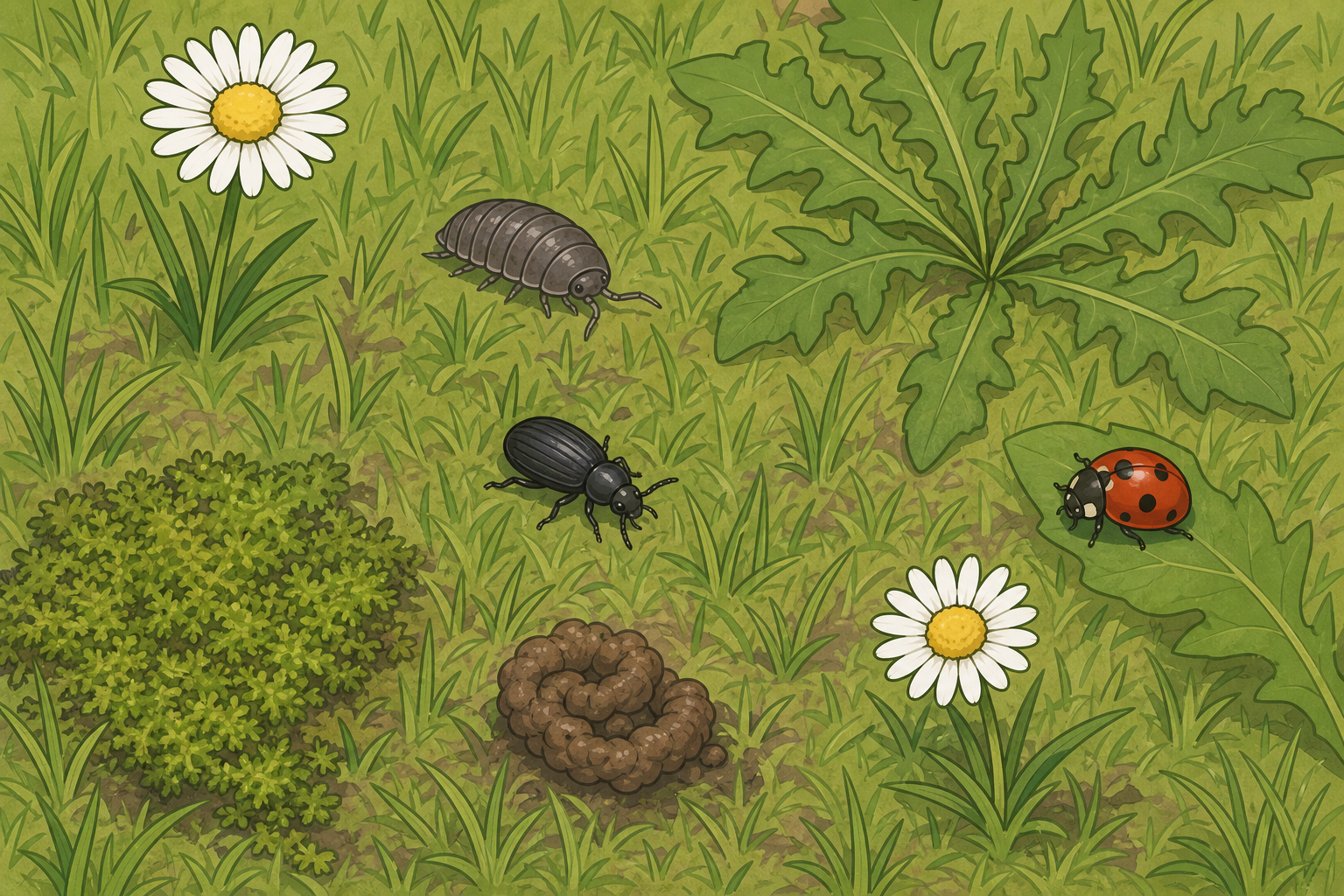
 If we wanted to know how much life is really in our school grounds, how could we find out without counting every single creature?
Talk with a partner for thirty seconds. What would you look at first?
Biodiversity means how many different kinds of living things share a place.
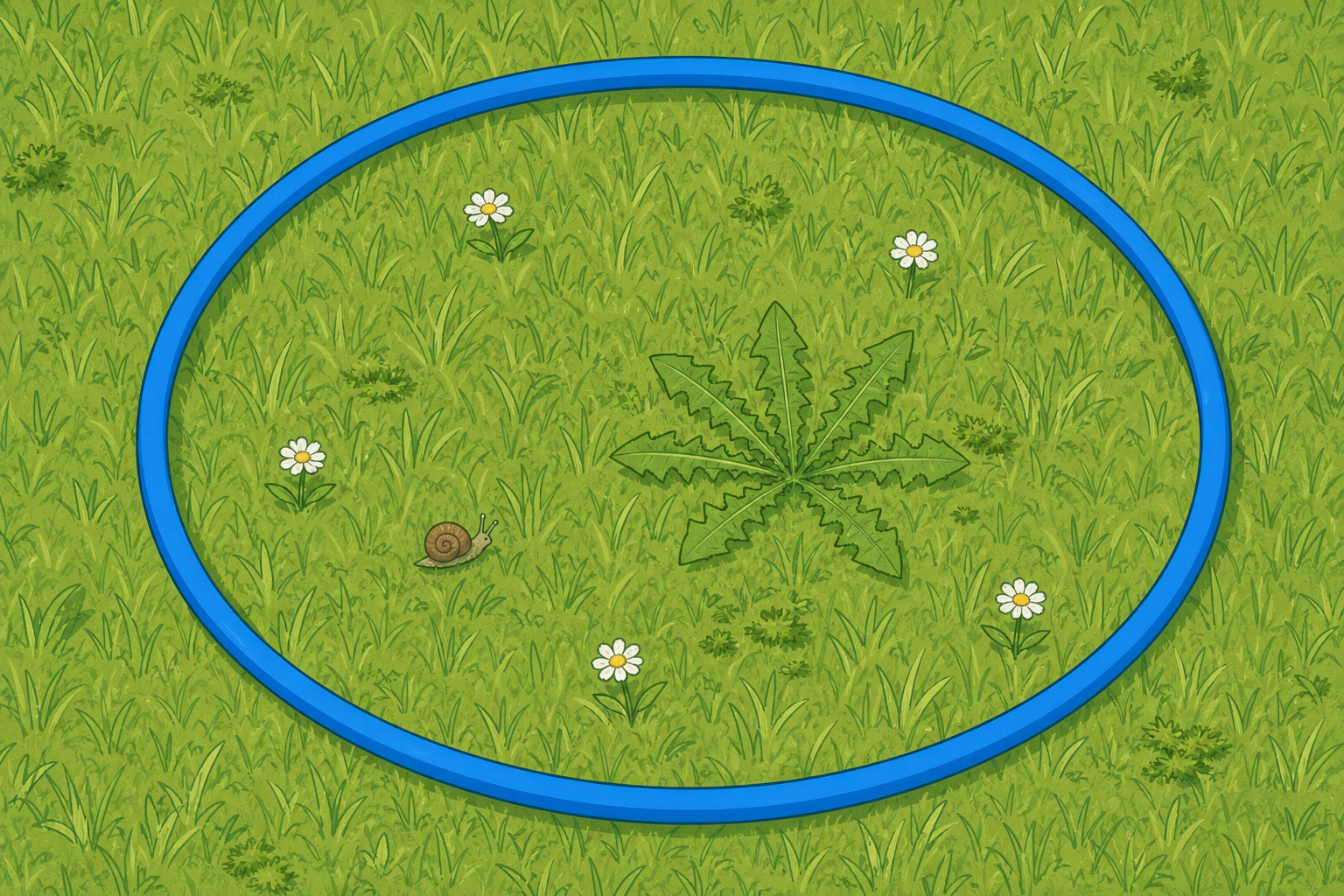 A microhabitat is a small spot with its own conditions, like under a log or on open grass.
Talk with a partner for thirty seconds: why sample two spots instead of only one favourite corner? Be ready to share one idea.
Watch your teacher try it with one hoop. A quadrat survey means we look inside the same-sized hoop in more than one spot so the comparison is fair.
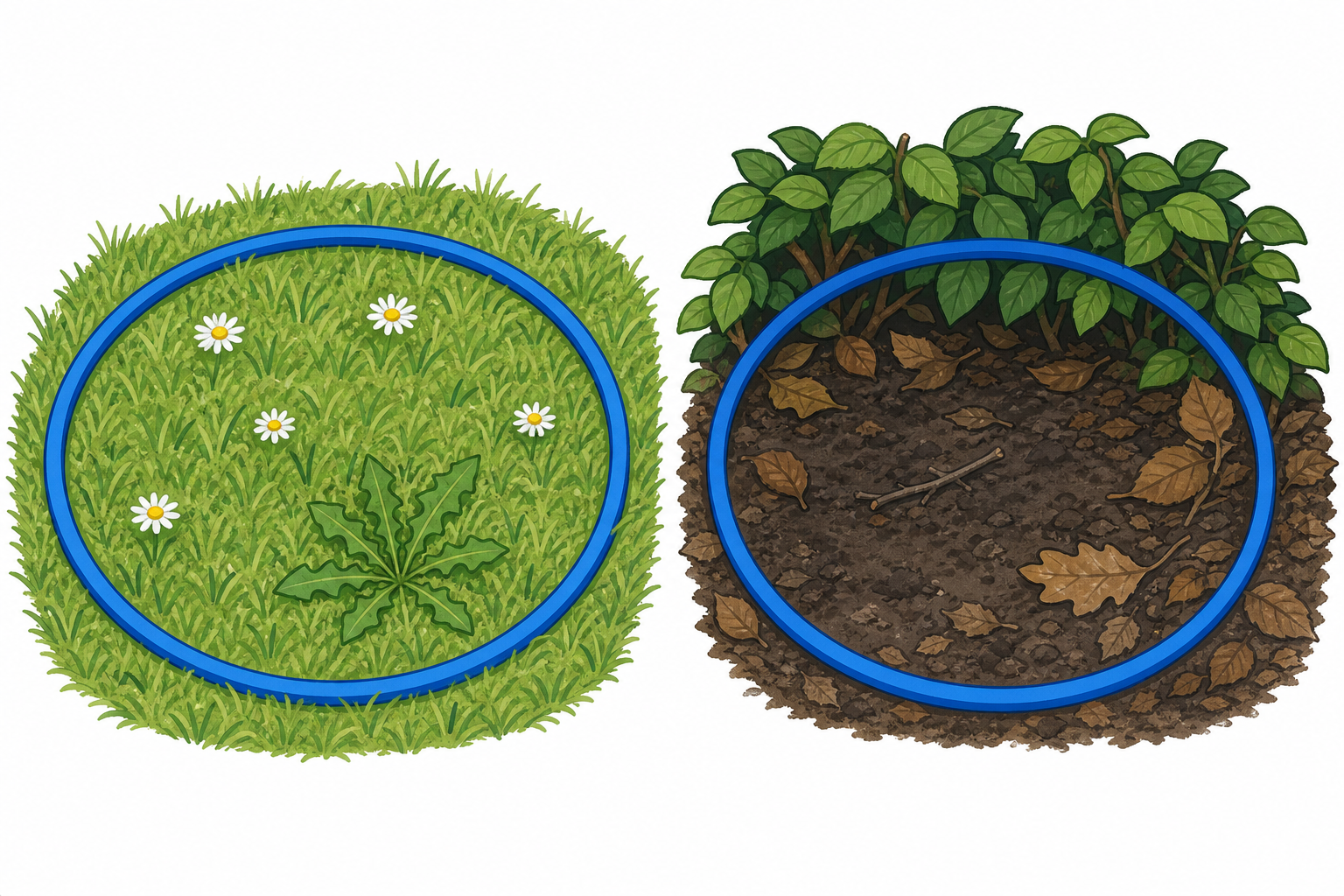 Our question: which sample spots in our grounds hold the most variety of living things?
In your group, choose two different microhabitats you will survey (for example open grass and under a hedge). Predict which will have more kinds of living things, and say why.
On your Investigation Journal page, write the two spot names, leave a clear tally space for kinds at spot A and spot B, and note your prediction before we go out.
 Outside, work in your group at the two spots you chose.
At each spot: place the hoop the same way, look carefully for one full minute, use the ID sheet to name what you find, and tally each kind on the group journal page on the clipboard. Move gently, put any minibeast back where you found it, and stay inside the boundary.
 Back in the classroom with coats off, open your group tally from outside.
- Which of your two spots had more kinds?
- Was your prediction right?
- Name one condition (damp, shelter, light, or plants) that differed between the spots.
- Point to two finds from your tally and say how one might depend on the other (food, shelter, or rotting leaves as a resource).
Be ready to share your two spot names and the number of kinds in each when we pool on the board.
Unlock the full learning experience
You're previewing this lesson. Get full access to this lesson and hundreds more — each one ready to teach, with interactive activities, printable resources and pupil progress tracking built in.
This lesson is copyright of DigitalSkills.org 2017 - 2025. Unauthorised use, copying or distribution is not allowed.