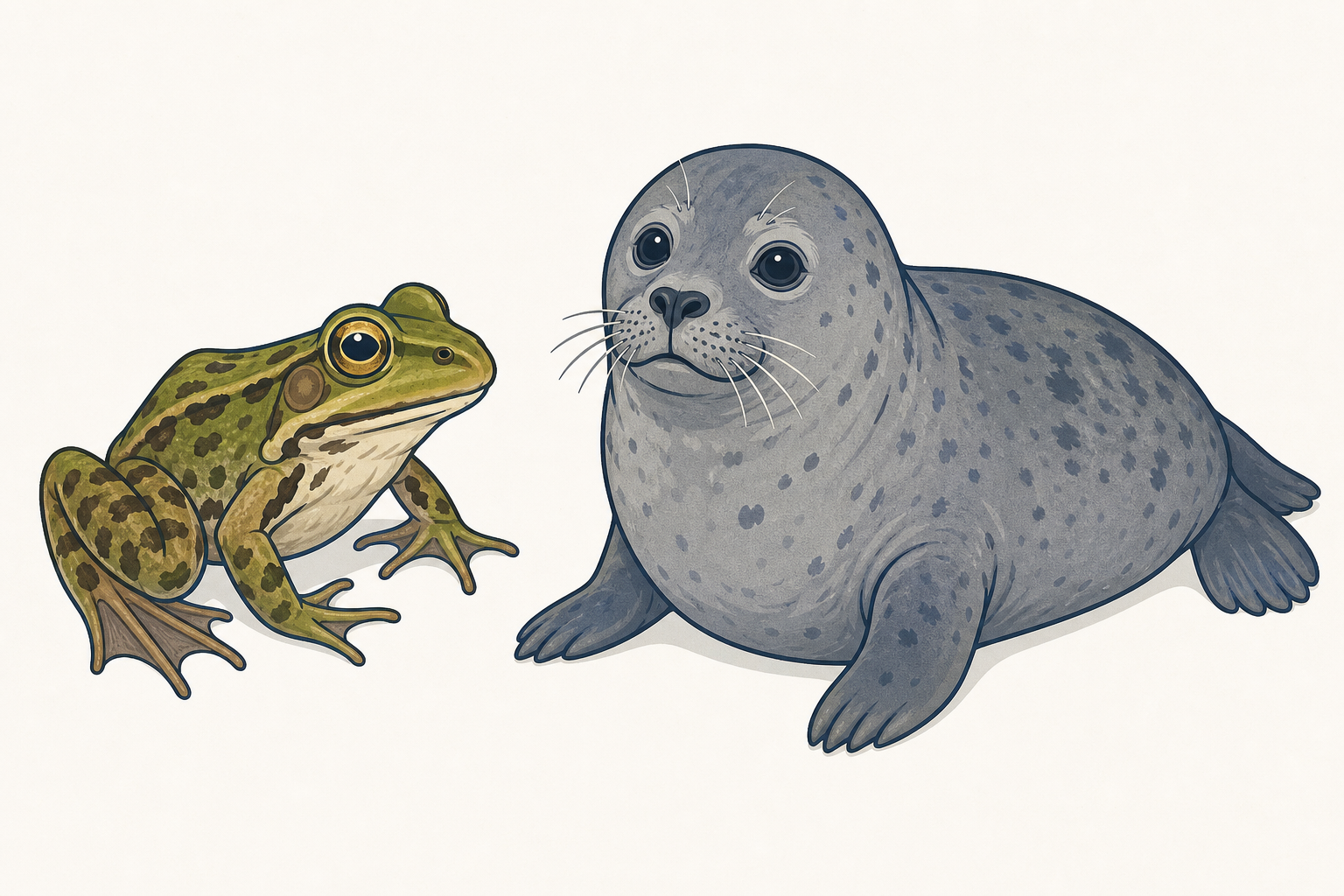
 Look at this frog and this seal side by side. One lives in a wet bog. One lives in cold sea water. What do you notice about their bodies that might help them where they live?
Scientists who walk Irish bogs and shores ask this same question.
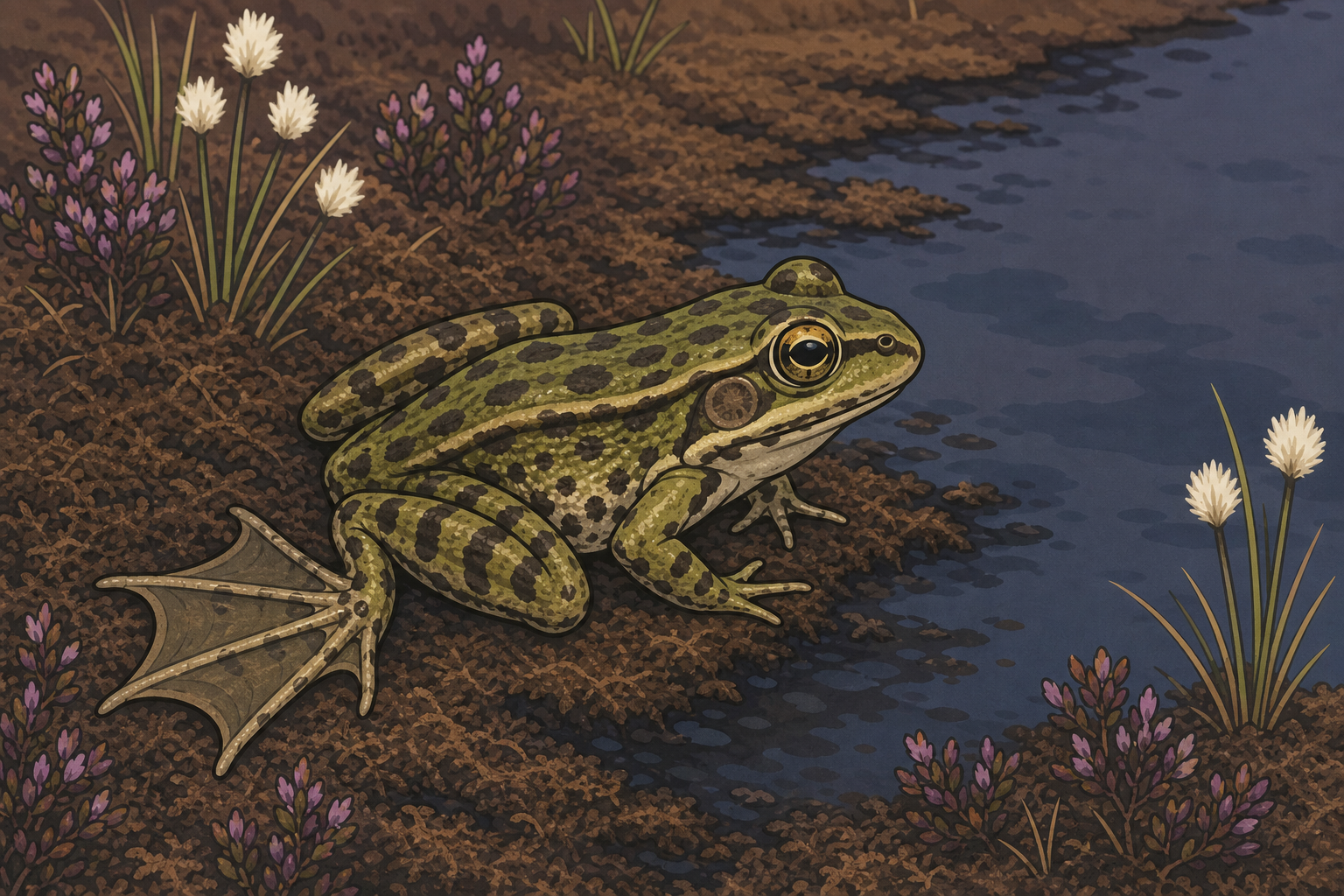 A frog's webbed feet help it live in a wet bog. That helping feature is called an adaptation. The bog is its habitat. Webbed feet are one feature we can notice and name.
Watch me match the frog to an Irish bog and say how each feature helps. Join in when I ask: which feature do you think matters most, and why?
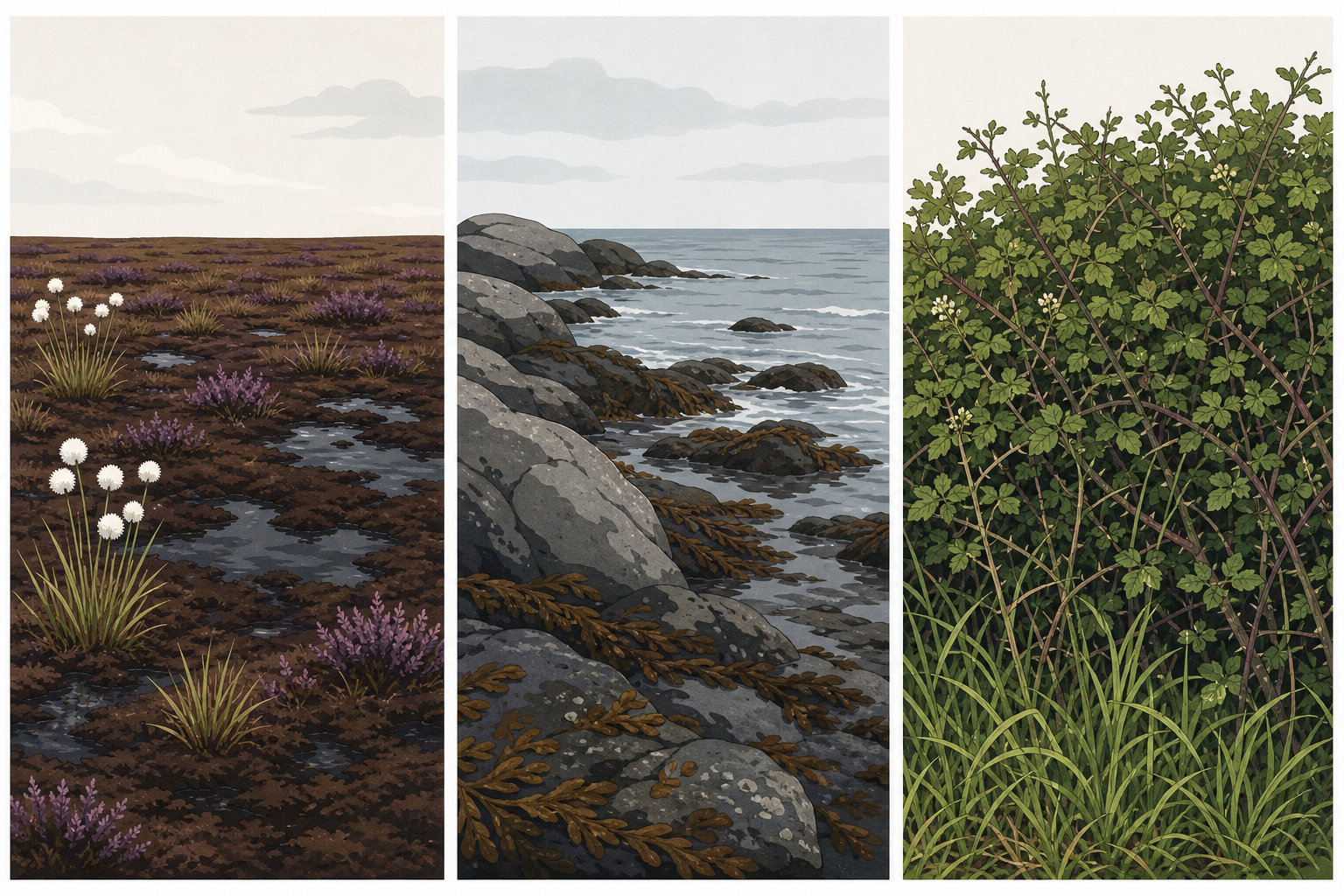 In your group you have 8 living-thing cards. Match each one to the habitat it suits best: Irish bog, Irish coast, or Irish hedgerow. For every match, name one feature and say how it helps. You may use the feature reminder cards on your table. Be ready to share one match with the class.
Here is a mystery living thing and its features:
- a hard outer shell that clamps tightly to wet rock
- a rough tongue for scraping tiny plants off stone
- can seal a little water inside when the tide goes out
- lives where waves splash and salt spray hits
With your group, decide its most likely Irish habitat: bog, coast or hedgerow. Be ready to say why, using at least two features you can point to on the list.
Your group gets one Irish habitat. Together, design one living thing that would be well suited to live there. Choose at least three features and say how each one helps. Draw and label your group's design on one shared sheet of plain paper.
Your design is ready when it has at least three labelled features, each linked to a real condition of your habitat (wet, salty, windy, sheltered, cold or soft ground), and no magical powers.
Unlock the full learning experience
You're previewing this lesson. Get full access to this lesson and hundreds more — each one ready to teach, with interactive activities, printable resources and pupil progress tracking built in.
This lesson is copyright of DigitalSkills.org 2017 - 2025. Unauthorised use, copying or distribution is not allowed.